

Who it is for
Older adults seeking adaptable seated movement
Duration
5–15 minutes
Experience
Gentle · adaptable
You need
Stable chair; optional mat, blanket or strap
Safety
Professional guidance is appropriate for fall risk, recent surgery or conditions affecting movement.
How this page has changed
June 18, 2026
Sources, internal links and safety or product context reviewed.
In this guide
Chair yoga for seniors is a gentle way to do yoga while sitting in a sturdy chair, or while standing and holding the chair for support. It keeps the movements small and safe. That makes it a good start for older adults, beginners, and anyone who finds getting down to the floor hard. Treat it as educational movement, not medical advice. Start slowly. Use a steady chair without wheels. And check with your doctor first if you have a health condition, recent surgery, dizziness, bad pain, or balance problems.
A quick note on who is writing this. I run The Yoga Sensei as a gear curator and long-time practitioner, not a certified yoga teacher. So this guide sticks to gentle, widely taught seated movements, leans on public-health sources for anything health-related, and points you to your own doctor for the rest.
What Is Chair Yoga?
Chair yoga is regular yoga, scaled down to a seated or chair-supported practice. Instead of moving between standing poses and the floor, you stay in or beside the chair the whole time. The chair becomes your stable base for stretches, gentle twists, simple strengthening, and breathing.
There are two broad versions. Seated chair yoga keeps you in the chair for every movement. Chair-supported yoga has you stand behind or beside the chair, holding it for balance during a few standing stretches. Standing work is optional, not required, and you can build an entire useful practice without ever leaving the seat.
It still counts as movement practice. It is not a treatment plan, a cure, or a substitute for care you have been prescribed. What it offers is an accessible way to move a little more, in a format that removes the two things that stop many people from trying yoga: getting down to the floor, and balancing while you do it.
Is Chair Yoga Safe for Seniors?
This article is for educational purposes only and is not medical advice. Listen to your body, and talk to a qualified professional before starting a new activity if you have any health concerns.
For most people, chair yoga is a low-intensity way to move. But "low intensity" is not the same as "no risk", and the right answer depends on your own health, not on the activity alone. A few ground rules make it safer:
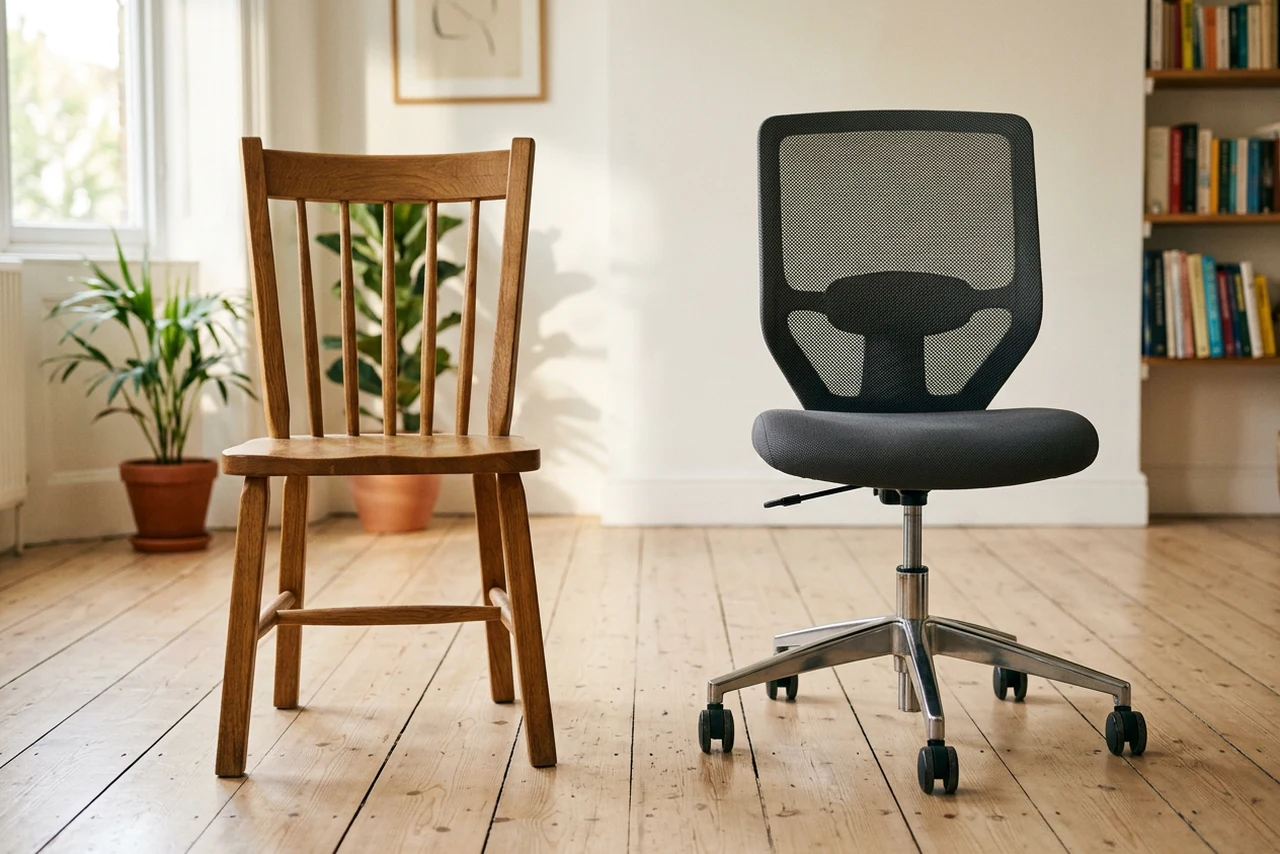
- Use a sturdy chair without wheels or arms that get in the way. A dining chair is usually better than an office chair.
- Practise on a non-slip surface. A yoga mat under the chair stops it sliding on hard floors.
- Keep your feet flat on the floor when seated, hip-width apart, so you have a stable base.
- Move within a comfortable range. Gentle and small beats deep and forced, every time.
- Breathe. If you find yourself holding your breath, the movement is too big.
Stop and rest, or stop entirely, if you feel sharp pain, chest pain, dizziness, unusual shortness of breath, numbness, or feel faint. None of those are things to push through.
Talk to your doctor or a qualified professional before you begin if you have had recent surgery, have osteoporosis, uncontrolled blood pressure, a history of falls, severe or unexplained pain, or any complex medical condition. The NCCIH says yoga is usually safe for healthy people who practise sensibly. But older adults and people with health conditions may need to change the poses, and should get personal advice first. That caution is the whole point of practising in a chair.
What You Need Before You Start
One of the nicest things about chair yoga is how little it asks of you. To begin you need:
- A sturdy chair without wheels.
- Comfortable clothing you can move and breathe in.
- Water within reach.
A few optional extras make some stretches easier, but none are required:
- A non-slip mat under the chair for grip on hard floors.
- A folded blanket or cushion to sit on if the seat is low, or to pad the lower back.
- A strap or towel to bridge the gap in stretches where your hands do not quite reach.
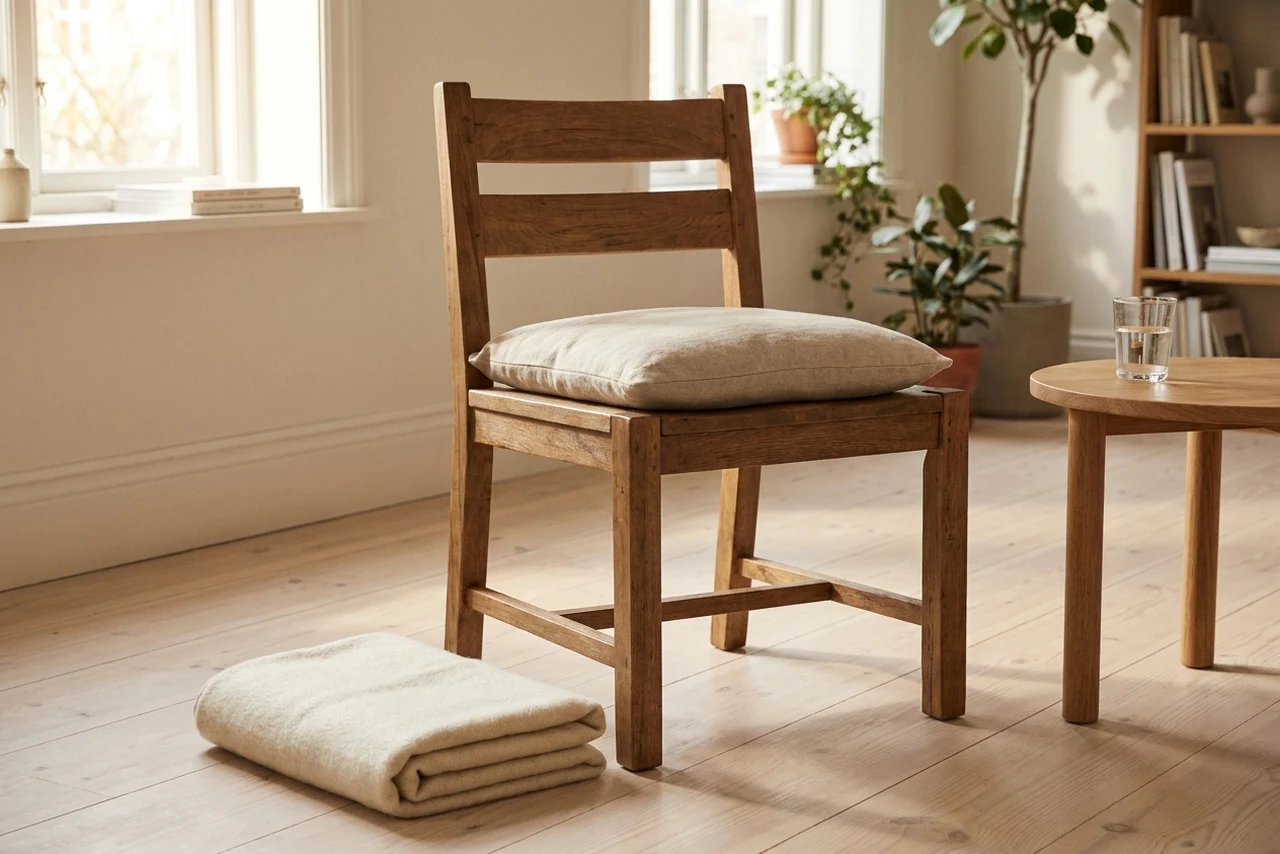
You do not need to buy anything special to start, and you should be wary of any "senior yoga kit" that says you do. If you later want a little support gear, a simple yoga bolster or cushion is more useful than most bundles. Begin with the chair you already own.
Benefits of Chair Yoga for Seniors
It is easy to find pages that promise chair yoga will fix arthritis, prevent falls, or lower blood pressure. The honest version is more measured. A few small trials — plus one large UK study (Gentle Years Yoga) — have looked at chair-based yoga for older adults. The results are promising but early, so the wording matters. Here is what can reasonably be said.
Gentle movement and range of motion
Gentle movement helps keep your joints from stiffening up. A seated practice lets you work on how far your joints move, without putting as much weight through them as standing exercise does. The CDC asks older adults to move most days and to break up long spells of sitting. Chair yoga is one easy way to add a little of that.
Balance confidence and body awareness
Holding the chair lets you practise shifting your weight and sitting tall, with something solid to hold. Some studies suggest chair-based exercise can help older adults feel steadier. Results vary, though, and it is usually one part of a bigger plan. It will not "prevent falls" on its own. Anyone worried about balance should get advice from a professional first.
Strength and functional fitness support
Slow, controlled seated movements ask a little from the muscles you use to stand, reach, and carry. That is everyday strength, not gym strength. One small study looked at chair yoga for older adults with osteoarthritis (worn, painful joints) in the legs. Some people moved more easily during the programme. But the study was small and early, so treat it as a hopeful sign, not proof.
Relaxation and mood support
The breathing and slow pace are, for many people, the part they keep coming back for. Calm, focused breathing can feel settling, and a gentle routine can be a pleasant anchor in the day. That is worth having on its own terms, without needing to claim it treats anxiety, depression, or sleep problems.
12 Gentle Chair Yoga Poses for Seniors
Here are twelve seated poses that cover the main ways the body likes to move: forward, back, side to side, twisting, and through the joints of the legs and feet. For each one you will see what it may help with, how to do it, a breath cue, a safety cue, and an easier option. Move slowly, and skip anything that does not feel right today.
-
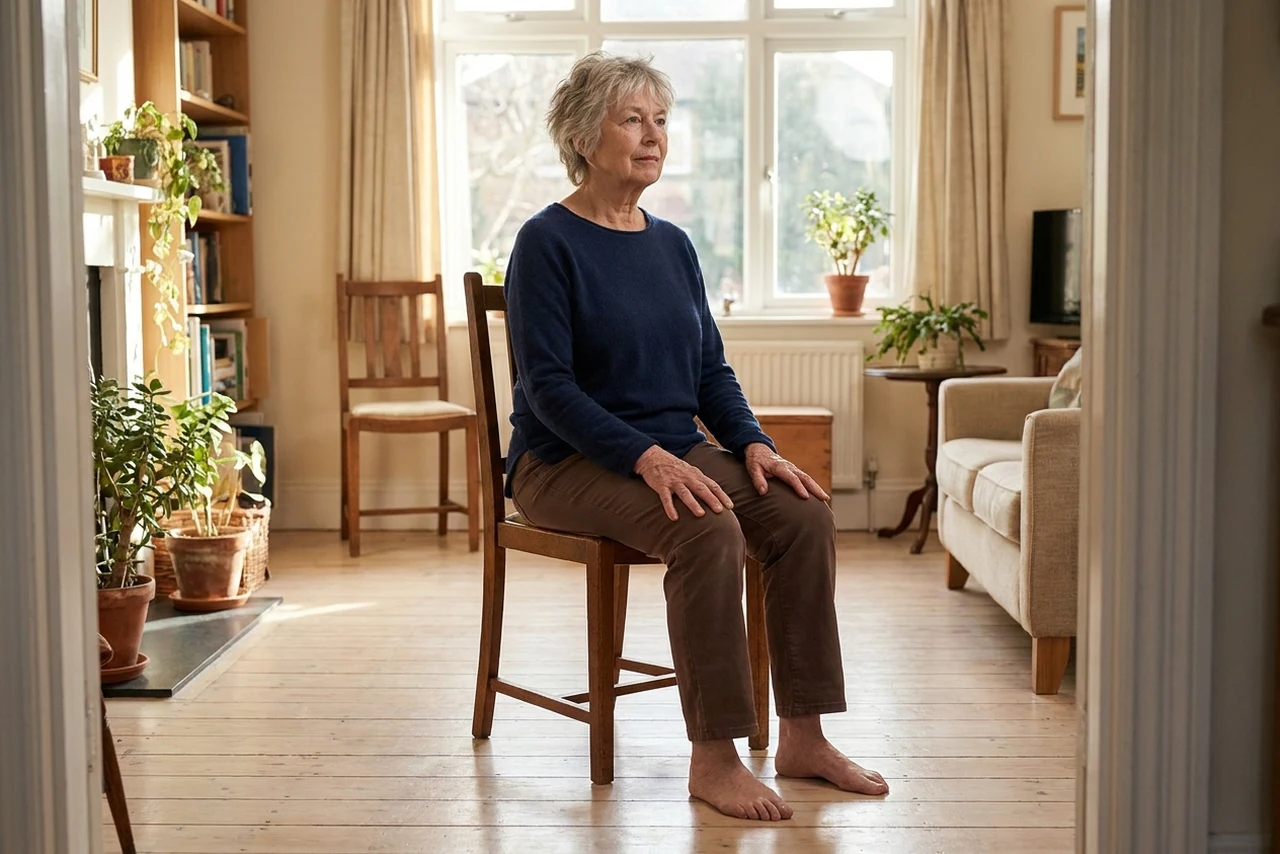
Seated Mountain. Sit tall, feet flat, hands resting on your thighs, crown of the head reaching gently up. This is your home base for posture and breathing. Breath: slow in and out through the nose. Safety: relax the shoulders down, do not arch the lower back. Easier: sit against the backrest for support.
-
Seated Shoulder Rolls. Lift both shoulders toward the ears, roll them back and down, several times, then reverse. May ease everyday neck and shoulder tightness. Breath: inhale up, exhale down. Safety: keep the movement small and smooth. Easier: roll one shoulder at a time.
-
Seated Cat-Cow. Hands on thighs. As you inhale, lengthen the spine and open the chest; as you exhale, round the back gently and tuck the chin. May support spinal mobility. Breath: drives the movement. Safety: keep the range small. Easier: reduce to a gentle rock of the pelvis.
-
Seated Side Bend. Reach one arm up and lean gently to the opposite side, feeling a long stretch down the side body. Breath: inhale to lengthen, exhale to bend. Safety: stay over your sitting bones, do not collapse forward. Easier: keep the lifted hand on the shoulder instead of overhead.
-
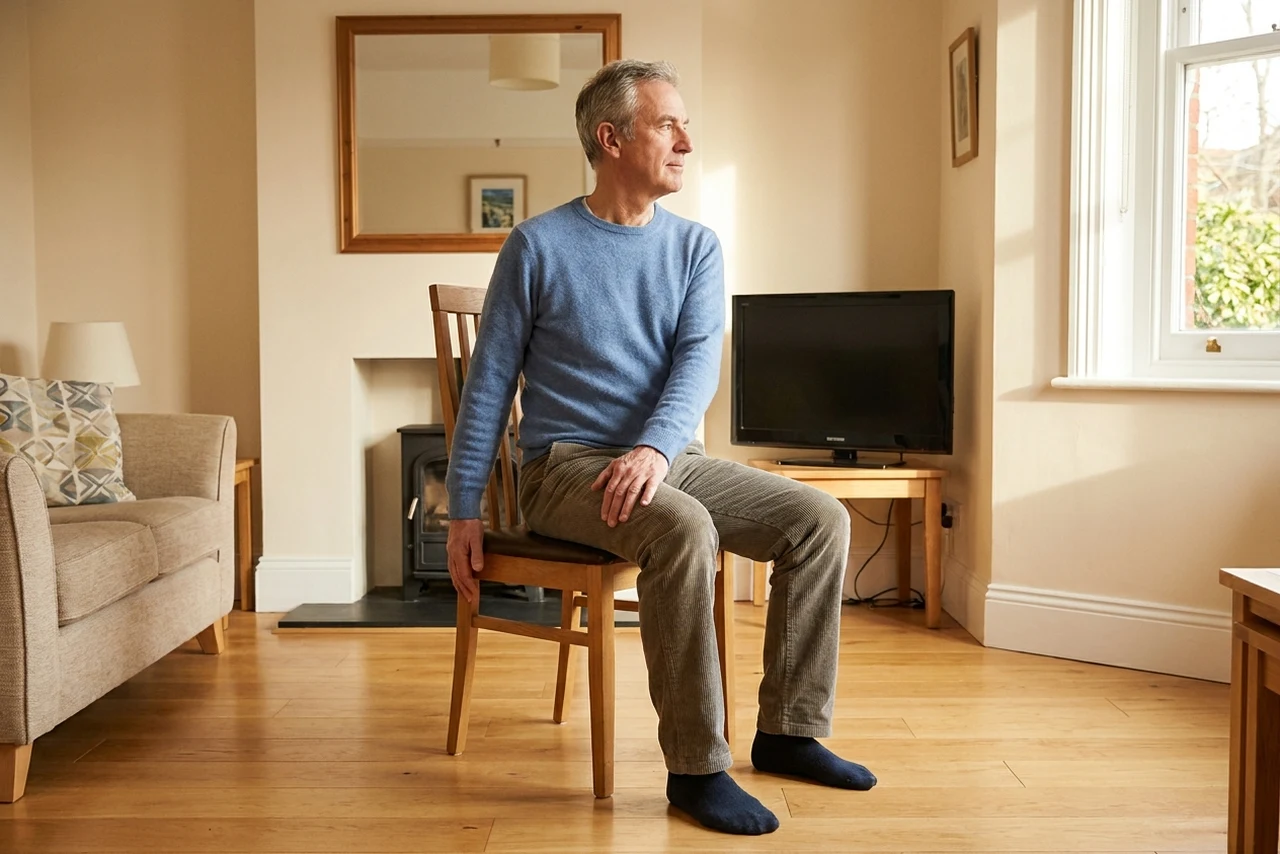
Seated Spinal Twist. Sit tall, place one hand on the opposite knee and turn gently through the upper back to look over your shoulder. May help with rotation you use to reach and check behind you. Breath: exhale as you turn. Safety: turn from the ribs, not the neck; keep it gentle. Easier: turn only halfway.
-
Seated Eagle Arms. Cross one arm under the other in front of you, hugging gently, and lift the elbows a little. Stretches the upper back and shoulders. Breath: slow and even. Safety: stop short of any pinching. Easier: simply hug yourself, hands on opposite shoulders.
-
Seated Forward Fold. With feet wide and hands on thighs, hinge forward from the hips, letting the hands slide down toward the shins. Breath: exhale as you fold. Safety: come up slowly to avoid light-headedness; skip if you have eye pressure or balance issues. Easier: fold only a few inches and rest the forearms on the thighs.
-
Seated Ankle Circles. Lift one foot slightly and draw slow circles with the ankle, both directions, then switch. Keeps the ankles mobile for walking. Breath: natural. Safety: hold the chair if lifting the foot feels unsteady. Easier: keep the heel down and circle just the toes.
-
Seated Heel and Toe Raises. With feet flat, lift the heels (toes stay down), lower, then lift the toes (heels stay down). Works the lower legs you use to walk. Breath: natural, unhurried. Safety: keep it slow and controlled. Easier: do one foot at a time.
-
Seated Figure-Four Stretch. Rest one ankle on the opposite knee, keeping the foot flexed, and sit tall; lean forward slightly only if comfortable. Stretches the outer hip. Breath: exhale into the stretch. Safety: skip if you have hip or knee replacements unless cleared by your professional. Easier: cross at the ankles instead.
-
Seated Warrior Arms. Sit tall and reach both arms out to the sides at shoulder height, palms down, holding for a few breaths. Builds gentle shoulder and postural endurance. Breath: steady. Safety: lower the arms if the shoulders fatigue or shrug up. Easier: hold for fewer breaths, or rest the hands halfway.
-
Seated Rest and Breathing. Sit comfortably, hands in the lap, eyes soft or closed, and take several slow breaths to finish. Breath: a little longer on the exhale. Safety: none — this is the rest. Easier: there is no easier; this is it.
A few movements are better skipped or treated with extra care: deep neck rolls, strong twists, big backbends, unsupported standing balance poses, and anything that asks you to get down to the floor. If a class or video pushes those, it is fine to leave them out.
A Simple 10-Minute Chair Yoga Routine
Once the poses feel familiar, you can string a few together into a short daily routine. Here is a gentle ten-minute version. Reduce the range or rest whenever a movement feels wrong.
- Minutes 0–1: Arrive in Seated Mountain. Sit tall and breathe.
- Minutes 1–2: Shoulder rolls and gentle neck movement, small and slow.
- Minutes 2–4: Seated Cat-Cow, then a side bend each way.
- Minutes 4–6: A gentle spinal twist each way, then a small seated forward fold.
- Minutes 6–8: Ankle circles, heel and toe raises, and the figure-four stretch.
- Minutes 8–10: Seated rest and slow breathing to close.
Done most days, a short routine like this is easier to keep up than a long weekly session — and consistency is what makes gentle movement worthwhile.
Chair Yoga for Seniors Over 70
There is nothing about being over 70 that rules out a seated practice. What usually changes is the dial, not the activity: smaller ranges of motion, shorter sessions, longer rests, and a bit more attention to a stable setup. If balance is uncertain, having someone nearby for the first few sessions is sensible.
Avoid treating age as the thing that decides what you can do. Two people the same age can have very different mobility. Start with what your body offers today, keep the movements small, and let the practice grow slowly. If anything about your health is in question, that is a conversation for your doctor before it is a movement for the chair.
Common Mistakes to Avoid
A handful of avoidable mistakes account for most of the trouble people run into:
- Using a rolling or unstable chair. Wheels and movement are the enemy here.
- Pushing into pain. Gentle discomfort in a stretch is fine; sharp pain is a stop sign.
- Holding the breath. If the breath stalls, the movement is too big — shrink it.
- Moving too quickly. Slow is safer and usually feels better.
- Copying advanced ranges from younger demonstrators in videos. Their range is not the target.
- Skipping professional advice when you are managing a medical condition.
Related Reading
- Chair yoga for beginners — the simplest place to start, with six easy poses.
- Free chair yoga for seniors — a free routine you can do today, plus where to find free classes.
- Printable chair yoga for seniors — a simple chart to print and keep by the chair.
- How to choose a yoga mat — a non-slip mat under the chair keeps it steady on hard floors.
- Best yoga bolsters — simple cushioning support if you want a little extra comfort.
This guide is the hub for our chair yoga content. If you would rather be told what to do each morning than decide for yourself, the free 28-day chair yoga plan sequences these twelve poses across four weeks, starting at about six minutes a day.
Frequently asked questions
What is chair yoga?
Chair yoga is a gentle form of yoga done while seated in a sturdy chair, or standing while holding a chair for support. It brings the floor up to you, so you can move through familiar stretches and breathing without getting down to a mat. It suits beginners, people with limited mobility, and anyone who finds a standing or floor-based class hard to access.
Is chair yoga safe for seniors?
For most people it is a low-intensity way to move, but safety depends on your own health. Use a stable chair without wheels, keep your feet flat on the floor, and move only within a comfortable range. Stop for sharp pain, chest pain, dizziness, or shortness of breath, and talk to your doctor first if you have recent surgery, osteoporosis, uncontrolled blood pressure, a history of falls, or any condition that affects movement.
How often should you do chair yoga?
A short daily session of 5 to 15 minutes is a reasonable place to start, but any amount you can keep up with regularly is more useful than an occasional long session. The CDC encourages older adults to be active most days and to include activities that work on balance and strength; chair yoga can be one gentle part of that, not a replacement for medical advice.
Does chair yoga help with weight loss?
Chair yoga is not mainly a weight-loss workout. It is a low-intensity practice focused on gentle movement, mobility, and relaxation, so it burns relatively few calories. If weight is your goal, treat chair yoga as a supportive habit alongside guidance from a healthcare professional, not the main tool.
What equipment do I need for chair yoga?
Very little. You need a sturdy chair without wheels, comfortable clothing, and water nearby. A non-slip yoga mat under the chair keeps it from sliding, and a folded blanket, cushion, or strap can make some stretches easier. You do not need to buy anything special to begin.
Is 70 too old to start yoga?
Age by itself does not rule out gentle movement. Many people begin a seated practice in their 70s, 80s, and beyond, usually with smaller ranges of motion, shorter sessions, and more rest. What matters is starting where your body is today and checking with a professional if you have medical conditions or balance concerns.
Can chair yoga be done for free?
Yes. The poses in this guide are free to practise at home with a chair you already own. Many libraries, community centres, and senior programmes also offer free or low-cost seated classes, and there are free video routines online — choose ones led by qualified instructors who emphasise safety.