

How this page has changed
August 2, 2026
Sources, internal links and safety or product context reviewed.
May 28, 2026
First published.
In this guide
- 01The 5 decisions that actually matter
- 021. Material — what each one actually feels like
- 032. Thickness — the trade-off nobody explains
- 043. Grip — wet vs. dry, and why it matters
- 054. Size — when standard does not fit
- 065. Durability and care
- 07How long does a yoga mat last?
- 08How to store your yoga mat
- 09Common buying mistakes
- 10A starting framework — match the mat to your practice
- 11Essential accessories
- 12Closing note
If the mat comes bundled with blocks, a strap and a bag, use the yoga starter kit checklist to reconstruct the piece count, verify each component and compare like-for-like bundle value.
Choosing a yoga mat is overwhelming because every mat looks almost the same online but feels completely different in practice. A mat that looks calm in a product photo can feel slippery, spongy, heavy, sticky, rubbery, too narrow, or surprisingly unstable once you actually move on it.
Quick answer. For most home practitioners, a 4–5mm PVC or natural rubber mat in standard size, around 68 × 24 inches, is the right starting point. Spend more on grip and durability than on extra thickness. Avoid very soft foam if you practise standing poses, and be cautious with cork on hard floors if you need knee comfort.
Your floor changes that starting point. If the room is carpeted, use the carpet-specific mat picks and setup check before buying extra thickness; plush pile may need a rigid platform rather than another soft layer.
The honest answer is not "buy the most expensive mat". Not all expensive mats are good for your body, and not every beginner needs a premium mat. But the opposite is also true: a very cheap mat can become a false economy if it slides, compresses, smells, flakes, or makes you skip practice.
This guide walks through the five decisions that actually matter: material, thickness, grip, size, and durability. It is written for real home practice, not for a product catalogue. I am Marvin Smit, a long-time practitioner and the author of The Yoga Sensei — not a certified yoga instructor. I also have not personally tested every material or every brand mentioned here. Where a brand claim appears, it is framed as manufacturer-published information, not as our own lab test.
By Marvin Smit · Long-time practitioner, not a certified instructor.
The 5 decisions that actually matter
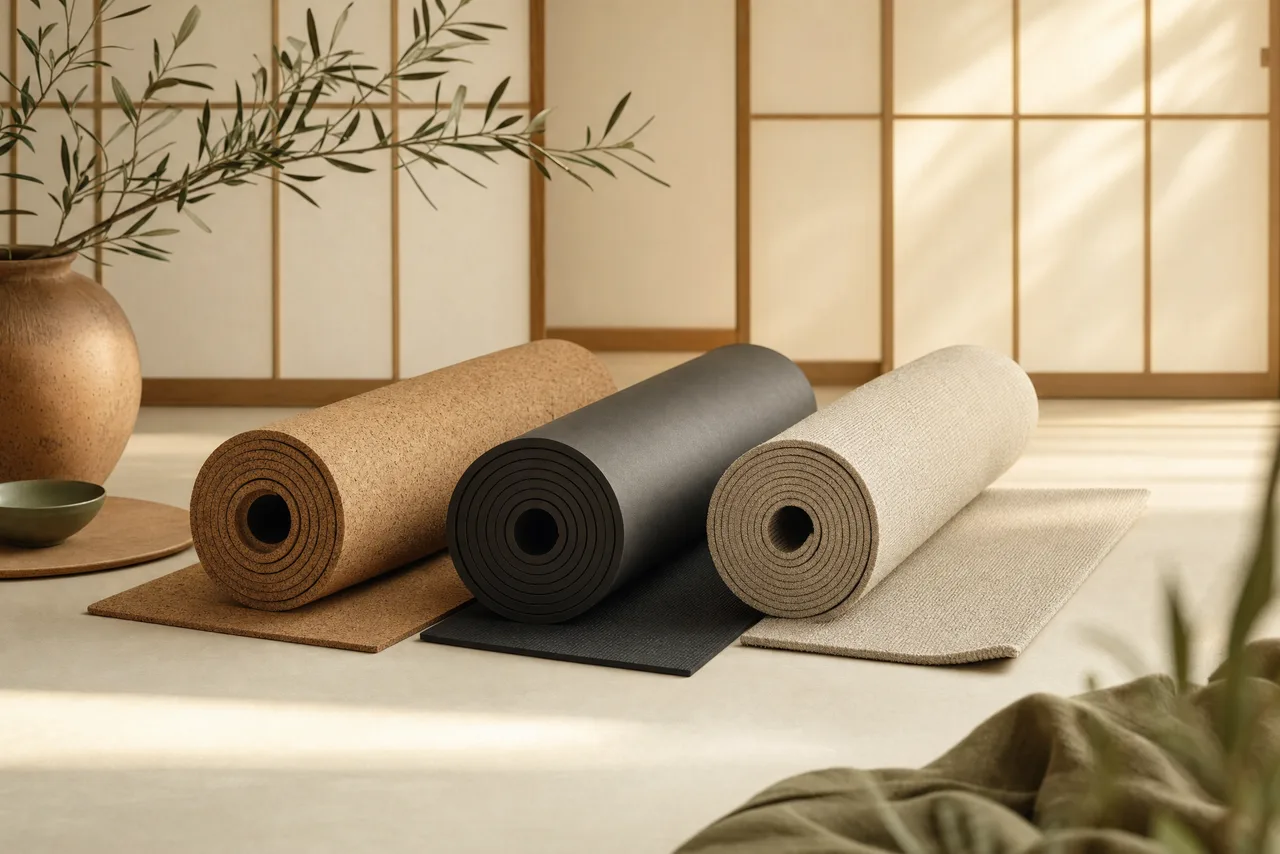
Most yoga mat advice gets lost in brand lists. Before you compare products, decide what you need from the surface under your hands and feet.
- Material decides feel, grip, care, weight, smell, and environmental trade-offs.
- Thickness decides the balance between cushion and stability.
- Grip decides whether the mat works for dry hands, sweat, or both.
- Size decides whether your whole body actually fits on the mat.
- Durability and care decide whether the mat still supports you a year from now.
If you answer those five questions first, product recommendations become much easier to judge.
1. Material — what each one actually feels like
Material is the biggest difference between two mats that look identical in a photo. It affects grip, smell, cleaning, weight, texture, and how the mat ages.
PVC: durable, stable, easy to clean
PVC mats are the old-school workhorses. The Manduka PRO is the best-known premium example: Manduka lists a 6mm build and backs the mat with a lifetime guarantee. It uses a high-density, closed-cell construction, which in practice feels firm, dense and stable rather than soft.
PVC is good for practitioners who want a mat that lasts, wipes clean easily, and feels grounded during standing poses. Closed-cell construction means sweat stays more on the surface instead of soaking in, which is useful for hygiene and care. It also means the mat may need a break-in period before the top layer feels grippy enough.
The trade-off is environmental. PVC is plastic, and it is not the eco-friendly choice compared with natural rubber or cork. It can still be the right choice if your priority is durability and you keep one mat for many years instead of replacing cheaper mats often. If natural materials are your main filter, read the focused eco-friendly yoga mat guide.
Who should consider it: regular home practitioners, people who value stability, and anyone who wants a low-maintenance mat.
Who should skip it: people prioritising natural materials, very light travel weight, or immediate sticky grip straight out of the box.
Natural rubber: grippy, grounded, but more sensitive
Natural rubber mats, including Jade-style mats and some Manduka eKO or Liforme-style constructions, usually feel more tactile than PVC. They often have strong dry grip and a grounded feel without being as dense as a heavy PVC mat.
Jade, for example, publishes that its Harmony mat is made with natural rubber tapped from rubber trees and contains no PVC, EVA, or synthetic rubber. Jade also states that its natural rubber mats are not intended for outdoor use and should not be exposed to sunlight. That matters because sunlight and heat can make rubber dry, crack, and degrade faster.
Natural rubber is a good fit if you want traction and a more natural surface feel. It is not ideal if you dislike rubber smell, leave your mat in a hot car, or practise outside in direct sun.
Latex deserves a straight answer rather than a hedge. Jade states its mats are 99% latex free, but because the rubber comes from rubber trees there can be trace latex proteins, and Jade recommends that people with latex allergies avoid contact with the mats. If that is you, natural rubber is not a material to experiment with — choose PVC, TPE or a cork-topped mat instead.
The environmental story is stronger than PVC because rubber can come from a renewable tree source, but it still has trade-offs: rubber farming, transport, durability, and end-of-life all matter. Treat "natural" as a useful data point, not a magic word.
Who should consider it: regular practitioners who want grip, texture, and a firmer connection to the floor.
Who should skip it: anyone with latex concerns, strong smell sensitivity, or a habit of storing gear in direct heat or sun.
Cork: clean-feeling, textured, and specific
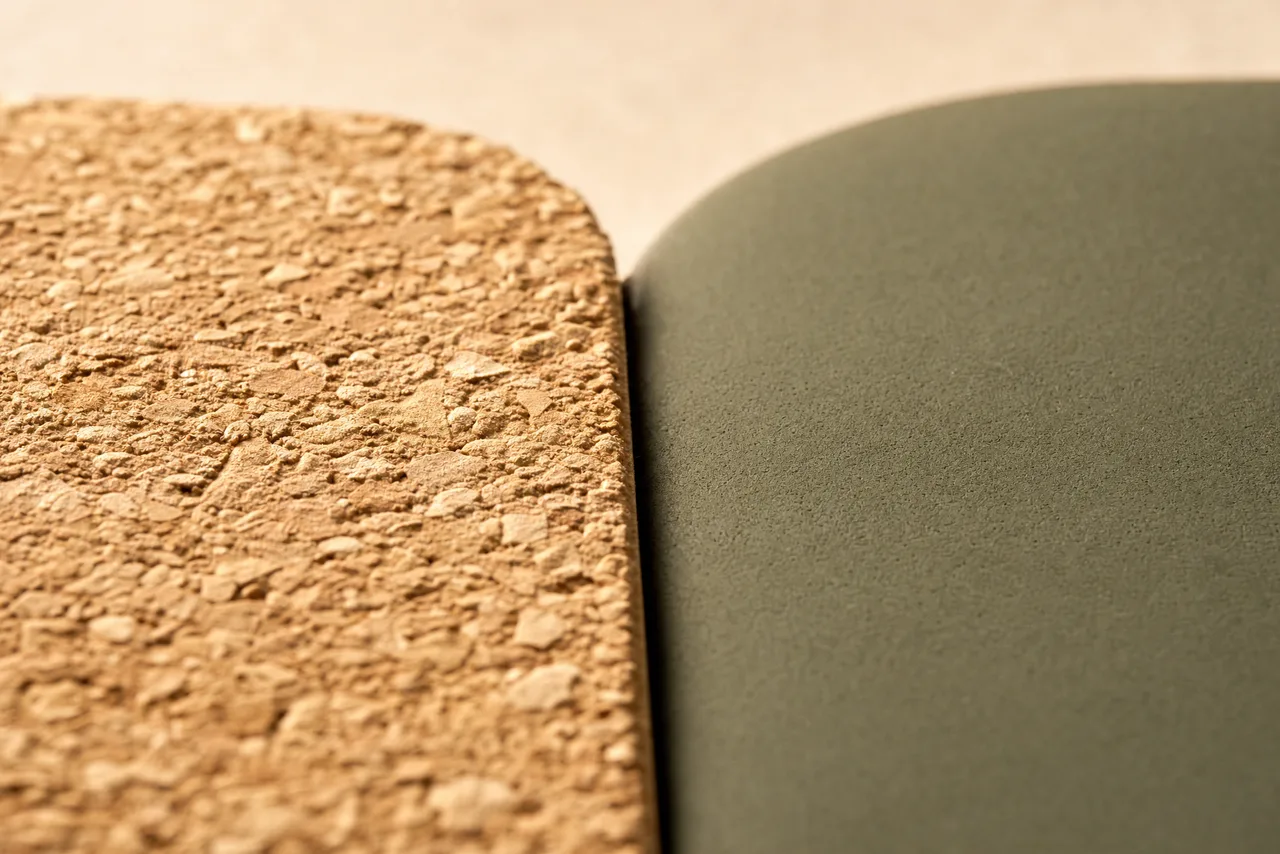
Cork mats have a very different personality. The surface is drier and more textured than rubber or polyurethane. Some practitioners like cork because it feels less plasticky and can grip better when hands are slightly damp.
The downside is comfort. Cork is usually a top layer bonded to another base, often rubber or TPE. The cork layer itself does not feel plush. On a hard floor, a thin cork mat can feel unforgiving for knees, wrists, and bony contact points.
Cork can work well for warm practice, gentle flows, and people who dislike synthetic-feeling surfaces. It is less ideal if you want maximum cushion, a very soft landing, or a mat that feels sticky from the first minute. For a direct head-to-head on grip, cushion and care, see cork against rubber.
Environmentally, cork is appealing because cork bark can be harvested without cutting down the tree. The full footprint still depends on the backing material, adhesive, shipping, and how long the mat lasts.
Who should consider it: practitioners who want a natural-feeling top surface and do not need a plush mat.
Who should skip it: knee-sensitive practitioners on hard floors, or anyone who wants a soft, sticky surface.
TPE: light, affordable, beginner-friendly
TPE mats are common in budget and beginner categories. They are usually lighter than dense PVC or rubber mats, often softer, and easier to carry. Gaiam's yoga mat collection, for example, includes mats across several thicknesses and material categories, including PVC and TPE-style options.
The upside is accessibility. TPE can be a reasonable first mat if you practise gently, want something light, or are not ready to invest in a premium mat. It often feels cushioned and approachable. The Gaiam range and the Retrospec Solana both sit in this entry-level territory.
The downside is durability and sweat performance. Many TPE mats compress faster than denser PVC or rubber mats. Some also become slippery when sweat builds up. If you practise hot yoga or sweat heavily, TPE is rarely the first material I would shortlist.
Environmentally, TPE is often marketed as a cleaner alternative to PVC, but claims vary by manufacturer. Treat broad "eco" claims carefully unless the brand gives specific material and manufacturing details.
Who should consider it: beginners, occasional home practitioners, and people who want a light, affordable starting mat.
Who should skip it: heavy sweaters, daily practitioners, and anyone who wants a mat to last for many years.
Polyurethane top layer: strong wet grip, careful maintenance
Polyurethane-top mats are popular because they can grip well when damp. Lululemon's The Mat is the common reference point for this category: a grippy top surface bonded to a rubber base. The Liforme works the same way and adds etched alignment lines, though it comes with a shorter service life than most people expect — Liforme offers no warranty and explains why.
The practical benefit is wet grip. If your hands slide as soon as you sweat, a polyurethane-style surface may feel more secure than a basic foam mat. That is why this category often appears in hot-yoga conversations.
For what it's worth: I've been on a 5mm dark green Lululemon natural rubber mat myself for about a year and a half now — mixed practice, mostly hatha and vinyasa. Grip's been solid, it cleans up well, and honestly I haven't found anything to complain about yet.
The trade-off is care. Polyurethane surfaces can show stains, absorb body oils, and dislike harsh cleaning. They are not "wipe it with anything" mats. Gentle cleaning and full drying matter.
Environmentally, the picture is mixed. The base may include natural rubber, but polyurethane is still a synthetic top layer. As always, durability and care decide a lot: a mat that lasts and supports practice is better than one that gets replaced quickly.
Who should consider it: sweaty practitioners, vinyasa practitioners, and anyone who needs extra wet grip.
Who should skip it: people who want the simplest cleaning routine or a surface that hides every mark.
For care differences by material, see our guide to cleaning a yoga mat. The wrong cleaner can shorten the life of a good mat.
2. Thickness — the trade-off nobody explains
Yoga mat thickness is not simply "more is better". More thickness gives more cushion, but it can also make balancing harder because your hands and feet sink into the surface.
Featured-snippet answer: Most people should choose a yoga mat between 4mm and 5mm thick. That range gives enough cushioning for home practice without making standing balance poses feel unstable. Choose 3mm if you want firmer floor feedback or travel weight, and 6mm+ if joint comfort matters more than balance stability.
Thickness comparison table
If you already know you want more cushion, the dedicated best thick yoga mat guide compares dense 6mm yoga mats with softer half-inch foam. That density distinction matters more than simply buying the largest number.
Fit can narrow the field just as quickly as thickness. Tall or broad practitioners can use the best yoga mats for men comparison to see which long and wide formats solve a real space problem—and when a roomier standard mat is already enough.
| Question | Short answer | Best fit |
|---|---|---|
| Is a 5mm or 3mm yoga mat better? | 5mm is better for most home practitioners; 3mm is better for portability and balance feedback. | Start with 5mm unless you already know you prefer firm mats. |
| Which thickness of yoga mat is best? | 4–5mm is the safest general range. | Beginners, home practice, mixed styles. |
| Which yoga mat is best, 6mm or 10mm? | 6mm is still a yoga mat; 10mm starts to feel more like a fitness or Pilates mat. | 6mm for knees; 10mm only for floor work and restorative use. |
| Should I get a 5mm or 8mm yoga mat? | 5mm for most yoga; 8mm only if cushion matters more than stability. | 5mm for flow; 8mm for sensitive joints or gentle practice. |
1–2mm: travel mats
A 1–2mm mat is for portability, not comfort. It folds or rolls small, fits in luggage, and works well as a hygienic layer over a studio mat. On its own, it gives very little cushion. Use this thickness if you travel often or practise on top of another mat.
3–4mm: firm and balanced
A 3–4mm mat gives better floor feedback. Balance poses feel more stable because your foot does not sink deeply into the surface. The downside is pressure: knees, wrists, and hip bones feel the floor more clearly.
4–5mm: the sweet spot
For most people choosing a first serious home mat, 4–5mm is the safest range. It gives enough cushion for kneeling and seated poses while still feeling stable in standing work. If you are unsure, start here.
5–6mm: more support, less floor feel
A 5–6mm mat makes sense if your knees or wrists complain on thinner mats, or if your practice includes restorative, slow, or floor-based sessions. The trade-off is balance. Tree pose, warrior transitions, and lunges may feel less precise.
6mm+: almost a different tool
Once a mat gets much thicker than 6mm, it starts behaving more like a fitness mat. That can be perfect for stretching, Pilates-style floor work, or gentle recovery sessions. For classic yoga with standing poses, it may feel too soft.
For a focused breakdown, see our yoga mat thickness guide.
3. Grip — wet vs. dry, and why it matters
Grip has two versions: dry grip and wet grip. A mat can be excellent at one and mediocre at the other.
Dry grip matters when your hands and feet are mostly dry. This is the first thing you notice in gentle home practice, hatha, beginner flows, and slower sessions. Natural rubber and broken-in PVC can do well here.
Wet grip matters when sweat enters the picture. Some surfaces become slick when damp. Others, especially polyurethane-style tops and certain rubber textures, feel more secure when slightly moist.
Closed-cell mats tend to keep sweat on the surface, which makes them easier to clean but can also create a slick layer. Open-cell mats can absorb moisture, which may improve grip in the moment but makes cleaning and drying more important. Polyurethane top layers are often chosen because they can feel grippy under damp hands, but they require gentle care.
There is also the break-in period. A dense PVC mat can feel slick for the first few practices. Manduka publishes break-in and care guidance for its PRO line; follow the current brand instructions if you choose that style of mat. Natural rubber mats usually feel grippier sooner, but they can have a rubber smell at first.
For sweaty practice specifically, our hot yoga mat guide goes deeper.
4. Size — when standard does not fit
A standard yoga mat is usually around 68 inches long and 24 inches wide. That works for many practitioners, but not all bodies and not all practices.
Choose a longer mat, often 71 or 74 inches, if your feet hang off the end in savasana, low lunge, cobra, or prone backbends. A simple rule: if you are tall enough that you regularly adjust your body to stay on the mat, the mat is too short.
Choose a wider mat, often 26 or 30 inches, if your shoulders or stance feel cramped. Wider mats can be useful for bigger bodies, wide-legged standing poses, mobility work, or home practice where you are not limited by studio spacing.
Travel mats are a separate category. They are often thin, foldable, and easier to pack. They solve portability, not comfort. If your main practice is at home, do not buy a travel mat as your only mat unless you genuinely like a firm surface.
5. Durability and care
Durability is not one thing. A mat can fail in several ways:
- The top layer flakes or peels.
- The surface loses grip.
- The mat compresses and never rebounds.
- The edges curl.
- Odour remains after cleaning.
- The base separates from the top layer.
Dense PVC mats are often strongest on structural durability. Manduka describes the PRO as high-density and backs it with a lifetime guarantee, but guarantees have conditions. Read the current warranty terms before treating any mat as indestructible.
Natural rubber mats often grip well but need more care. Direct sunlight, heat, oils, and soaking can shorten their life. Polyurethane-top mats can perform well for sweat but may show surface wear or staining if cleaned harshly.
The care routine is simple: wipe sweat, dry fully, clean gently, store away from heat, and do not roll a damp mat. That routine matters more than most people think.
How long does a yoga mat last?
How long a yoga mat lasts depends on material, frequency, sweat, cleaning, floor texture, and storage. A budget foam mat used daily may feel tired within months. A dense PVC mat cared for properly can last for years. Natural rubber and polyurethane-top mats often sit between those extremes: excellent performance, but more sensitive to heat, oils, sunlight, and aggressive cleaners.
Use wear signs instead of a fixed calendar. Replace the mat when the surface flakes, grip disappears after cleaning, permanent indentations form under your hands and feet, the edges curl badly, or odour remains after a proper clean and full dry.
Repair is limited. You can clean residue, dry mildew risk, and improve a dirty surface. You cannot truly repair a peeling top layer or restore foam that has collapsed. When the mat changes how you practise, it is time to replace it.
How to store your yoga mat
Store your mat dry, loosely rolled, and out of direct sun. That one sentence prevents most care problems.
Roll most mats with the practice side facing in unless the brand instructs otherwise — it keeps the surface you touch protected and helps the mat lie flat when you unroll it. Folding is fine for travel mats designed to fold, but it can crease thicker mats. Never roll a mat while damp; trapped moisture is what creates persistent smell.
Natural rubber needs the most care: avoid direct sunlight, hot cars, radiators, and humid storage. PVC is more forgiving, but it still should not live in heat. If you practise often, let the mat air out before putting it in a closed bag.
For the full method — which way to roll, hanging versus standing, breathable bags, and the storage gear you can skip — see how to store a yoga mat so it lasts. For cleaning routines by material, use our yoga mat cleaning guide.
Common buying mistakes
Buying on thickness alone
A thick mat can still be slippery, unstable, heavy, or poorly made. Thickness solves pressure, not grip. If you only compare millimetres, you miss the real decision.
Falling for antimicrobial marketing claims
Some materials and treatments are marketed with antimicrobial language. Be careful. A mat that resists odour is not the same as a medical disinfectant. You still need to clean it, dry it, and avoid sharing it when hygiene matters.
Buying the cheapest PVC mat as a false economy
A very cheap mat is fine if it gets you started. It becomes a false economy when it slips, flakes, smells, or needs replacing quickly. The better question is cost per year of use, not the lowest checkout price.
Skipping the break-in period
Some good mats feel different after a few practices. Dense PVC in particular may need a little time and the brand's recommended break-in routine. Do not judge every mat by the first five minutes unless it is obviously unsafe or uncomfortable.
Buying based on Instagram aesthetics
A beautiful mat is nice. But your hands do not care about colour in downward dog. Grip, stability, cushion, and care should decide first. Aesthetic preference is the final filter, not the foundation.
A starting framework — match the mat to your practice
If you still feel unsure, start with the way you actually practise.
| Practice style | Better starting point | Why |
|---|---|---|
| Casual home practice, gentle sessions | 4–5mm PVC or TPE | Comfortable, accessible, easy to live with. |
| Regular daily or varied practice | 4–5mm natural rubber or dense PVC | Better grip, stability, and long-term support. |
| Hot yoga or heavy sweating | Polyurethane-top or sweat-focused rubber mat | Wet grip matters more than plush cushion. |
| Knee-sensitive or restorative practice | 5–6mm mat, or a 4mm mat plus folded blanket | Support without making every standing pose unstable. |
| Travel | 1–2mm folding travel mat | Accepts less cushion in exchange for portability. |
If you are not sure hot yoga is your style yet, start with this buying framework. If you already know sweat is the main problem, go straight to the best yoga mat for hot yoga guide.
Where to start, by practice style
These are the mats this guide keeps coming back to. I have not lab-tested any of them — each write-up is built from manufacturer specifications and long-term owner reports, and each one says plainly who should skip it.
Gentle home practice — Gaiam Premium 6mm. Cushioned and forgiving. The easiest mat to live with while you are still working out what you actually like.
Check price on AmazonDaily or varied practice — Manduka PRO 6mm. Dense and firm, and likely to outlast several cheaper mats. Expect a break-in period before the grip settles.
Check price on AmazonGrip and a natural surface — Jade Harmony. Strong dry grip from natural rubber. Skip it if latex is a concern, and keep it out of direct sun.
Check price on AmazonStarting cheaply — Retrospec Solana ½ inch. Thick and soft rather than stable. Good for gentle floor work, less good for standing balance.
Check price on AmazonPractising alone, and want the alignment lines — Liforme. Excellent wet grip plus an etched guide for where your feet belong. Read the review first: it carries no warranty and the grip has a service life.
Check price on AmazonIf you would rather see them compared side by side, the full yoga mat roundup does exactly that.
Essential accessories
A mat is the foundation; a few props round out a home practice once you are ready for them:
- Yoga blocks — height and support before you have the flexibility for a pose.
- Yoga bolsters — firm support for restorative and reclined work.
- Mat bags and carriers — for the day the mat starts travelling to class.
Closing note
The best yoga mat is not the one with the loudest marketing. It is the one that makes practice easier to repeat. Choose the surface that supports your body, clean it gently, store it well, and let the mat disappear into the background of the practice.
If you already own a mat, the next useful step is care: read how to clean a yoga mat without damaging it before your next deep clean.
Frequently asked questions
Is an expensive yoga mat actually worth it?
An expensive yoga mat can be worth it if you practise regularly and need better grip, durability or joint support. It is not automatically better for every beginner. A reliable mid-range mat is enough for many home practitioners, especially while you are still learning what style of practice you enjoy.
Can I use a cheap yoga mat to start?
Yes. A cheap yoga mat is fine for starting, gentle stretching and occasional home practice. Upgrade when the mat slips, compresses too much under your hands and knees, smells even after cleaning, or makes you avoid practice. The first goal is consistency, not owning premium gear.
Is a 5mm or 3mm yoga mat better?
A 5mm mat is better for most home practitioners because it gives more knee and wrist comfort without feeling too unstable. A 3mm mat is better if you prioritise balance, portability or a firmer connection to the floor. For beginners, 4–5mm is usually the safer starting point.
What yoga mat material is best?
There is no single best yoga mat material. PVC is durable and easy to clean, natural rubber has strong grip and a more grounded feel, cork can suit warm or sweaty hands, TPE is light and affordable, and polyurethane-top mats often grip well when wet. The best material depends on your practice style.
What size yoga mat should I buy?
A standard 68 by 24 inch mat works for many practitioners. Choose a 71 or 74 inch mat if you are tall or dislike your feet landing off the edge in prone poses. Choose a wider mat if your shoulders, stance or practice style need more side-to-side room.
How do I know my yoga mat is the wrong fit?
Your yoga mat is probably the wrong fit if you keep sliding, avoid kneeling poses, feel unstable in standing balance work, run out of length, or hesitate to practise because the surface feels unpleasant. The right mat should quietly support practice instead of becoming the main thing you notice.