

This guide contains affiliate links — recommendations aren’t based on commission. Read our full disclosure.
How this page has changed
August 2, 2026
Sources, internal links and safety or product context reviewed.
May 29, 2026
First published.
In this guide
If your mat smells, peels at the edges or refuses to lie flat, how you store it is usually the reason. Storing a yoga mat well is simple: clean and dry it, roll it with the practice side facing in, and keep it somewhere cool, dry and out of direct sun. Do that and a decent mat lasts years instead of months.
The rest is detail, and most of the storage gear sold to you is optional. I will tell you which parts actually matter and which you can skip.
By Marvin Smit · Long-time practitioner, not a certified instructor.
The short answer
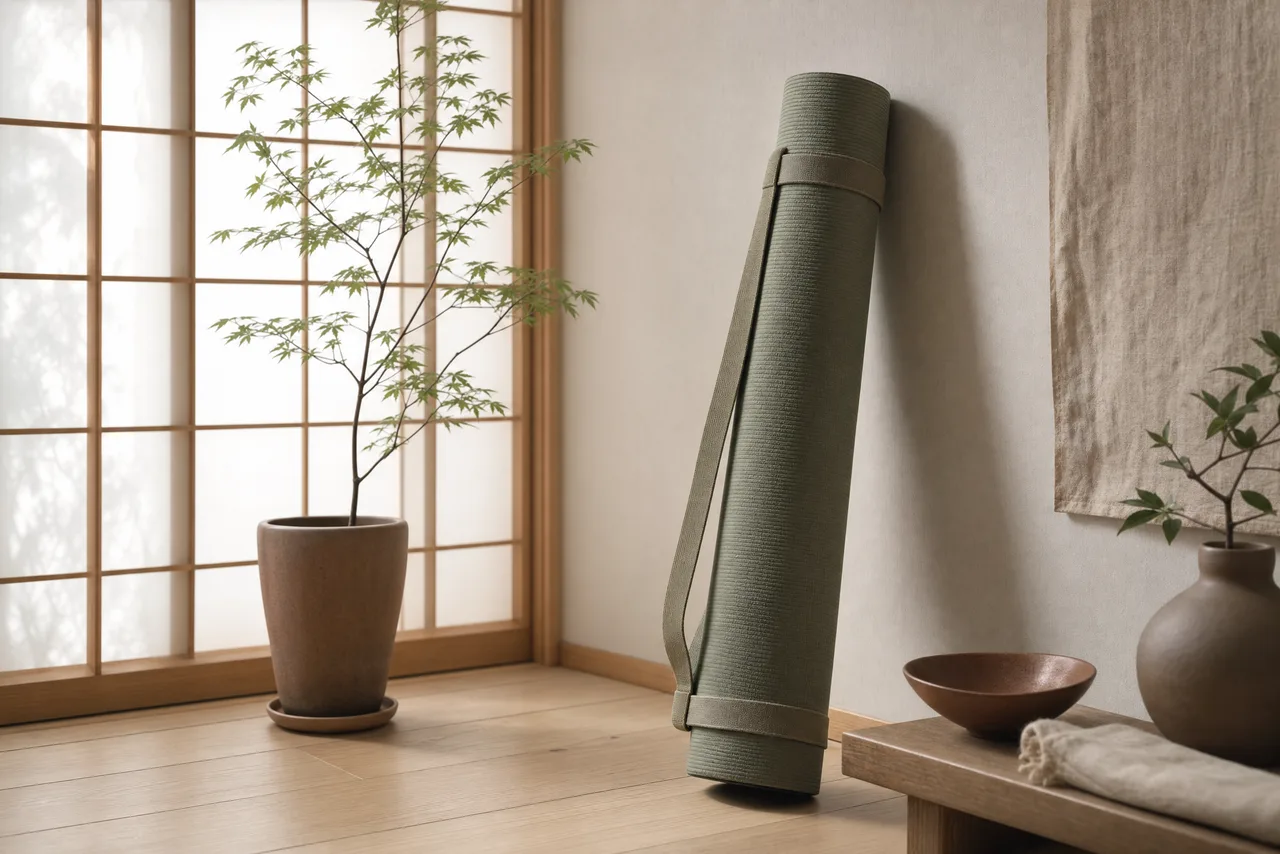
Clean the mat, let it dry fully, roll it loosely with the top surface inward, secure it with a strap, and store it upright or flat in a cool, dry, shaded spot with some airflow. Avoid three things: damp, direct sun and an airtight bag. That is the whole method.
Everything below is the reasoning, plus the small differences that depend on your mat's material and your space.
Clean and dry it first
Storage problems almost always start wet. Sweat, skin oils and a quick roll-up after class trap moisture inside the roll, and that is exactly what mildew needs. The smell that never quite leaves a mat is usually mould that started in storage, not on the studio floor.
So the first step happens before you roll anything. Wipe the mat down, then let it air-dry completely on both sides before it goes away. Damp control is not fussiness. The EPA's guidance on mould and moisture is blunt about it: keep things dry and ventilated, because trapped damp is what grows mould indoors. A rolled mat in a cupboard is a small, dark, badly ventilated space, so it dries on your terms or not at all.
For the actual cleaning routine by material, including what not to spray on rubber and cork, see how to clean a yoga mat. Storage is step two; cleaning is step one.
Roll it the right way
Roll most mats with the practice surface facing inward, starting from the bottom edge where your feet go and working toward the top. There are two reasons. The side you press your hands and face into stays protected, and a mat rolled this way tends to lie flatter when you unroll it instead of curling up at the corners.
Roll firmly enough that it holds its shape, but do not crank it tight. Crushing the cushion, especially on a softer mat, can leave a permanent flat band. Then secure the roll so it does not spring open in the cupboard.
That is all a strap is for. A Velcro mat strap, a simple carry sling or a wide elastic band each does the job. If your mat keeps unrolling itself, you need a strap, not a new mat.
Rolled, flat or hung
Rolling is the default and it is fine for the vast majority of mats. A few cases change the answer.
Store it flat if you have a thick or plush mat that creases when rolled, provided you have a clean, level spot where it will not get walked on. Thicker mats behave differently here, which is part of the wider trade-off covered in how thick should a yoga mat be.
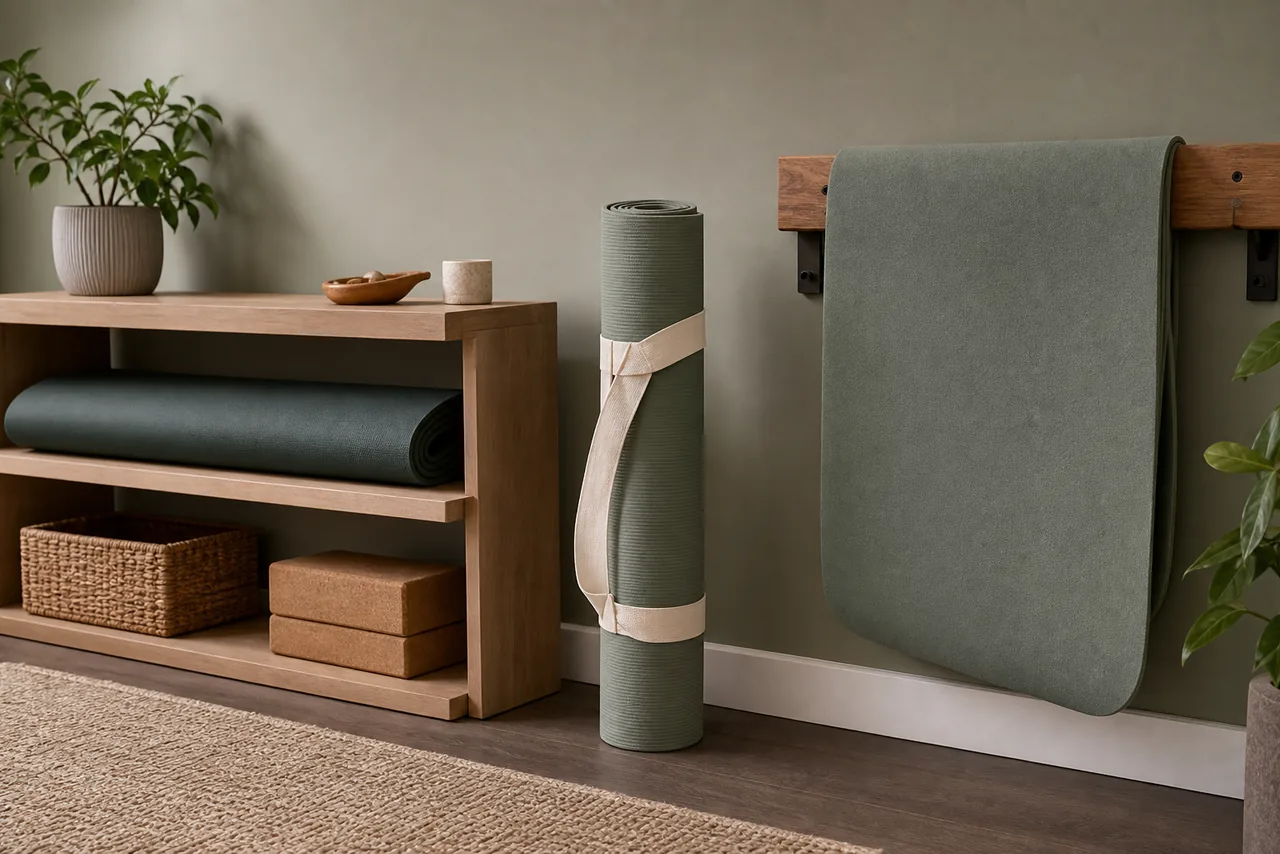
You can hang a mat over a rail or wall bar to save floor space, with one caveat: a heavy rubber mat left hanging on a thin hook for weeks can stretch or crease at the fold. Drape it over a wide rail rather than a narrow peg, and shift how it sits now and then. Hanging is a space solution, not a free upgrade.
Where to store it
Three conditions matter more than the exact spot: cool, dry and out of direct sun.
Heat and UV are hard on mat materials. A mat left in a sunny window or a hot car can fade, dry out and, in the case of natural rubber, crack. Manduka's own mat-care guidance points to the same thing: sun and heat speed up the oxidation that ages natural rubber. Brief air-drying in indirect light is fine; long-term storage in the sun is not.
Damp is the other enemy, which rules out the obvious convenient spot: the bathroom. A steamy bathroom is the worst place to keep a mat, even on a hook. A ventilated cupboard, a shelf, a corner of a bedroom or any spot with some airflow is better. Skip the genuinely airtight container, because a mat sealed with even a little moisture is a mat that will smell.
Do you need a bag or a rack?
Mostly, no. This is where storage turns into shopping, and you can opt out of most of it.
A strap is the one thing worth owning, and it is a few euros — it stops the roll springing open in the cupboard. A simple Velcro or sling strap like the Manduka Align does the job and lasts for years.
Check price on AmazonAfter that, accessories are about your space, not your mat's health:
- A breathable bag or carrier in mesh or cotton keeps off dust and pet hair, which is genuinely useful if your mat lives out in the open. A sealed plastic sleeve is not — it traps damp.
- A wall rack or mat rack is a tidy way to store one or several mats vertically and off the floor. It is a space and aesthetics choice. Your mat does not last longer because it sits on a nice rack.
If you have one mat, a clean shelf and a strap, you already have everything you need. Buy the rack because you want the corner to look tidy, not because a blog told you the mat requires it.
A quick note by material
Material changes how forgiving storage is.
Natural rubber is the most sensitive: keep it out of sun and heat, dry it properly, and give it air. It is also the material with the latex caveat, so if latex matters to you, that is worth knowing before you even buy — the eco-friendly yoga mat guide covers the material trade-offs in full.
Cork is low-drama in storage but dislikes being put away damp or stored somewhere humid. PVC and TPE are the most forgiving and tolerate imperfect storage better than rubber, though sun and damp still shorten their life. Whatever the surface, the same three rules hold: clean, dry, shaded.
Common storage mistakes
Most mat damage comes from a handful of avoidable habits:
- Rolling it up wet after class. The single fastest way to grow mildew and a permanent smell.
- Leaving it in a hot car or sunny window. Heat and UV fade and weaken the material, rubber worst of all.
- Sealing it in an airtight plastic bag. Trapped moisture has nowhere to go.
- Cranking the roll too tight. A crushed cushion can take a permanent flat band, especially on softer mats.
- Keeping it in the bathroom. Convenient, steamy, and the quickest route to mould.
So, the short version
Clean it, dry it fully, roll it practice-side in, strap it, and keep it cool, dry and out of the sun. The mat lasts, it does not smell, and you have not spent anything beyond a strap.
If you are still choosing a mat in the first place, start with how to choose a yoga mat. If yours already needs a refresh before it goes into storage, how to clean a yoga mat is the companion to this one.
Frequently asked questions
Should you store a yoga mat rolled or flat?
Rolled is fine for most mats and saves space. Store it flat only if you have a thick or memory-foam-style mat that creases easily, or if you have a clean flat spot where it won't get stepped on. What matters more than rolled-versus-flat is that the mat is clean, dry and out of direct sun.
Should the yoga mat be rolled with the top facing in or out?
Roll most mats with the practice surface facing inward, starting from the bottom edge where your feet go. This keeps the side you touch protected and helps the mat lie flat when you unroll it. Sticky and rubber mats especially behave better stored this way.
Is it bad to store a yoga mat in a bag?
A breathable bag made of mesh or cotton is fine and keeps off dust and pet hair. Avoid sealing a mat in an airtight plastic bag, especially if there is any moisture left, because trapped damp is how mats grow mildew and start to smell.
Can you hang a yoga mat to store it?
You can hang a mat over a rail or wall hook, and it is a good space-saver. The caveat is that a heavy rubber mat left hanging for a long time can stretch or crease at the fold. If you hang yours, drape it over a wide rail rather than a thin hook, and rotate how it sits now and then.
How do you stop a yoga mat from unrolling in storage?
Secure the roll with a Velcro strap, a carry sling, or even a wide elastic band. Roll it firmly but not so tight that you crush the cushion. A mat that springs open in a cupboard usually just needs a strap, not a new mat.
Does sunlight damage a yoga mat?
Prolonged direct sunlight can fade and weaken many mat materials over time, natural rubber especially, which can dry out and crack. Air-drying briefly in indirect light is fine. Long-term storage in a sunny window is not.