

This guide contains affiliate links — recommendations aren’t based on commission. Read our full disclosure.
How this page has changed
August 30, 2026
Sources, internal links and safety or product context reviewed.
August 16, 2026
First published.
In this guide
These two are the classic cross-shop. Both are the mat a teacher points at when you ask what to buy. Both cost about the same. And they are built from opposite materials, which is the whole story.
One is dense PVC that seals sweat out. The other is porous rubber that soaks sweat in. Everything below follows from that one difference.
A word on what this is. I have not practised on either mat. Every number here comes from OutdoorGearLab's tested group review, from Jade's and Manduka's own published pages, or from our editorial scoring in our Jade review and Manduka PRO review. Where sources disagree, I say so instead of picking the tidier answer.
The picks
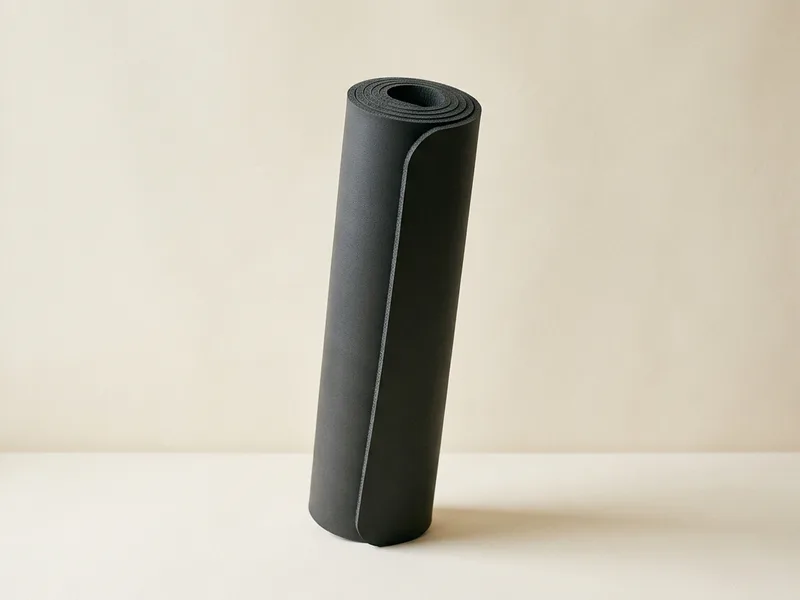
Best overall
The buy-once mat, if you accept a break-in period and never carry it far.
- Ranked first of nineteen mats by OutdoorGearLab, scoring 91
- Perfect 10.0 for both comfort and support and materials
- Lifetime guarantee that Manduka defines as about ten years
- Slippery when new — plan on a towel for the first weeks
Scores from OutdoorGearLab; guarantee terms from Manduka.
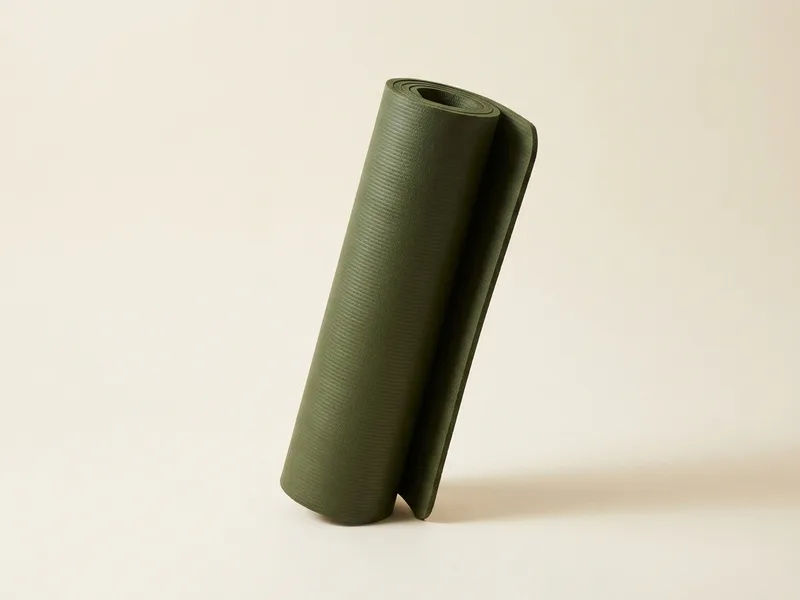
Best dry grip
The grippiest rubber tested, as long as your practice stays dry.
- Made in the USA, per Jade — the 2.0 is made in Spain
- Dry grip scored 9.5 on the 2.0, the highest in the test group
- Grips from the first roll-out, with no break-in
- Not for latex allergies, and not for heated rooms
This link goes to the original Harmony. The tested scores are OutdoorGearLab’s numbers for the Harmony 2.0; latex notice from Jade.
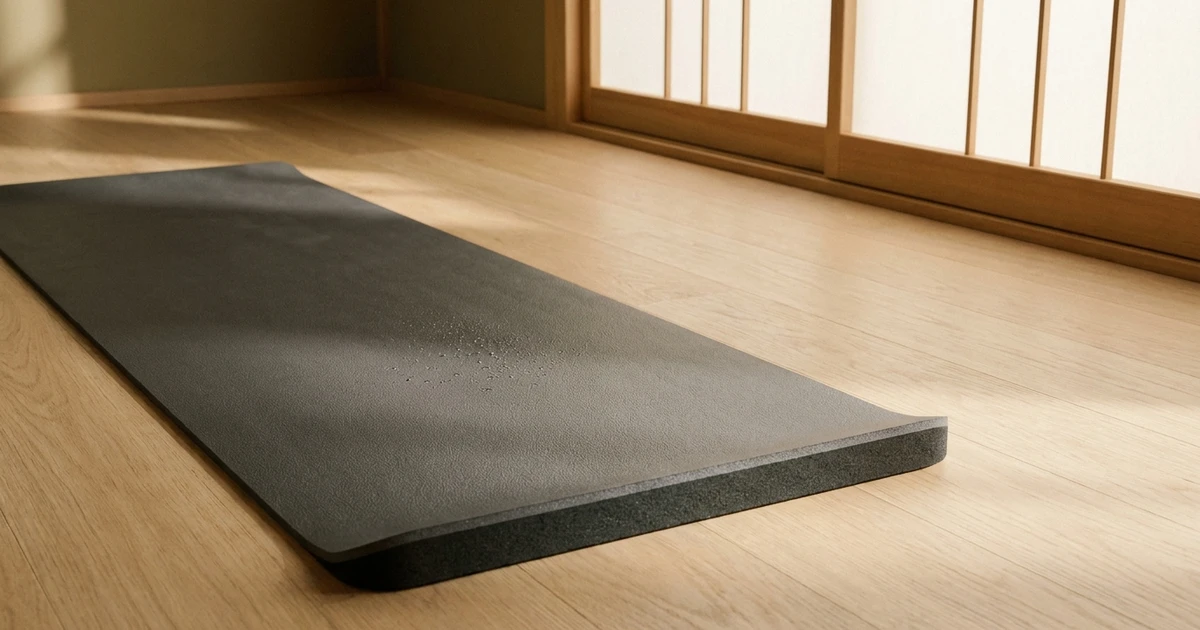
If you sweat
The escape hatch, if the section above described your practice.
- Absorbent top layer built to grip more as it gets damp
- The Manduka to buy when the PRO is the wrong tool
- Rubber and latex in the construction — check before buying
See our full Manduka GRP Adapt review for the detail.
Affiliate links — we may earn a commission. Prices and stock change too often to print here.
First, which Jade?
Jade currently sells two Harmony mats side by side, and most comparisons online do not separate them.
- The Jade Harmony, the original. Jade says it is made in the United States, under US environmental and labour rules.
- The Jade Harmony 2.0, the newer one. Jade says it is made in Spain, using natural rubber, FSC certified and made with renewable energy. Jade describes it as tougher and longer lasting with better grip than the original.
Both are 3/16 in thick, about 5 lb, 24 in wide, and sold in 68 in and 74 in lengths. The tested scores below are for the 2.0, because that is the one OutdoorGearLab put through its group test. Our own review covers the original. I flag which is which wherever it matters.
The short answer
Buy the Manduka PRO if you practise in one place and want one mat for the next ten years. Buy the Jade Harmony if grip is your only real problem, your practice is dry, and you want a renewable material.
If you sweat hard, buy neither. More on that below.
Still deciding on material first? Our mat buying guide starts further back.
What the testing actually found
OutdoorGearLab put nineteen mats through the same tests in 2026. The results split cleanly.
| Manduka PRO 6mm | Jade Harmony 2.0 | |
|---|---|---|
| Overall score | 91 — ranked first of nineteen | 78 — ranked fifth |
| Grip | 8.0 | 8.5 |
| Comfort and support | 10.0 | 7.5 |
| Materials | 10.0 | 7.0 |
| Care and cleaning | 8.0 | 8.0 |
| Measured weight | 7.5 lb | 5.2 lb |
| Thickness | 6 mm | 5.0 mm measured; Jade publishes 3/16 in |
| Dimensions | 71 × 26 in | 68 in long, 24 in wide (74 in also sold) |
| Material | PVC, closed surface | Natural rubber, open surface |
| Made in | Germany | Spain (2.0); the original Harmony is made in the USA |
| Latex | Latex-free | Contains natural rubber, may contain latex |
| Guarantee | Lifetime, defined as ~10 years | None published |
Note the shape of that table. The Jade wins one row. The Manduka wins most of the rest, and the two rows it wins by the widest margin — materials and comfort — are the two the Jade scores lowest on.
But the one row the Jade wins is the row most people are shopping for.
Grip: the row that decides it
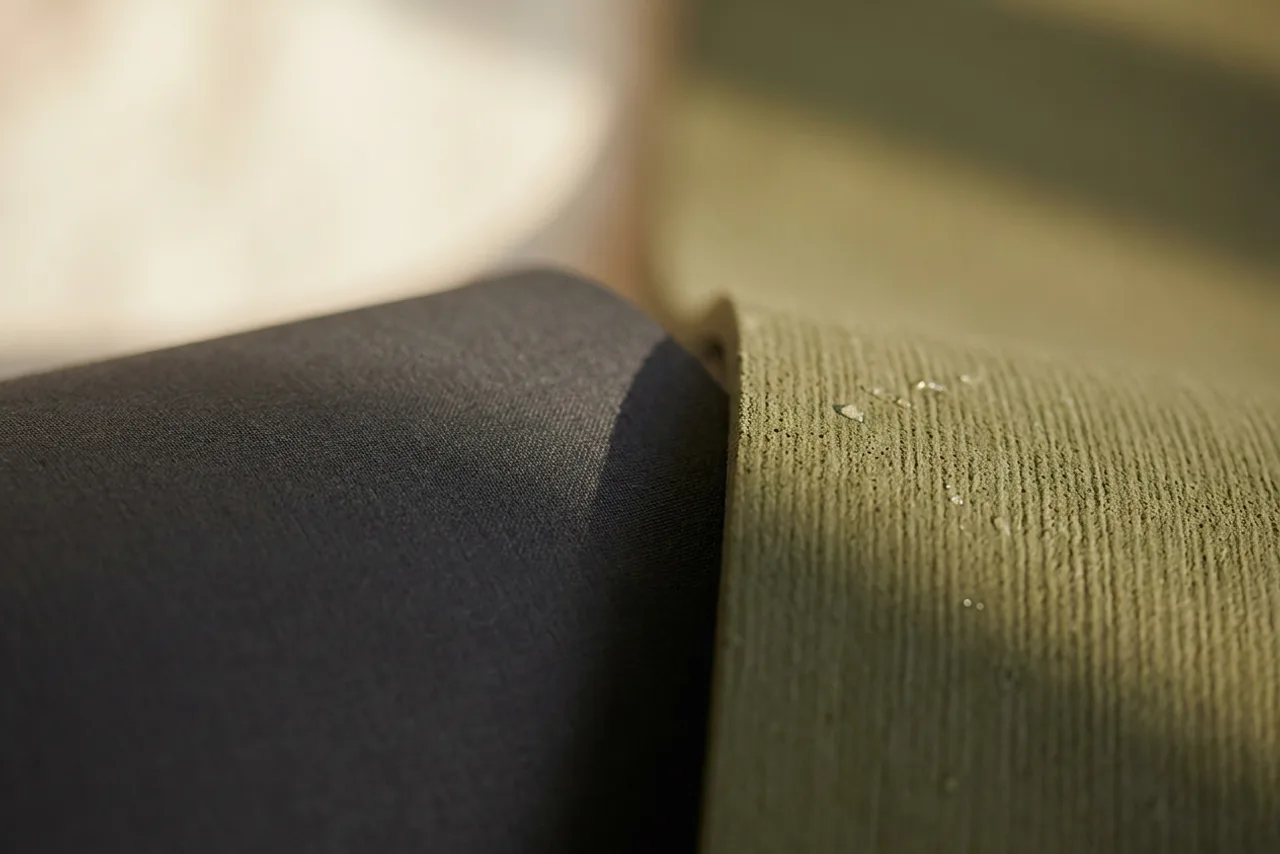
Jade's dry grip is one of the best numbers in the test. OutdoorGearLab scored it 9.5, half a point off the top — the Manduka eKO and the Prana Verde share that at 10.0 — and level with the Manduka GRP Adapt. Against the PRO's 9.0 it wins the dry-grip column outright, which is the comparison that matters on this page. Our own review lands in the same place, scoring its dry grip 4.8. It grips from the first roll-out. There is no break-in.
The Manduka is the opposite on day one. It is genuinely slippery when new. OutdoorGearLab found it improved with daily use, and Manduka's own guidance is that the slickness is simply how the closed surface behaves — so the salt-scrub trick people recommend does not do much. Plan for weeks of using a towel.
That is the trade the two mats are actually offering. Grip now, or grip that arrives later and then stays.
The sweat claim, and why I think it is backwards
Search for these two mats and you will read the same line everywhere: Jade is the sweat mat, because open-cell rubber absorbs moisture instead of letting it pool.
The tested numbers do not support that.
OutdoorGearLab scored the Jade's wet grip 7.0, well below its 9.5 dry. Then it ran a hot-yoga simulation with heat, humidity and sweat, and reported the surface turned noticeably slicker, with more slipping in poses under tension. Our own Jade review is harsher still, scoring wet grip 2.5.
The Manduka is not the answer either. The same testers describe it as more slippery when wet, with decent traction under light moisture only, and recommend a microfiber towel for sweat-heavy sessions.
So the honest reading is that neither of these is a hot-yoga mat. One gets slick because sweat sits on top of it. The other gets slick because sweat soaks into it. If your classes are heated, the open-cell versus closed-cell guide explains the mechanism, and the third mat in the picks above is the one built for it.
Durability, and the guarantee nobody reads
This is the Manduka's strongest row and it is not close.
OutdoorGearLab reported that after three years of intensive daily practice, its PRO showed virtually no signs of wear — no compression, no fraying, no curling edges. Manduka backs the PRO with a lifetime guarantee, which it defines as roughly ten years of regular use, and will replace a mat that wears out under normal conditions.
Read the exclusions before you count on it. Manduka covers the PRO, PROlite, PRO Travel, PRO Squared and both Long & Wide sizes, and allows one replacement per purchase. It does not cover printed graphics, Almost Perfect mats, mats marked irregular, mats bought from discount retailers, or mats used by a studio as in-studio equipment.
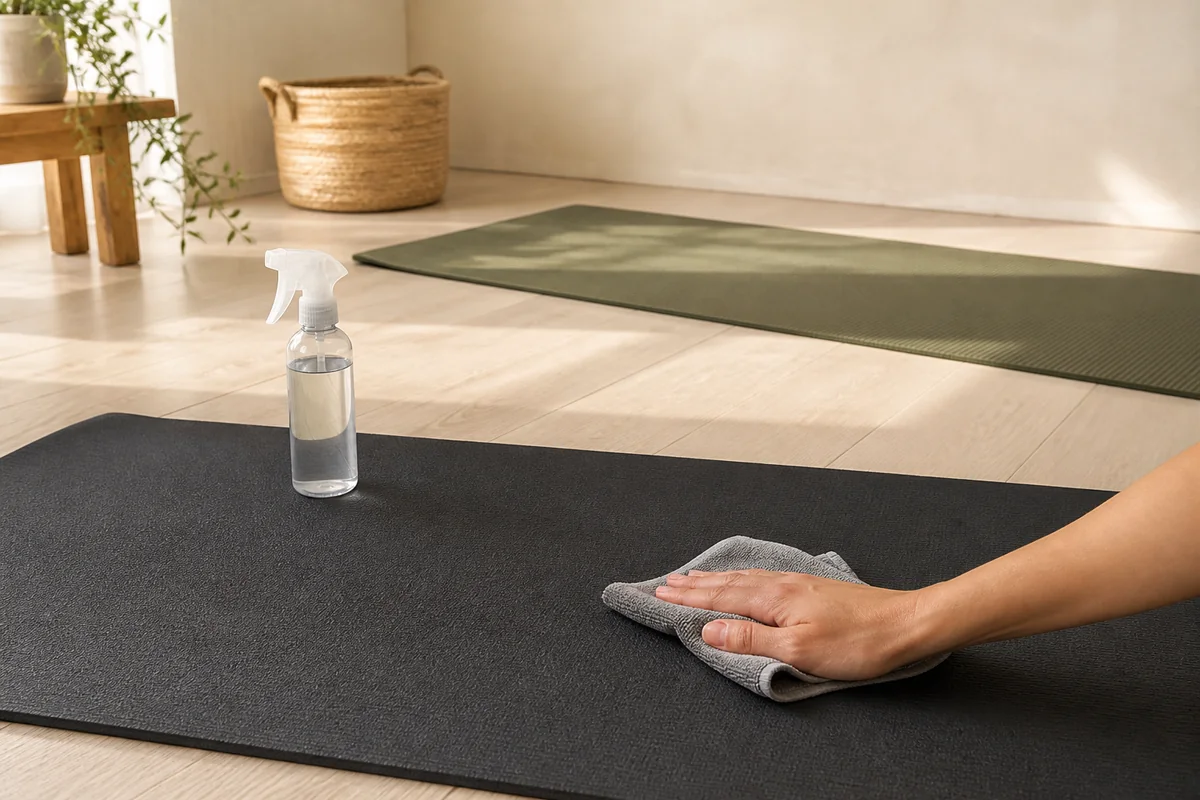
Cleaning is where most people would lose it. Manduka's terms exclude damage from washing machines, vacuums and garden hoses, and from submerging the mat or exposing it to excessive water. That matters if you were planning the soak method from our mat cleaning guide — on a PRO, use water or Manduka's own mat wash and nothing else.
Jade publishes no lifespan figure and no guarantee. Natural rubber is a renewable material that breaks down, which is the point of it and also the cost of it. Jade does say the rubber smell is normal and fades.
Where each one wins
Manduka PRO wins on
- Durability — three years of daily testing with virtually no wear
- A lifetime guarantee Manduka puts at about ten years
- Comfort and support, where it scored a perfect 10.0
- Being latex-free, which the Jade cannot claim
Jade Harmony wins on
- Dry grip — 9.5 against 8.0, the best in the test group
- Weight, at 5.2 lb against 7.5 lb, if you carry your mat
- Gripping from the first session with no break-in
- A renewable material, plus a tree planted per mat sold
Read those as each mat's case, not as good against bad. Both are strong mats built for different practices.
Who should buy neither
Three groups, and these caveats are important enough to repeat after the evidence.
- Anyone with a latex allergy should skip the Jade. Its own page says people with rubber or latex allergies should avoid contact with the mat. The Manduka is fine here.
- Anyone doing heated classes should skip both. Covered above — the tested wet numbers are mediocre on one and poor on the other.
- Anyone who carries a mat daily should think hard about the Manduka. At 7.5 lb it stays put beautifully and travels badly.
So which one?
If you already know you will still be practising in five years, and you practise at home, the PRO is the safer money. You are buying one mat instead of three, and the testing behind that claim is the strongest of anything here.
If grip is the specific thing that has been ruining your practice, and you are not sweating through your classes, the Jade fixes it on day one and the Manduka does not.
Two things to weigh before using that link. It goes to the original Harmony, the USA-made one, while the tested scores above are for the Spain-made 2.0 — Jade says the 2.0 is tougher with better grip, so treat those numbers as the ceiling rather than the promise. And Jade publishes no warranty or expected lifespan for either. You are buying a renewable material that will eventually break down, and that is the deal on both sides.
The full detail lives in our Manduka PRO review and our Jade Harmony review. If the Manduka is on your shortlist but the Jade is not, Manduka PRO versus Liforme is the other comparison worth reading.
Frequently asked questions
Is Jade or Manduka better?
It depends on whether you sweat. OutdoorGearLab ranked the Manduka PRO first of nineteen mats it tested and the Jade Harmony 2.0 fifth. The Jade beat it on grip, scoring 8.5 against 8.0. The Manduka won everywhere else, including a perfect comfort and support score. Pick the Jade for a dry, grip-led practice. Pick the Manduka if you want one mat for the next decade.
Are Jade yoga mats worth it?
For a dry practice, yes. OutdoorGearLab scored the Harmony 2.0 at 9.5 for dry grip — near the top of its nineteen-mat field, level with the Manduka GRP Adapt and behind only the Manduka eKO and Prana Verde at 10.0. Jade also plants a tree for every mat sold and says it has planted over two million so far. The catch is sweat: the same testers found the surface got noticeably slicker after a hot-yoga simulation, and its wet-grip score of 7.0 sits well below the GRP Adapt's 8.5.
Why is the Manduka yoga mat so expensive?
Three things Manduka publishes account for most of it. The PRO is made in Germany in what Manduka calls an emissions-free facility, the PRO series is certified STANDARD 100 by OEKO-TEX, and the mat carries a lifetime guarantee. Manduka defines that lifetime as roughly ten years of regular use, and will replace a PRO that wears out under normal conditions.
What is the highest rated yoga mat?
In OutdoorGearLab's 2026 group test of nineteen mats, the Manduka PRO placed first with an overall score of 91, earning a perfect 10 for both comfort and support and materials. That is one test by one outlet, not a permanent title. The same test put the Jade Harmony 2.0 fifth on 78.
Does either mat contain latex?
The Jade does. Its own product page says people with rubber or latex allergies should avoid contact with the mat, because it contains dry natural rubber and may contain latex. The Manduka PRO is PVC and latex-free. If latex is a problem for you, the PRO is the safe one of this pair.
What is the difference between the Jade Harmony and the Harmony 2.0?
Where they are made, mainly. Jade sells both, and says the original Harmony is made in the United States while the Harmony 2.0 is made in Spain with FSC-certified natural rubber and renewable energy. Jade describes the 2.0 as tougher and longer lasting with better grip. The published specs are otherwise the same: 3/16 in thick, about 5 lb, 24 in wide, in 68 in and 74 in lengths.
Which mat is easier to clean?
Both scored the same in OutdoorGearLab's care and cleaning test, at 8.0. The difference is what you are allowed to do. The PRO's closed surface keeps sweat on top, but Manduka's guarantee excludes damage from washing machines, vacuums and garden hoses, and from submerging the mat — so clean it with water or Manduka's mat wash only. The Jade has no guarantee to lose, but its textured surface holds moisture in the ridges.