

How this page has changed
July 26, 2026
Sources, internal links and safety or product context reviewed.
In this guide
- 01Men's yoga outfits at a glance
- 02The easiest first-class outfit
- 03Build the outfit from four functional layers
- 04Match clothes to the class, not the label
- 05A two-minute clothing check at home
- 06Fabric and construction without the marketing fog
- 07What not to wear
- 08A minimal men's yoga capsule
- 09Studio etiquette in plain language
- 10The verdict
- 11Frequently asked questions
For a first yoga class, a man can wear a clean T-shirt with stretch shorts or tapered joggers. You do not need a specialist outfit. The clothes only need to let you move, stay in place when you bend, offer the coverage you want and suit the temperature of the room.
That simple answer gets lost in activewear marketing. A logo cannot tell you whether a shirt will fall over your face in Downward Dog or whether a waistband will roll. This guide therefore starts with what you may already own, then shows when a different top, underlayer or bottom solves a real problem.
The advice is based on current clothing guidance from REI, Nike and official men's yoga collections, plus common buyer questions. It is not a claim that The Yoga Sensei wear-tested every garment.
Men's yoga outfits at a glance
| Setting | Simple outfit | Why it works | Check before class |
|---|---|---|---|
| First regular class | T-shirt + stretch shorts or tapered joggers | Familiar, inexpensive and versatile | Shirt stays down; waistband stays up |
| Hot yoga | Light technical top + lined shorts | Less fabric and easier moisture management | Studio shirt policy; liner coverage |
| Vinyasa or power | Close athletic top + lined shorts or light pants | Limits shifting during repeated transitions | Nothing pinches in a squat or lunge |
| Hatha or gentle yoga | T-shirt or long sleeve + soft tapered pants | More warmth, no need for minimal clothing | Cuffs cannot move beneath the feet |
| Restorative or Yin | Soft layer + relaxed pants with controlled hems | Comfortable during longer, quieter holds | Zips and drawcords do not create pressure |
| Home practice | Any clean clothes that pass the fit checks | No dress code or commute | Fabric is not slippery against your mat |
This is a starting framework, not a uniform. Room temperature, personal modesty, sensory comfort and studio rules all matter more than matching a particular look.
The easiest first-class outfit
Start with a top that sits reasonably close to the torso and bottoms you can squat in. REI's clothing guide emphasizes comfort, breathability and flexibility; its discussion of men's shorts also notes built-in liners as one route to coverage. Lululemon's men's yoga category similarly recommends a top close enough to avoid repeated adjustment. Neither point requires buying from those retailers.
A normal athletic T-shirt is usually enough. Raise both arms, lean forward and notice where the hem goes. If it slides over your face, tuck it in or use a closer cut. “Fitted” should mean controlled, not compressed: your ribs and shoulders still need to move without resistance.
For bottoms, choose stretch gym shorts, lined running shorts, tapered training pants or yoga pants. Empty the pockets before class. Phones, keys and wallets can swing, press into you or fall out. Our separate men's yoga pants guide compares long-bottom silhouettes and current product specifications; this page covers the whole outfit.
Build the outfit from four functional layers
1. A top that does not need management
The best top is the one you forget about. A crew-neck tee, sleeveless training top or light long sleeve can all work. Test three things: whether the neck gapes when you lean, whether the hem travels upward when your arms lift, and whether the shoulders restrict an overhead reach.
Cotton is comfortable in a calm, normal-temperature class, but it absorbs sweat and can become heavy. A synthetic or blended athletic top is often more practical when you expect substantial perspiration. “Moisture-wicking” is a manufacturer term rather than proof that every technical shirt dries equally fast, so treat the actual fabric weight and your comfort as more useful evidence.
2. Bottoms that move and stay covered
Men commonly practise in shorts, tights, joggers and relaxed pants. Each is legitimate:
- Lined stretch shorts are a simple warm-room choice because the inner layer adds coverage as the outer leg moves.
- Shorts over compression shorts give similar control and let you use pieces you already own.
- Tapered joggers balance coverage with a hem that stays near the ankle.
- Tights create the least loose fabric; wear them alone or under shorts according to your comfort.
- Relaxed pants suit slow sessions, provided the hems cannot slide toward the knee or under a foot.
The waistband should remain stable without being painfully tight. A drawcord can help, but large knots, metal tips and back zips may become uncomfortable when you lie down.
3. An underlayer chosen for coverage
Ordinary supportive underwear may be enough. When shorts have wide leg openings or a loose outer shell, a built-in liner or close under-short can reduce unintended exposure and fabric movement. Check the combination in bright light and from more than one angle; a fabric that looks opaque while standing may stretch differently in a deep bend.
This is not about policing bodies. Coverage is personal, and a studio contains people moving in many orientations. Choose a setup that lets you focus without repeatedly adjusting it.
4. A removable warm layer
Studios can feel cool before class and warm once movement begins. A light sweatshirt or overshirt is useful for arrival and final rest, but it need not stay on during practice. Avoid bulky hoods, hard zips or thick drawcords if you intend to lie on the garment.
Match clothes to the class, not the label
Regular studio yoga
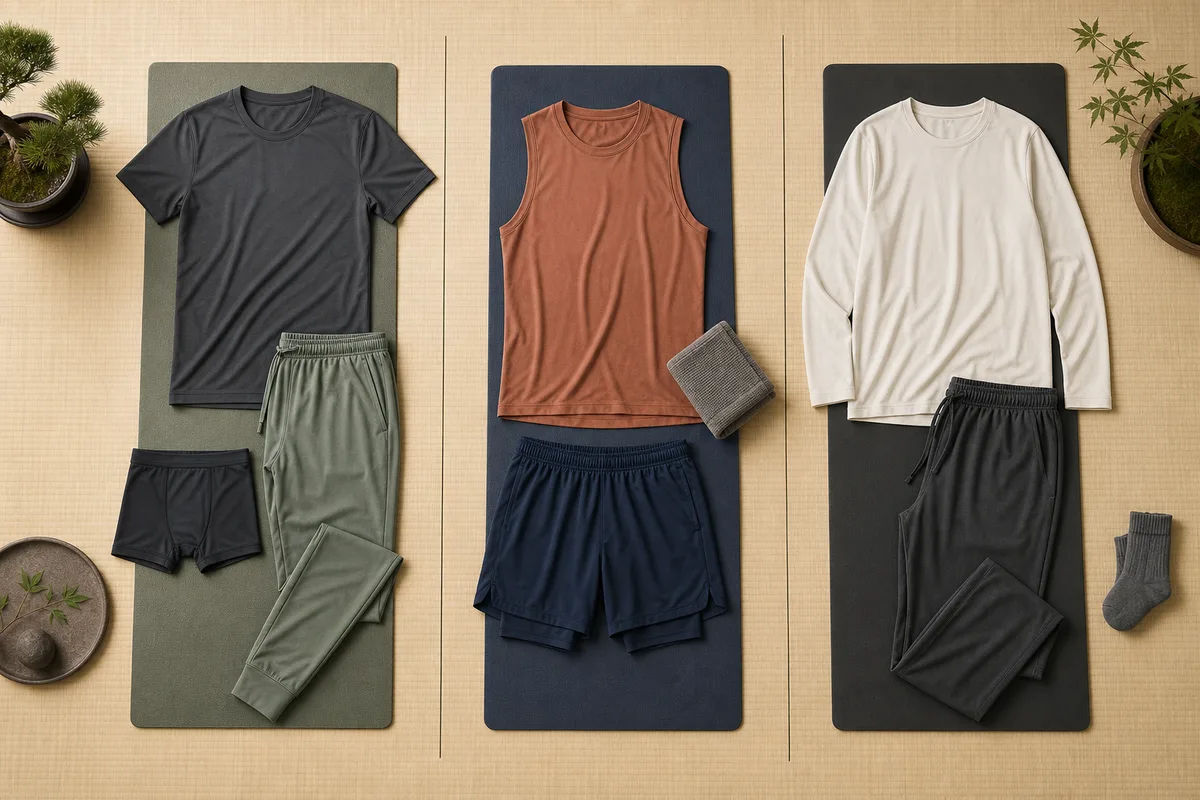
A T-shirt and tapered joggers or mid-length shorts is the safest neutral choice. You have enough coverage for an unfamiliar room without carrying excessive fabric. If the class description is vague, ask whether the room is heated; that fact affects clothing more than whether the session is called flow or Hatha.
Hot yoga
Use fewer, lighter layers: a quick-drying sleeveless top or tee and lined stretch shorts are conventional. Some men practise shirtless, but do not assume every studio permits it. Check the venue's published rules or ask before arriving.
Bring a change of clothing and consider a yoga mat towel. A towel addresses sweat on the practice surface; a premium shirt does not. Avoid heavy cotton if you dislike the feeling of wet fabric, and make sure your shorts remain secure when saturated.
Vinyasa and power yoga
Repeated transitions make shifting fabric more noticeable. A closer top, stable waistband and controlled hems reduce adjustment. That does not mean skin-tight clothing is mandatory. A well-cut tee and tapered pant can provide the same practical control.
Hatha, Yin and restorative classes
Slower does not always mean warmer. Longer pauses can make a light extra layer welcome. Soft joggers or relaxed pants work well when their cuffs stay clear of the feet. Read Hatha vs Vinyasa if you are choosing between a slower pose-by-pose class and a continuous flow.
A two-minute clothing check at home
Keep tags attached and follow the retailer's return conditions if anything is new. These are garment checks, not a yoga lesson; use a comfortable range and stop if a movement does not suit your body.
| Check | What to do comfortably | Pass signal | Common failure |
|---|---|---|---|
| Overhead | Raise both arms | Shoulders move; hem remains manageable | Shirt exposes or pulls across the back |
| Forward lean | Hinge slightly at the hips | Neck and hem stay controlled | Top falls over the face or gapes |
| Squat | Sit into an easy bodyweight squat | Waist stays up; knees and seat move freely | Rolling waistband, tight seams, transparency |
| High step | Place one foot on a low stable step | Crotch and thigh allow movement | Liner binds or shorts ride excessively |
| Floor rest | Lie on your back briefly | Hardware and pockets disappear from attention | Zip, knot or phone creates pressure |
Also walk around for a minute. Some fabrics swish, cling or create friction even when they stretch well. Comfort includes sound and feel, not just range of motion.
Fabric and construction without the marketing fog
Fiber content offers clues, not a final verdict. Elastane or spandex usually supports stretch and recovery. Polyester and nylon blends are common in light training clothing. Cotton feels familiar and soft but generally retains more moisture. Merino blends can manage temperature across conditions, though they require more careful laundering and are not essential.
| Priority | Look for | Be cautious about |
|---|---|---|
| Low distraction | Flat or smooth seams; controlled hem; simple waistband | Thick back zips, loose pocket contents, hard drawcord tips |
| Heavy sweat | Light fabric; secure liner; published care instructions | Heavy fleece, absorbent layers, vague “performance” claims |
| Coverage | Stable waistband; sufficient rise; opacity under stretch | Wide unlined shorts, pale fabric that changes when stretched |
| Warmth | Soft midweight knit; removable upper layer | Bulky clothing that cannot be removed easily |
| Longevity | Reinforced high-stress seams; appropriate wash care | Assuming a high price or yoga label proves durability |
Marketing language such as “four-way stretch,” “breathable” and “sweat-wicking” is not standardized into one cross-brand performance score. Use published material, garment measurements and care instructions to narrow options, then let the fit test decide.
What not to wear
There are few absolute rules, but some choices create avoidable distractions:
- Rigid jeans or non-stretch trousers restrict the hips and knees.
- Very loose tops can obscure vision or require constant adjustment.
- Wide trouser hems may move beneath a foot.
- Open pockets invite belongings onto the floor; leave valuables outside the practice area.
- Strong fragrance can affect people sharing a close indoor space.
- Outdoor shoes normally stay outside the practice area; follow the studio's signs.
Clean, comfortable gym clothing is more appropriate than an expensive outfit that needs constant management. If you are unsure about a dress code, the studio is the authoritative source.
A minimal men's yoga capsule
You can cover almost every class with five pieces: two tops, one lined short, one tapered pant and one light warm layer. Choose colors that can be washed together and repeat outfits without apology.
- One regular athletic tee for normal-temperature classes.
- One light sleeveless top or second tee for hot or vigorous sessions.
- One lined stretch short or a short-plus-underlayer combination.
- One tapered pant or jogger for coverage and cooler rooms.
- One simple removable layer for arrival, final rest and the trip home.
Do not buy the capsule in advance. Take your first class in existing clothes, identify the actual failure point, then replace only that part. Beginners can put the saved money toward a suitable first yoga mat—or spend nothing until the habit sticks.
Studio etiquette in plain language
Arrive in clean clothes, remove outdoor shoes where requested and keep belongings clear of other mats. Clothing should provide the degree of coverage you intend throughout movement. Beyond that, yoga studios vary widely: some welcome shirtless hot-yoga practice, some ask everyone to keep a top on, and specialist traditions may have their own expectations.
Check the booking page before your first visit. It may also tell you whether towels are supplied, how warm the room is and whether changing facilities are available. These practical details are more reliable than generic internet etiquette.
The verdict
The best default men's yoga outfit is a close but comfortable T-shirt with lined stretch shorts or tapered joggers. It can come from your current gym drawer. Test the shirt when your arms rise, test the bottoms in a comfortable squat, empty the pockets and add a light layer for cool rooms. If your mat also feels cramped, choose by actual dimensions in the best yoga mats for men comparison rather than buying a generic “men's” design.
Choose shorts and quick-drying fabric for heat; choose controlled-hem pants and a removable layer for slower or cooler practice. Yoga clothing succeeds when it stops demanding attention—not when it looks most specialized.
Frequently asked questions
What should a man wear to his first yoga class?
Wear a clean, breathable T-shirt or fitted athletic top with stretch shorts or tapered joggers. The top should stay near your torso when you bend, and the bottoms should allow a deep squat without slipping or becoming transparent. Ordinary gym clothes are fine.
Do men need special clothes for yoga?
No. Yoga-specific clothing is optional. Existing gym clothes work if they move freely, stay in place, provide the coverage you want and suit the room temperature. Buy something new only when your current clothing creates a specific distraction.
Should men wear shorts or pants for yoga?
Shorts are cooler for hot or vigorous classes, while tapered pants add warmth and coverage for regular, gentle or restorative sessions. Lined shorts or compression shorts underneath can provide extra coverage. Avoid wide hems that can move under a foot.
Can men wear a regular T-shirt to yoga?
Yes. Test it by raising your arms and leaning forward: if it falls over your face or exposes more than you want, tuck it in or choose a closer-fitting top. A regular cotton shirt may feel heavy in a very sweaty class, but it is adequate for a first normal-temperature session.
What should men wear to hot yoga?
Choose a light, quick-drying top or go shirtless only if the studio permits it, plus lined stretch shorts or shorts over a close underlayer. Bring a mat towel and a change of clothes. Check the studio policy before class because rules differ.
Frequently asked questions
What should a man wear to his first yoga class?
Wear a clean, breathable T-shirt or fitted athletic top with stretch shorts or tapered joggers. The top should stay near your torso when you bend, and the bottoms should allow a deep squat without slipping or becoming transparent. Ordinary gym clothes are fine.
Do men need special clothes for yoga?
No. Yoga-specific clothing is optional. Existing gym clothes work if they move freely, stay in place, provide the coverage you want and suit the room temperature. Buy something new only when your current clothing creates a specific distraction.
Should men wear shorts or pants for yoga?
Shorts are cooler for hot or vigorous classes, while tapered pants add warmth and coverage for regular, gentle or restorative sessions. Lined shorts or compression shorts underneath can provide extra coverage. Avoid wide hems that can move under a foot.
Can men wear a regular T-shirt to yoga?
Yes. Test it by raising your arms and leaning forward: if it falls over your face or exposes more than you want, tuck it in or choose a closer-fitting top. A regular cotton shirt may feel heavy in a very sweaty class, but it is adequate for a first normal-temperature session.
What should men wear to hot yoga?
Choose a light, quick-drying top or go shirtless only if the studio permits it, plus lined stretch shorts or shorts over a close underlayer. Bring a mat towel and a change of clothes. Check the studio policy before class because rules differ.