

This guide contains affiliate links — recommendations aren’t based on commission. Read our full disclosure.
How this page has changed
August 30, 2026
Sources, internal links and safety or product context reviewed.
August 27, 2026
First published.
In this guide
- 01The short answer
- 02Why the kerbside bin says no
- 03The six routes people will send you to
- 04Give it away before you try to recycle it
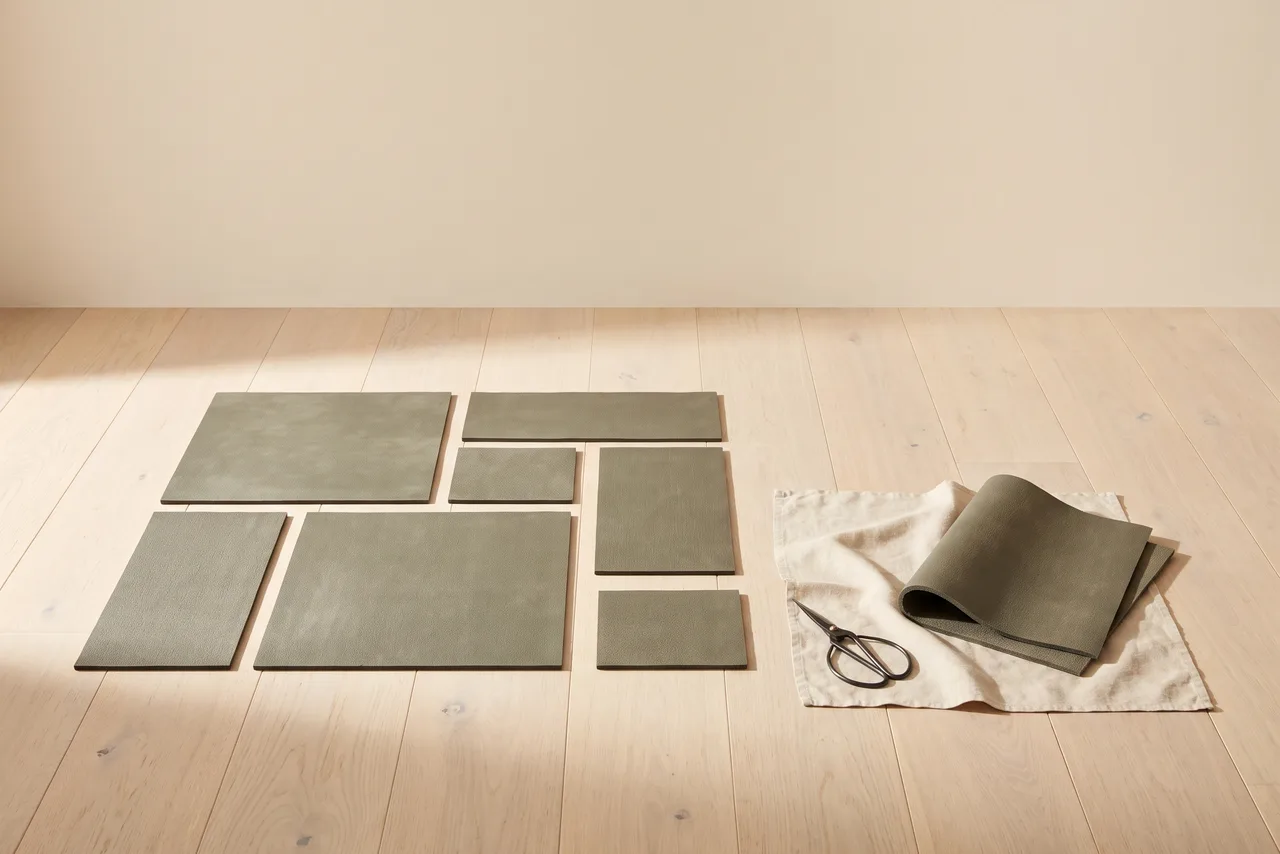
- 05Cut it up
- 06The part nobody selling mats wants to write
- 07The cheap thing that prevents the problem
- 08Four things that push the next replacement further out
- 09Buying the next one with the end in mind
Your old yoga mat cannot go in the kerbside bin, and most of the recycling programmes the search results point you at will not take it either. That is the honest starting position, and nobody ranking for this question says it out loud.
I went through every route the top results name and tried each one. Five of the six were closed, in the wrong country, or not free. Here is what is left.
The short answer
If your mat still grips and holds its shape, give it away. That is the only route that works everywhere, costs nothing and keeps the mat in use.
If it is genuinely finished — ripped, smooth, flaking — cut it up and use the pieces, then landfill what is left. A specialist recycler is worth chasing only if one operates where you live.
Why the kerbside bin says no
Three reasons, and they stack.
The material. Most mats are PVC, which Earth911 calls one of the most difficult plastics to recycle. Its advice is blunt: even if your local centre takes PVC, it may still refuse yoga mats, so phone first.
The shape. The EPA's recycling guidance says plastic bags, wraps and textiles do not belong in a kerbside bin. A yoga mat is a large flexible sheet with exactly that problem. Hugger Mugger puts the mechanism plainly: flexible sheets tangle in sorting machinery.
The sweat. The same source notes that a mat which has absorbed sweat and skin oils can contaminate the rest of the load. Yours has.
None of that changes if the mat is natural rubber. Hugger Mugger's point about landfill applies to the eco materials too: breaking down needs oxygen, moisture and microbes, and a sealed landfill supplies none of them quickly.
The six routes people will send you to
I checked each one on 27 August 2026.
Manduka via SuperCircle. It is over. On paper this was the best offer in the category: send any mat, any brand, any condition, with a prepaid label, and take a discount off your next Manduka order. That is how it was announced in November 2024, and Athletech News named the portal as manduka.supercircle.world.
Four checks, all pointing the same way. That address redirects to a Manduka blog post about sustainable design; so does manduka.com/pages/recycling, and neither page explains how to send a mat in. Manduka's own FAQ does not mention the programme. And SuperCircle's own site lists its partner brands — J.Crew, Reformation, Guess, Rothy's, Vans, Parachute, FIGS, Thousand Fell. Manduka is not among them.
Search results will still describe this programme in the present tense, because they are repeating the launch announcement rather than checking the page. It ran, and it stopped.
ContinuOM Collective. Real, and genuinely good: Second Flow collects mats from every manufacturer, cleans and donates the usable ones, and recycles the rest into industrial products rather than burning or burying them. It has taken more than 6,000 PVC and 1,800 rubber mats. The catch for most readers is geography — the collection trial runs in Germany, the Benelux, France and Austria.
LovEarth. Also real, also somewhere else. It is based on Sydney's northern beaches, takes all brands and all types with no quantity limit, and charges a service fee for the sorting and rehoming work. It says it has repurposed over 6,000 mats in a decade.
lululemon Like New. Does not apply. The trade-in programme's own help page excludes yoga props, and a mat is a prop. Clothing yes, mats no.
JadeYoga. There was a studio-collection programme years ago, and older articles still describe it. Jade's current FAQ has no take-back offer. Its answer to what to do with an old mat is a list of reuses and a pointer to freecycle.org, plus an email address.
TerraCycle. This one works, for money. The yoga-mat route is a purchased Zero Waste Box rather than a free sponsored programme, which Earth911 confirms and the search results reflect.
Give it away before you try to recycle it
Donation is the route with no fee, no postage and no country restriction, and it keeps the mat doing its actual job.
The condition rule matters. Hugger Mugger draws the line at clean and structurally sound, and says a mat that is pilling or flaking is past donating. Yoga Journal's version: ripped, worn, no longer grippy means recycle, not donate. Wash it properly first — our guide to cleaning a yoga mat covers what not to soak.
Who takes them, in rough order of success: local studios for spare class mats, community centres and schools, animal shelters for cage lining, and neighbours through a local giveaway group. Ask before you turn up with it.
Cut it up
For a mat that is finished, this is where nearly all of them actually end up, and it is not a consolation prize.
Liforme's repurposing page lists more than ten uses and, notably for a mat brand, tells you to take PVC to a facility that accepts it. JadeYoga's FAQ answers the same question with its own list. CorePower Yoga's suggestion is the simplest: promote the old mat to outdoor mat and stop worrying about it.
The ideas that keep recurring across all three:
- Non-slip liners cut to size for drawers, shelves and the bottom of a toolbox
- A kneeling pad for gardening, cut long enough to shuffle along a bed
- Grip pads under rug corners and furniture feet so they stop travelling
- Bedding for a crate, or a washable layer under a pet bowl
- An outdoor or camping mat you never have to keep clean
The part nobody selling mats wants to write
Recycling a yoga mat is mostly a story we tell ourselves. Of the six routes the top-ranking pages point a reader to, two have quietly ended, two only operate on other continents, one refuses mats outright, and the last one wants you to buy a box.
So the lever that actually moves anything is not disposal. It is not replacing the mat.
I own one mat — a Lululemon Reversible 5mm I have practised on almost daily since late 2024. At eighteen months the grip is unchanged and the damage is entirely cosmetic. Not because I looked after it especially well, but because sweat is what destroys the top surface, and most of mine landed on a towel.
Worth your time
- Donating a clean, structurally sound mat to a studio or shelter
- Cutting a finished mat into liners, kneeling pads and grip pads
- A specialist collector, if one runs a programme in your country
- Making the next mat last longer so this question comes round less often
Will waste your time
- The kerbside recycling bin — flexible sheets and sweat both disqualify it
- Brand take-back pages found through old articles; check the link still works
- Trade-in programmes, which generally exclude props
- Assuming a natural rubber mat will quietly break down in landfill
The cheap thing that prevents the problem
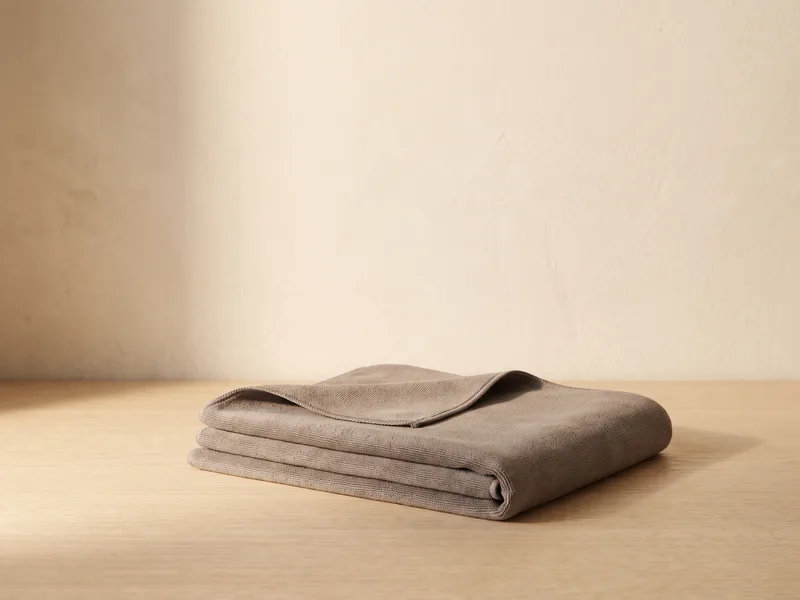
A grip towel sits between your hands and the mat and absorbs the sweat before the surface does. Then it goes in the wash, which the mat never can.
One caveat, because it matters: a towel needs some moisture before it grips. Manduka tells you to mist the nubbed side first, and a bone-dry towel on a bone-dry mat can feel worse than nothing. If your hands stay dry, skip it and save the money.
Four things that push the next replacement further out
None of these are exciting. All of them beat recycling, because the mat stays in use.
Highest leverage
Stops the sweat that wears out the top layer, and washes afterwards.
- Nubbed underside grips the mat instead of wandering
- Mat-sized, so it covers the whole practice surface
- The single cheapest way to delay a replacement
Manduka advises misting the nubbed side before practice — it needs moisture to work.
Keeps a mat donatable
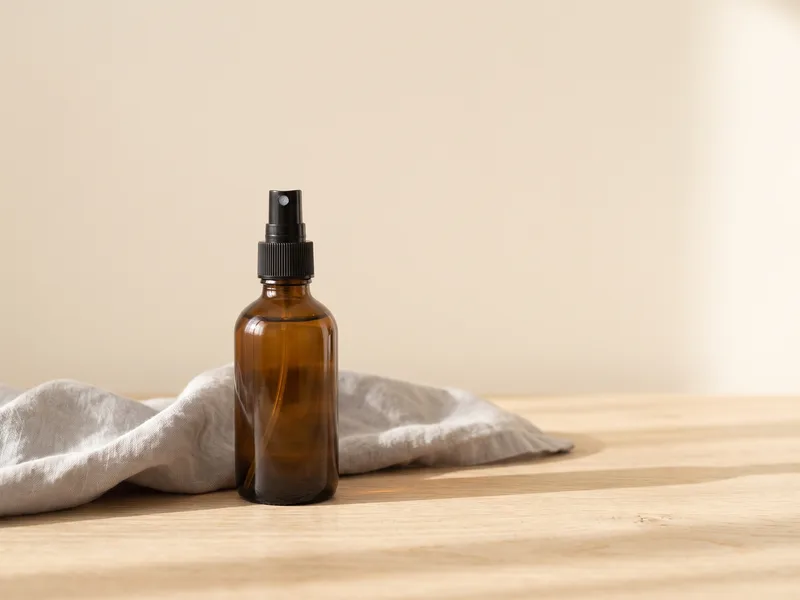
A wipe-down spray is what keeps a mat clean enough to pass on later instead of binning it.
- Spray and wipe, no soaking — submerging a mat is what ruins it
- A clean mat is a donatable mat; a stained one is not
Manduka's own guarantee terms exclude damage from submerging a mat, machine washing it, or using a different cleaning agent.
Natural rubber option
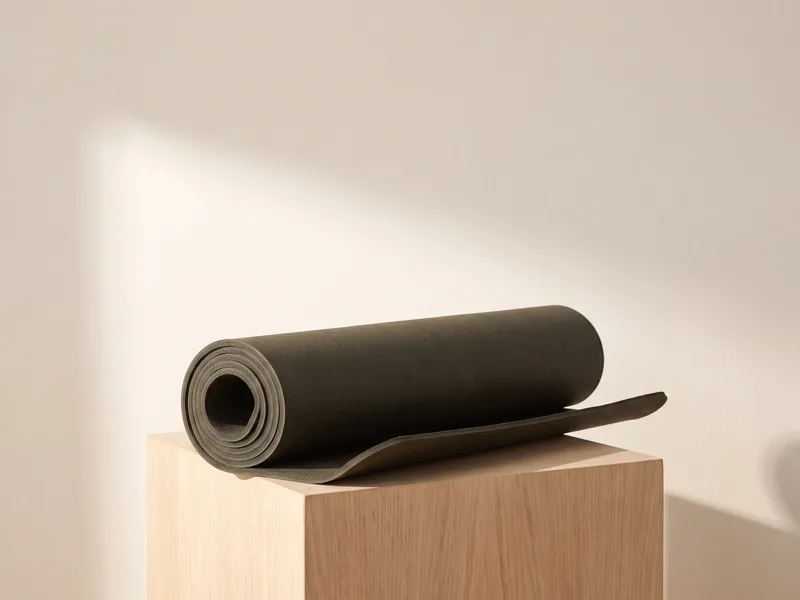
Natural rubber rather than PVC, which at least removes the hardest-to-recycle material from the equation.
- Open-cell rubber surface, grippy from the first session
- No take-back programme — Jade points owners at reuse instead
- Contains latex, so not for anyone with a latex allergy
Two versions share the name: the original Harmony is made in the USA, the Harmony 2.0 in Spain. The link here is the original.
The other rubber option
The rubber mat from the one brand that has at least tried to build an end-of-life route, whatever its current state.
- Natural rubber, no PVC in the core
- Heavier than most — a poor choice if you carry it to class
- Contains latex; Manduka flags this on its own pages
Affiliate links — we may earn a commission. Prices and stock change too often to print here.
Read those as four ways to postpone a purchase, not as a shopping list. If you already own a mat that grips, you need none of them except possibly the towel.
Buying the next one with the end in mind
Two things are worth weighing before you replace anything, and both are covered properly elsewhere on this site.
First, whether the mat is actually finished. Our guide to how long a yoga mat lasts sets out what genuine end-of-life looks like versus a mat that just looks tired.
Second, what "eco" means on a label. Most of it is marketing, and our eco-friendly yoga mat guide names the handful of brands where it is not. If disposal is the thing bothering you, that guide matters more than this one. And if you are starting from scratch, how to choose a yoga mat begins further back.
Frequently asked questions
Can yoga mats be recycled?
Technically yes, practically almost never through your council or municipality. Most mats are PVC, which Earth911 calls one of the hardest plastics to recycle, and the EPA's own recycling guidance says flexible plastics and textiles do not belong in a kerbside bin. Hugger Mugger adds two more reasons sorting plants reject them: flexible sheets tangle the machinery, and a mat that has soaked up sweat can contaminate other recyclables. Recycling a mat means finding a specialist programme, not a bin.
Should I throw away my yoga mat?
Only if it has stopped being safe to practise on. Yoga Journal's rule of thumb is that a mat which is ripped, worn smooth or no longer grippy is a recycling candidate rather than a donation. Hugger Mugger draws the donation line at clean and structurally sound, and says a mat that is pilling or flaking is too far gone to pass on. If yours still grips and holds its shape, keeping it is greener than replacing it.
How do you dispose of an old yoga mat?
In this order. Give it away first, to a studio, community centre, animal shelter or a neighbour, if it is clean and intact. If it is finished, look for a specialist collector: ContinuOM Collective's Second Flow initiative takes mats from any manufacturer, though its collection trial covers Germany, the Benelux, France and Austria rather than the US, and LovEarth runs a paid rehoming service in Australia. TerraCycle's route is a purchased Zero Waste Box. Landfill is the honest last resort, and Earth911 says so plainly.
What can I use an old yoga mat for?
Cut it up. Liforme's own repurposing page lists more than ten uses, including outdoor seat cushions and taking PVC to a facility that accepts it; JadeYoga's FAQ answers the same question with a list of reuses and points people at freecycle.org. CorePower Yoga suggests keeping the old mat as a dedicated outdoor mat. The recurring ideas are drawer and shelf liners, a gardening kneeling pad, grip pads under rugs and furniture feet, and pet bedding.
Does Home Depot recycle foam?
Not in the way this question usually means, and not for yoga mats. Home Depot's own Eco Actions recycling guide defines packing foam as expanded polystyrene packaging, moulded inserts and packing peanuts, notes that most kerbside programmes do not accept foam, and sends people to a locator such as Earth911 to find a drop-off. It does not describe an in-store foam take-back, and a yoga mat is not packing foam regardless.