

In this guide
The Lululemon yoga mat earns its reputation for one reason above all: grip. Reviewers who test mats for a living keep putting it at or near the top, and after about a year and a half on one myself, I understand why. But "the grippiest mat" and "the right mat for you" are not the same sentence, and this review is mostly about the gap between them.
This is a research-and-experience review, not a lab test. I practise on a 5mm Lululemon mat and draw on what testers like OutdoorGearLab and Live Science report from their own hands-on testing — attributed where it matters. No invented scorecard, no fixed price frozen in time.
By Marvin Smit · Long-time practitioner, not a certified instructor.
The short verdict
Buy it if you want one do-everything mat for a regular home or studio practice and you care more about grip and joint comfort than about carrying it around. Skip it if you commute with your mat, have a latex allergy, or want something that stays looking new — it is heavy, the polyurethane top stains, and the stickiness softens over a few years.
Everything below is the reasoning, including the parts the product page leaves out.
What you're actually buying
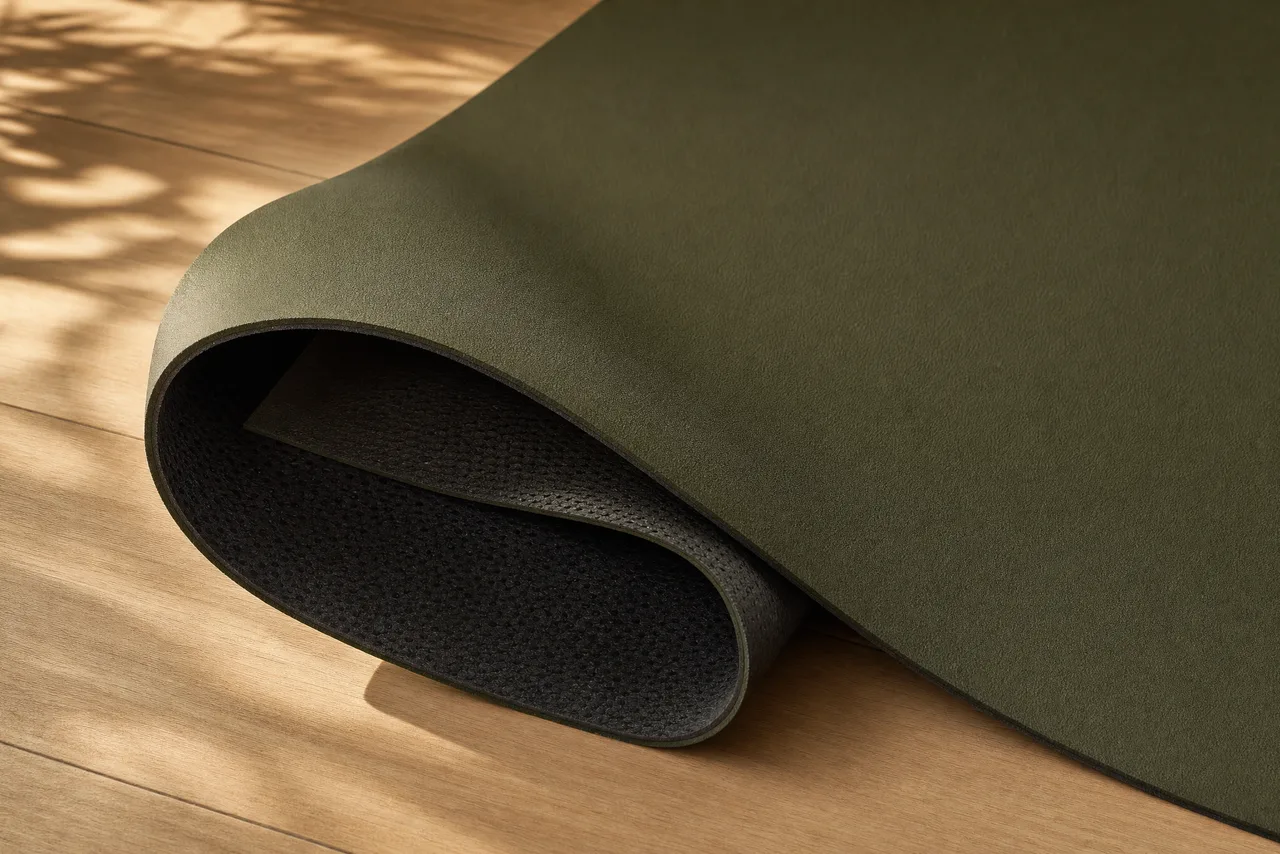
The mat most people mean by "the Lululemon yoga mat" is officially The Reversible Mat 5mm — the one most people just shorten to "The Mat." It is a natural rubber base bonded to a polyurethane top, with two usable faces. Here are the specs that actually matter, drawn from Lululemon's listings and independent testers.
| Spec | The Reversible Mat 5mm |
|---|---|
| Thickness | 5mm (a 3mm version exists) |
| Dimensions | 71″ × 26″ (longer/wider sizes exist) |
| Weight | ~5.2 lb on the spec sheet; OutdoorGearLab weighed it at just under 6 lb |
| Construction | Smooth polyurethane side + a textured natural-rubber side |
| Material | Natural rubber + polyurethane, plus synthetic rubber, polyester, nylon |
| Latex | Yes — natural rubber base contains latex |
| Lifespan | ~4–6 years of regular use, per independent testers |
The price moves around. It lists for roughly $78 to $98 depending on the colourway and version, so check the current figure on Lululemon's product page rather than trusting any number frozen into a review.
Grip: the reason it tops the lists
This is the mat's whole argument. OutdoorGearLab singles out its wet grip as one of the best in their lineup, and it is widely cited as a top overall pick, including by Wirecutter. Unlike some natural-rubber mats, it grips from the first roll-out — no salt-and-vinegar break-in week.
The reversible design is where people get confused. Lululemon markets the smooth polyurethane side as the sweat side, because it absorbs moisture rather than letting it pool. Some reviewers, though, prefer the textured rubber side for raw friction once they are really sweating. There is no single correct face — try both and keep whichever stays put for your practice and your floor.
My own experience lines up with the testers, with one honest limit: at about a year and a half of mixed hatha and vinyasa, the grip has stayed solid. But the most consistent long-term complaint in reviews is that the stickiness softens after a few years of regular use, and I have not had the mat long enough to confirm or deny that yet. If you do heated classes daily, plan on a towel eventually.
Cushion and feel
The 5mm rubber base is where the comfort comes from. OutdoorGearLab scored its comfort and support a perfect 10 out of 10 and called its mat-to-skin texture one of the best they tested — springy but still firm enough to balance on. In practice that means it is forgiving in kneeling poses and long holds without turning into a soft wobble pad in standing balances. For where 5mm sits in the wider thickness trade-off, see how thick a yoga mat should be.
The honest downsides
A mat this well-reviewed still has real costs, and they are not hidden in the marketing by accident.
- It is heavy. Around 5.2 lb on paper, and OutdoorGearLab weighed it at just under 6 lb. This is a mat that stays put, not one you want to carry across town daily.
- The top stains, and here is why. The same absorbent polyurethane that grips when you sweat soaks up body oil, sunscreen, makeup and dragged-toe marks — so they sink in rather than wipe off. Reviewers call the marks "nearly impossible" to remove, worst on light colours. The property that makes the grip is the property that causes the staining; that is the trade-off no spec sheet spells out.
- It smells of rubber out of the box. Most reviewers report it off-gasses within a few days. Air it out before first use.
- It is not a lifetime mat. Four to six years is the realistic span, and it is premium-priced for that. If you want buy-once-cry-once, this is not it.
Latex, and what it's really made of
If you have a latex or rubber allergy, this is a hard no. The natural-rubber base contains latex; no amount of liking the brand changes that. For a latex-free natural-feeling surface, a cork-topped mat on a synthetic base is the safer route — I compare the two in cork vs rubber.
It is also worth setting the eco expectation straight. The marketing leans on "natural rubber," but the published material breakdown is closer to natural rubber plus synthetic rubber, polyurethane, polyester and nylon. It is a rubber-based mat with a synthetic top — durable and high-performing, but not fully natural or fully recyclable. If sustainability is your main driver, read the eco-friendly yoga mat guide before defaulting to this one. (For what it is worth, my mat is dark green, which hides the staining that owners of pale and marble colours complain about — colour choice matters more here than on most mats.)
Care: how to keep the grip
The absorbent top is why care matters more than on a basic mat. Wipe it down after every practice and deep-clean it roughly monthly. The important "don't": skip vinegar, essential oils and harsh chemical cleaners — reviewers report those strip the grippy texture, and Lululemon's own guidance says the same. Air-dry it fully, out of direct sun, which degrades the rubber. Mine still cleans up well at a year and a half on a plain wipe-and-dry routine. The full method by material is in how to clean a yoga mat.
Who should buy it — and who shouldn't
Buy it if you practise mostly in one place, want a single mat that handles hot flow, inversions and long restorative holds, and you will use it for years. For a committed home or studio practice, the grip-and-cushion combination is genuinely hard to beat, and most testers think it justifies the price on that basis.
Don't buy it if any of these are you:
- You carry your mat to a studio or travel with it — it is too heavy; almost any lighter or foldable mat beats it on portability.
- You have a latex or rubber sensitivity.
- You want a mat that stays pristine — the top marks and stains, especially in light colours.
- You won't keep up with cleaning, or you practise outdoors in the sun.
- Sustainability is your primary reason for buying — the synthetic top undercuts the "natural" story.
How it compares
Against the other premium rubber mats, the Lululemon's edge is the moisture-absorbing top; its weaknesses — weight, staining, latex — are shared across the natural-rubber category. The Manduka eKO 5mm and Jade Harmony are the natural-rubber peers people cross-shop, with the same latex caveat and similar heft; both sit in the best yoga mats of 2026 shortlist. If latex is the dealbreaker, a cork-topped mat on a TPE base sidesteps it entirely — the trade-offs are in cork vs rubber. And if you are weighing materials rather than brands in the first place, start with how to choose a yoga mat.
FAQ
Is the Lululemon yoga mat worth it?
If you want one do-everything mat for a regular home or studio practice and you value grip and cushion over portability, most reviewers think it earns its premium price. It is not worth it if you carry your mat daily, have a latex allergy, or want a mat that stays looking new — it is heavy, it stains, and the grip softens over a few years.
What is the Lululemon yoga mat made of?
A natural rubber base with a polyurethane (PU) top layer, plus small amounts of synthetic rubber, polyester and nylon. The natural rubber means it contains latex. It is a rubber-based mat with a synthetic top — not a fully natural or fully recyclable product.
Which side of the Lululemon mat do you use?
It is reversible. Lululemon markets the smooth polyurethane side as the sweat side because it absorbs moisture, while some reviewers prefer the textured rubber side for raw friction when they sweat heavily. There is no single right answer — try both and keep whichever grips best for your practice and your floor.
How long does a Lululemon yoga mat last?
Independent testers report roughly four to six years of regular practice before the top starts to wear or peel. Daily intensive hot yoga shortens that; lighter, careful use extends it. It is a multi-year mat, not a lifetime one.
Why is the Lululemon yoga mat so expensive?
You are paying for the grip-and-cushion combination, the reversible build and the brand. Reviewers consistently rate its wet grip and 5mm comfort at the top of the category. Whether that justifies roughly $78 to $98 depends on how often you practise and for how many years.
Is the Lululemon mat good for hot yoga?
Yes — the moisture-absorbing polyurethane side is built for sweat and reviewers rate its wet grip among the best. The catch is that the absorbent top needs careful, regular cleaning, and the grip fades over years, so heavy daily hot-yoga users may want a towel and should expect to replace it sooner.