
This guide contains affiliate links — recommendations aren’t based on commission. Read our full disclosure.
How this page has changed
August 30, 2026
Sources, internal links and safety or product context reviewed.
In this guide
Nearly every yoga trapeze is sold on the same promise. The listing for the product that named the category puts it as "instant back pain relief via traction and spinal decompression".
That is worth pausing on before you spend anything, because the research on inversion is considerably less certain than the marketing.
What the evidence actually says
WebMD's review of inversion therapy reaches three conclusions, and only the first is good news for the seller. Some people do get short-term relief from low back or compressed-disc pain. Studies suggest it works no better than sham treatment. And it is probably not effective as a long-term treatment.
Short-term relief that does not beat a placebo is not nothing — plenty of comfort is placebo, and hanging genuinely feels good. But it is a different proposition from "instant back pain relief", and it should change what you expect for your money.
So here is the honest framing. Buy a trapeze because you want to hang, because supported backbends and shoulder opening appeal, and because inverting feels good to you. Do not buy it as a treatment.
What it actually is
A trapeze is not an aerial hammock, despite the shared vocabulary and the overlapping search results.
A hammock is one loop of fabric you sit in and lie back over. A trapeze is a shorter sling with handles at several heights and ankle straps, built around hanging upside down. The hammock is closer to a restorative prop; the trapeze is closer to an inversion tool.
They also hang differently, and this is the practical difference at purchase. The trapeze is designed to go on a chin-up bar, a beam or a solid branch — the brand's own listing says so, and says in the same breath that ceiling hooks are not included.
The rigging numbers do not mean what you think
The trapeze brand sells its own ceiling hooks, described as industrial strength and holding up to 600 lb. The aerial hooks we looked at on the hammock guide publish 330 lb — and that is the better number.
The difference is what the figure describes. A working load limit is what a fitting is rated to carry in use, with the safety factor already applied. Uplift Active states 330 lb at a 10:1 factor, which implies a far higher failure point. "Holds up to 600 lbs" does not say whether any factor is included, or against what standard it was measured.
The same applies to the swing itself: "tested for 600 lbs" is the seller's own claim and names no standard.
None of this means the equipment is unsafe. It means the numbers on the box are not comparable to each other, and that the anchor above the swing deserves more of your attention than the swing does. If you are putting anything into a ceiling, that is a structural job — the aerial hardware sellers say themselves that it needs a licensed contractor or a professional rigger.
The picks
The category original
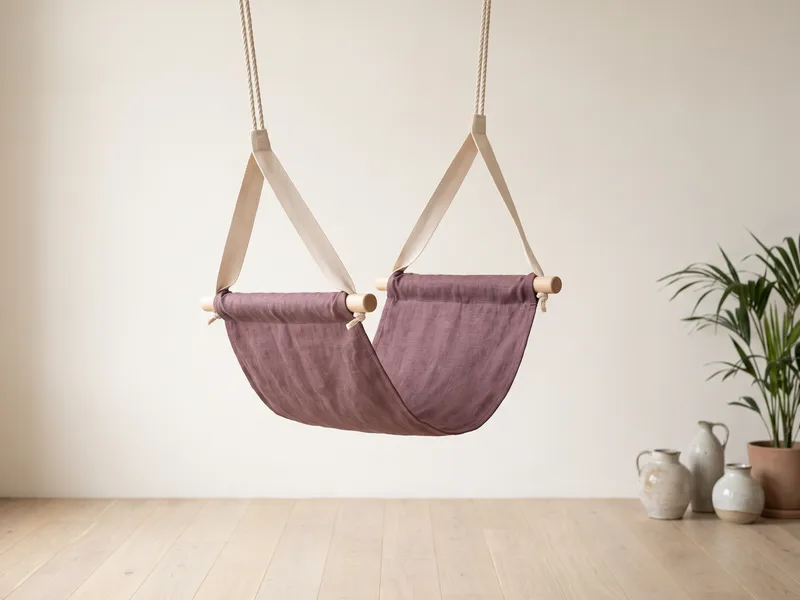
The product the search results belong to, and the one whose tutorials and pose chart come in the box.
- Handles at multiple heights plus ankle straps
- Designed for a chin-up bar, beam or branch
- Ceiling hooks sold separately, as the listing states
Includes a door mount
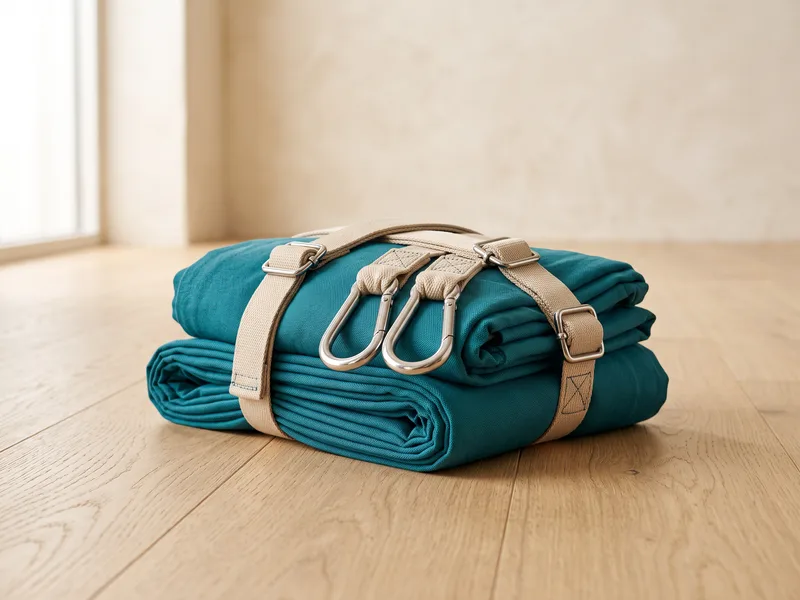
The one that ships with both ceiling and door mounts, which matters if you rent and cannot drill.
- Ceiling and door mounting hardware in the box
- Considerably cheaper than the brand original
- Read the door-mount limits before relying on one
The part not in the box
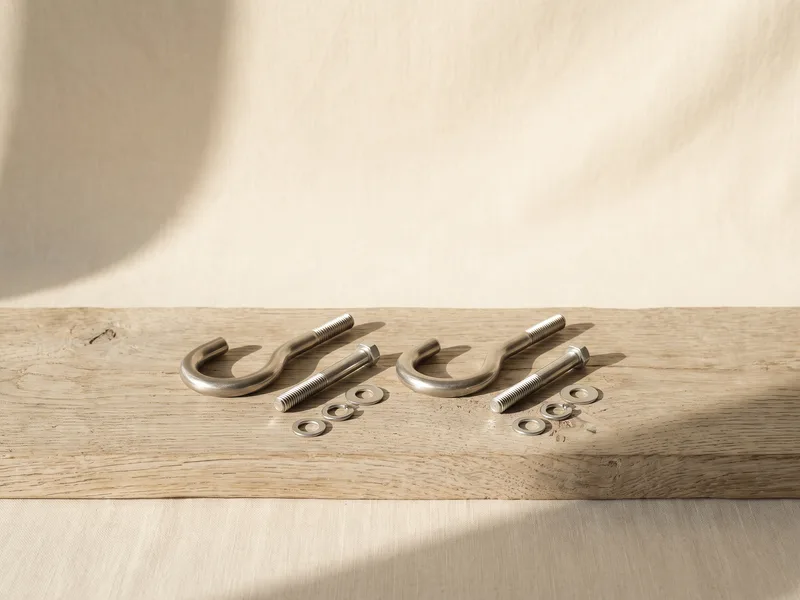
If you are mounting to a ceiling you need hardware, and this is the brand-matched set — fitted by someone qualified.
- Includes anchors and bolts
- Described as holding up to 600 lb, with no standard named
- Installation is a structural job, not a DIY afternoon
Affiliate links — we may earn a commission. Prices and stock change too often to print here.
The version that needs no ceiling
If you rent, or nobody has assessed your structure, the freestanding rig from our hammock guide solves this the same way it solves that one. It costs more than the swing and takes real floor space, and it removes the only genuinely dangerous part of the purchase.
Who should not buy one
This matters more here than on most gear pages, because inversion changes your physiology rather than just your comfort.
WebMD's page lists the conditions that should keep you off an inversion table: high blood pressure, glaucoma or other eye disease, heart disease, a history of stroke, hiatal hernia, inner-ear problems, pregnancy, and knee or hip arthritis. It notes that inverting slows the heartbeat, raises blood pressure and raises the pressure in your eyes, and it advises checking with a doctor first.
The eye finding is the one with the strongest evidence behind it. A systematic review of yoga and intraocular pressure found head-down postures raise eye pressure within a minute of assuming them, and its authors advise glaucoma patients against practising them at all.
We are not a medical source and will not tell you whether any of this applies to you. If one of them might, that is a conversation before a purchase.
Worth buying if
- You have a beam, chin-up bar or branch already, or room for a stand
- You want hanging, backbends and shoulder opening rather than a cure
- You will learn the entries with a teacher before practising alone
- You understand it is comfort equipment, not treatment
Skip it if
- You are buying it to fix a back problem — the evidence does not support that
- A doctor has flagged your eyes, blood pressure, heart or inner ear
- You would be drilling into a ceiling you cannot have assessed
- You want restorative fabric work, in which case buy a hammock instead
What we would do
If hanging appeals and you have somewhere sound to hang from, the original is the safe buy: it is the product the tutorials were written for. If you rent, the set with a door mount is the more realistic purchase.
And if what you actually want is to lie back in fabric rather than hang by your ankles, you want the aerial hammock, not this.
For the floor-level version of the same idea, the headstand bench gives you a supported inversion with nothing suspended at all, and our props guide covers what to buy before either.
Frequently asked questions
What are the benefits of trapeze yoga?
The sellers claim spinal traction and back-pain relief. The evidence is weaker than that: WebMD's review of inversion therapy reports that some people get short-term relief from low back or compressed-disc pain, that studies suggest it works no better than sham treatment, and that it is probably not effective as a long-term treatment. What a trapeze reliably does is let you hang, support backbends and shoulder opening, and hold positions your floor practice cannot.
How is a yoga trapeze different from an aerial hammock?
A hammock is one loop of fabric you sit and lie in. A trapeze has handles at several heights plus ankle straps, and is built around hanging inverted rather than around the fabric. They also hang differently: a trapeze is designed to go on a chin-up bar, beam or branch, while a hammock usually wants a dedicated ceiling point. If you want supported restorative shapes, read our aerial hammock guide instead.
Who should not use a yoga trapeze?
Inversion is not neutral. WebMD lists high blood pressure, glaucoma or other eye disease, heart disease, a history of stroke, hiatal hernia, inner-ear problems, pregnancy, and knee or hip arthritis as reasons to avoid inversion tables, and advises checking with a doctor first. On the eyes specifically, a systematic review of yoga and intraocular pressure found head-down postures raise eye pressure within a minute and advises glaucoma patients against them. Ask a doctor before you buy, not after.
What do you hang a yoga trapeze from?
A chin-up bar, a structural beam, or a solid branch, according to the brand's own listing — and it says plainly that ceiling hooks are not included. If you are mounting into a ceiling instead, that is a structural job: aerial hardware sellers state that installation must be done by a licensed contractor or professional rigger. A freestanding stand avoids the question.
Is a '600 lb' rating better than a '330 lb' one?
Not necessarily, because they are different kinds of number. A working load limit is the weight a fitting is rated to carry in use, with a safety factor already applied — Uplift Active publishes 330 lb at a 10:1 factor for its aerial hooks. 'Holds up to 600 lbs', which is how the trapeze hooks are described, does not say whether a safety factor is included or what standard was used. Compare like with like, and when a listing does not say, assume it is the less conservative figure.