

How this page has changed
July 26, 2026
Sources, internal links and safety or product context reviewed.
Cleaning a Lululemon yoga mat is simpler than most guides make it: a damp cloth after practice, a single drop of mild soap in warm water when it needs more, wipe the soap off, and let it air-dry completely out of the sun. That is the whole routine. Lululemon's own care instructions are three lines long — wipe clean with a damp cloth, ensure the mat is dry before rolling, store out of direct sunlight.
The reason this page exists anyway: the popular cleaning advice that circulates for yoga mats in general — vinegar sprays, disinfectant wipes, bathtub soaks, salt scrubs — is quietly wrong for this specific mat, and some of it will shorten its life.
I have practised on a dark green Reversible Mat 5mm nearly daily since late 2024, so this is the routine I actually use, not a theory. For how the mat performs, read the full Lululemon Reversible Mat review.
By Marvin Smit · Long-time practitioner, not a certified instructor.
Why this mat needs gentler care than most
The Reversible Mat is a smooth polyurethane top layer bonded to a natural rubber base. Both halves of that sandwich dislike harsh treatment, each for its own reason.
The polyurethane top is what grips your palms, and it is sensitive to strong cleaners. Harsh chemicals dull it, and residue from soaps and sprays builds into exactly the slippery film you were trying to clean off.
The natural rubber base is the bigger constraint. Rubber ages with acid, harsh solvents, heat, UV light and prolonged soaking. Some rubber mats tolerate an occasional diluted vinegar wipe; on this one, the combination of a sensitive polyurethane top and a rubber base earns the stricter rules below. Lululemon's care label also notes the mat inhibits bacteria and mould on its own — you are cleaning off sweat and oil, not running a sterilisation programme.
The routine, step by step
- Shake off loose debris. Lay the mat flat and brush off hair, dust and grit first — wiping a gritty mat grinds the grit into the polyurethane.
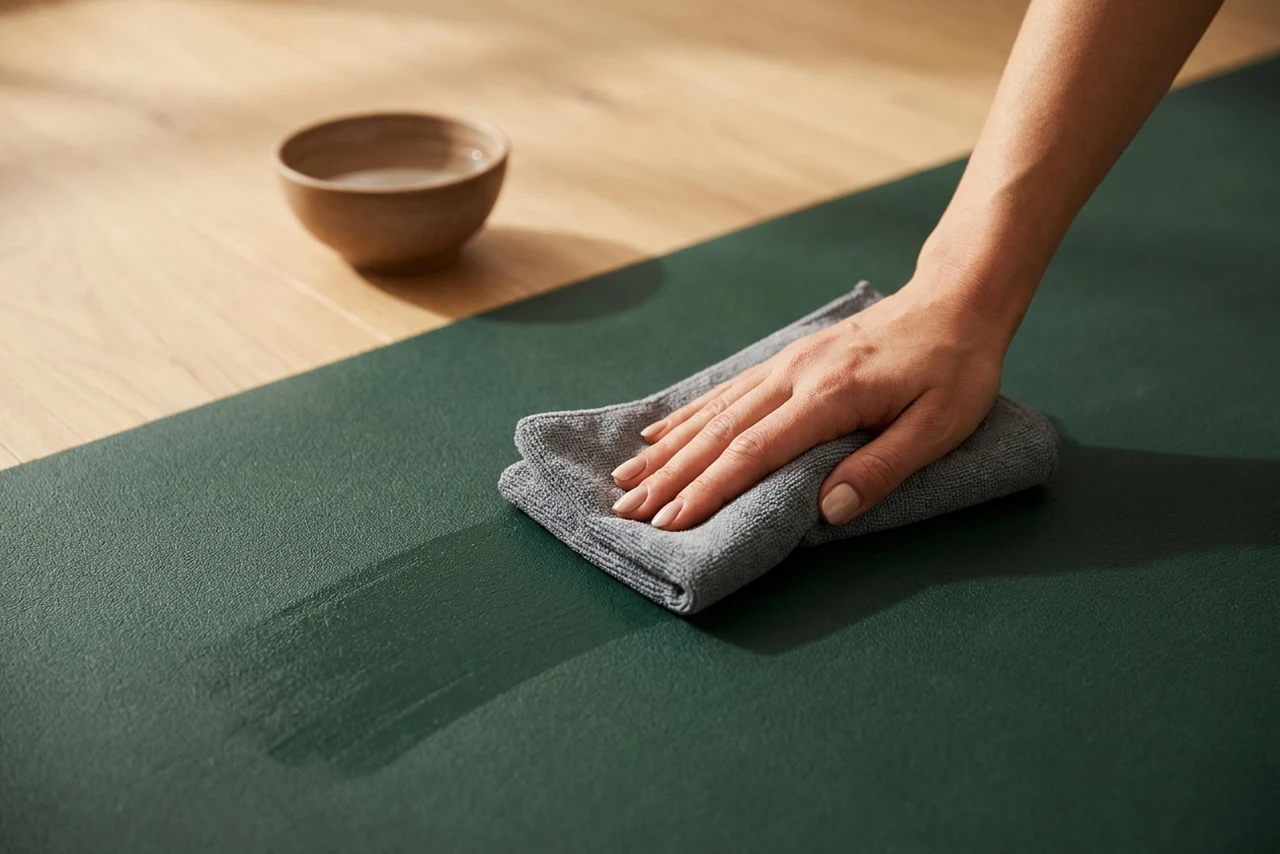
- Wipe with a damp cloth after practice. A microfiber cloth wrung out in plain water, in slow passes over the zones your hands and feet use. On my dark green mat every sweat mark shows, which makes this step easy to aim — and it alone keeps the mat clean for weeks.
- Deep clean with one drop of mild soap. When water stops being enough: a single drop of mild soap — Castile is ideal — in two cups of warm water. Dip the cloth, wring it out properly, wipe both sides. Never pour anything directly onto the mat.
- Wipe off the soap residue. The step most people skip: go over both sides again with a clean, water-only cloth. Soap film is why freshly "cleaned" mats often feel slicker than before.
- Press out moisture with a dry towel. Lay the mat on a dry towel and press, or roll the two together loosely for a minute — it shortens drying without heat.
- Air-dry fully, out of the sun. Hang the mat over a shower rod or chair back, away from sunlight and radiators — the same drying rule REI's mat-care guide gives for every mat. Roll it up only when both sides are bone dry; trapped moisture is how a mat turns musty, and a musty rubber mat rarely comes back.
What should never touch this mat
Each of these shows up in general mat-cleaning advice, and each is wrong here:
- Vinegar spray. Our own general mat-cleaning guide includes a vinegar-and-water recipe, and diluted and occasional it is fine on some mats. We keep it off this one: between the sensitive polyurethane top and the rubber base, acid is a risk this mat does not need.
- Disinfectant wipes, Clorox included. Their actives — quats in Clorox's case, bleach or alcohol in others — degrade both the polyurethane top and the rubber base, and leave residue your skin sits in during practice.
- The bathtub and the washing machine. Rubber and prolonged soaking do not mix, and machine agitation is worse. This is a wipe-clean mat, full stop.
- The salt scrub. That was old break-in advice for dense closed-cell PVC mats — and Manduka has since retired it even there. On a polyurethane surface it is simply abrasion.
- Sun-drying. UV is the fastest way to age the rubber base. Shade, airflow, patience.
- Essential oils. Reviewers and Lululemon's own guidance agree that oils strip the grippy texture — skip them on this mat, including the popular tea-tree mix.
If you sweat heavily every session, the cheaper long-term move is keeping sweat off the mat in the first place — a grip towel over the top means fewer deep cleans for the mat itself.
When cleaning is not the answer
Two honest limits. First, if the surface has gone slick and stays slick after a proper soap clean and full dry, the polyurethane may simply be worn — natural rubber mats are consumables. Independent testers put this one at a realistic four to six years of regular practice, less under heavy sweat, and once the top wears through it is done. Second, if the mat smells musty from the inside rather than the surface, that is trapped moisture damage, and no surface cleaner reaches it. In both cases the fix is a replacement, not a better spray — our Lululemon review and the buying guide cover what to look at next.
Nothing on this page needs buying, which is the point: the correct care routine for this mat is water, a cloth and an occasional drop of mild soap you already own.
Related reading
- Lululemon Reversible Mat 5mm review — the mat this page cares for, after a year and a half of daily use
- How to clean a yoga mat — the general guide, including materials where vinegar is fine
- How to store a yoga mat — the other half of making a mat last
- Best non-slip yoga mat — where the Reversible Mat sits among the grippiest options
Frequently asked questions
What is the best way to clean my Lululemon yoga mat?
A damp microfiber cloth with plain water after practice, and an occasional deeper clean with a drop of mild soap in warm water, wiped off afterwards. The damp-cloth wipe is Lululemon's own care instruction — wipe clean with a damp cloth, ensure the mat is dry before rolling, store out of direct sunlight. The mild-soap step is the widely shared extension for when water alone stops working.
Can I use Clorox wipes on my Lululemon yoga mat?
No. Standard Clorox wipes are quaternary-ammonium ('quat') disinfectant wipes, and quats degrade natural rubber and polyurethane over time — other disinfecting wipes lean on bleach or alcohol, which are no kinder to rubber. They also leave a residue you then practise on. A mild soap wipe followed by a plain-water wipe removes the sweat and oil that wipes are usually reached for — though no mat-safe cleaner disinfects in a medical sense.
How do I make my Lululemon yoga mat sticky again?
Usually the grip is hiding under a film of sweat, body oil and cleaner residue — a gentle clean with a drop of mild soap in warm water, wiped off with plain water, brings it back. Do not reach for the old salt-scrub trick: that was break-in advice for dense PVC mats, Manduka has since retired it even there, and on a polyurethane top it is just abrasion. If the surface is visibly worn or flaking after years of use, no cleaner will restore it.
How to revive a Lululemon yoga mat?
Start with the deep clean: soap wipe, rinse wipe, full air-dry. That fixes most slickness and smell. What it cannot fix is age — natural rubber slowly breaks down with use, and once the top layer wears through or starts flaking, the mat is at the end of its life rather than dirty.
How long should a Lululemon yoga mat last?
Independent testers put the Reversible Mat at a realistic four to six years of regular practice — the figure our full review uses. Heavy, sweaty daily use wears any natural rubber mat faster than that. Mine has been in near-daily use since late 2024 and is still going — gentle cleaning and keeping it out of the sun are most of the battle.