
This guide contains affiliate links — recommendations aren’t based on commission. Read our full disclosure.
How this page has changed
August 31, 2026
Sources, internal links and safety or product context reviewed.
In this guide
Search for a Pilates ball and Google will hand you a sizing rule within about two seconds. Under 5ft 4in, take the 55cm. Up to 5ft 11in, the 65cm. Taller than that, the 75cm.
That rule is correct. It is also for a completely different product.
Every ball on this page is between 7 and 9 inches across. The chart describes the large stability ball you sit on, which is roughly three times the diameter. Nothing about your height decides which small ball you want.
The size question, answered properly
The small ball is picked by where it goes, not by how tall you are.
Complete Pilates, a UK clinic, publishes both rules on one page and keeps them apart. The 55/65/75cm chart is scoped to the stability ball. For the small ball — they call it an over ball — the recommendation is 7 inches.
Here is the practical version, using the diameters these four brands actually state:
| Diameter | Where it works | Example |
|---|---|---|
| 7.5 in | Between knees or ankles, where a bigger ball slips out | Trideer |
| 8 in | A middle size, comfortable in the hands | Bala |
| 9 in | Under the low back, between the palms, the clinic default | THERABAND, ProBody |
Two inches sounds like nothing. On a ball you hold between your knees it is the difference between a squeeze you can hold and one that keeps escaping.
Firmness is a setting, not a spec
This is the part the listings bury, and it is the single most useful thing to know before you buy.
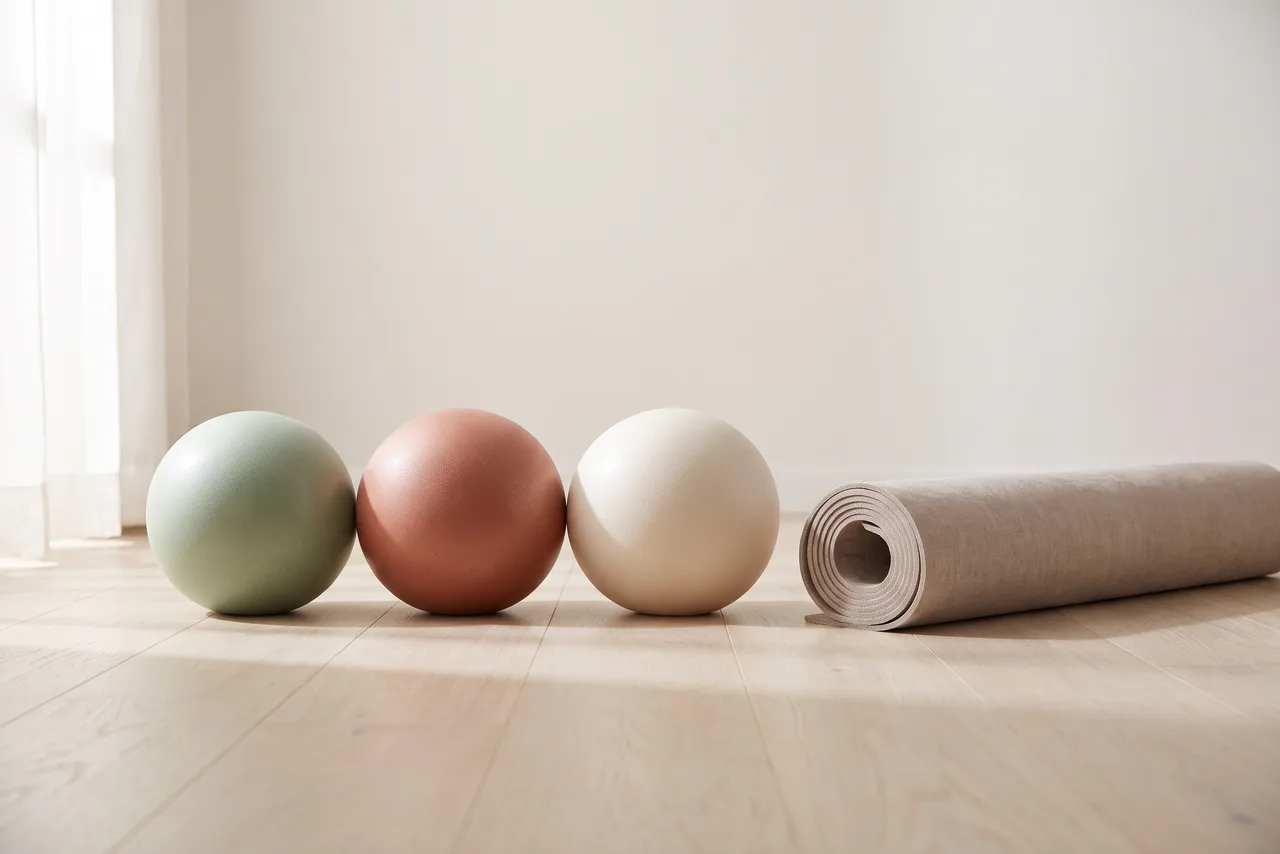
These balls all ship flat. You decide how firm yours ends up. That is not a defect of the cheap ones — it is how the category works, and two of the four brands write instructions around it.
What makes it interesting is that the sources contradict each other about which direction is "support".
Bala tells you to over-inflate the ball for more support, or to half fill it to work harder. Complete Pilates says the opposite: a partially deflated ball gives greater comfort and support, while a fully inflated one adds instability and challenge.
Both are right, and the disagreement is the useful bit. They are describing different placements. Lying with the ball under your lower back, a softer ball is more comfortable and supports more of you. Squeezing one between your knees, a firmer ball gives you more to press into. "Support" means two different things depending on which side of the ball you are on.
So the spec that matters is not the diameter printed on the box. It is whether you can change your mind afterwards.
Three of these four seal with a plug: you inflate, you plug, and adjusting means starting over. Trideer is the only one with a needle valve, which lets you add or release air whenever you like. If I were buying one object to cover both placements, that is the feature I would pay for.
The week nobody warns you about
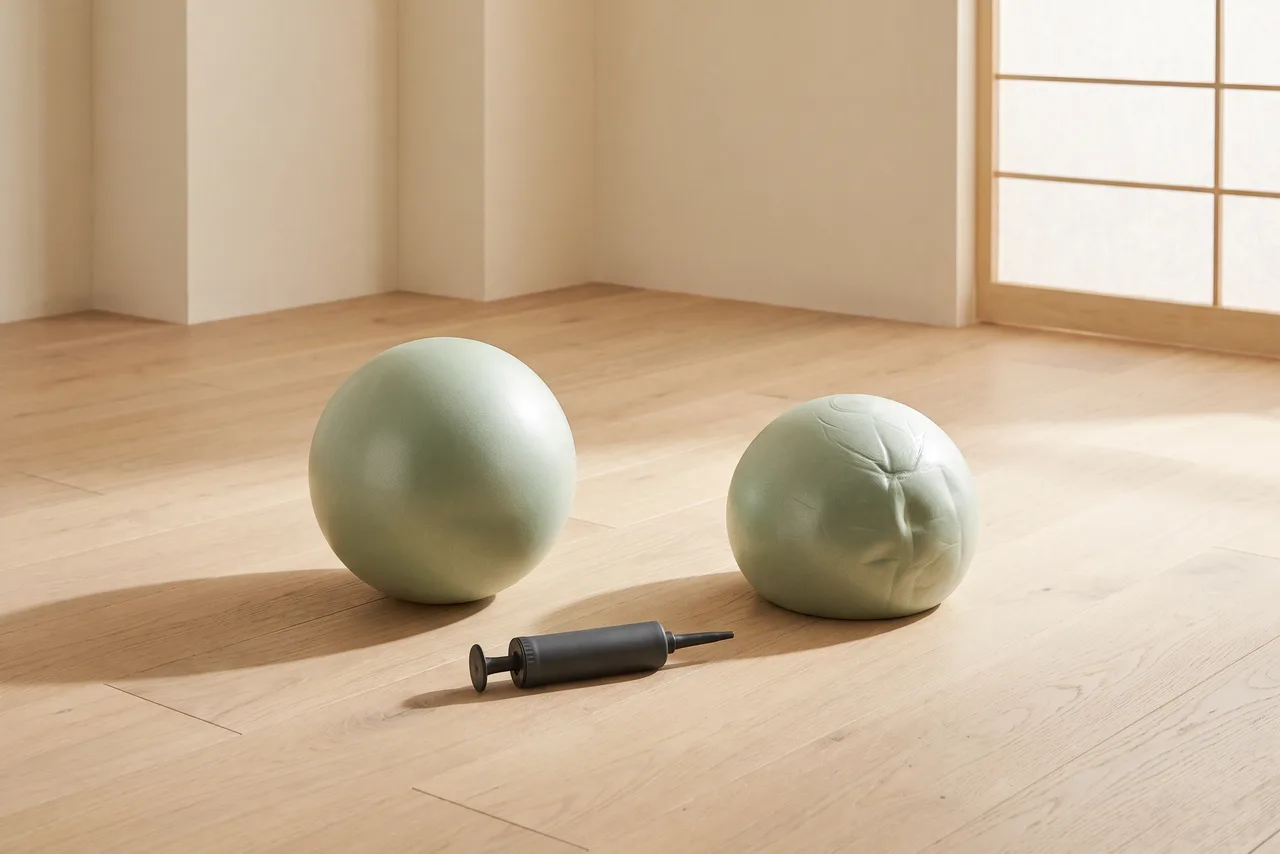
Trideer's own listing says something none of the others do: there is roughly a one-week break-in period. After the first inflation the ball goes softer and needs topping up, because of how the PVC behaves. After that it settles.
Nothing is wrong with your ball. It is the material relaxing.
This matters more than it sounds, because it is the point at which most people decide their cheap ball is leaking and give up on it. It is also another argument for a valve — topping up through a plug means deflating and starting again.
What "anti-burst" is worth here
Almost every listing in this category says anti-burst. It is worth roughly nothing as a way to tell them apart.
Look at ProBody's own comparison table and the anti-burst tick appears on all seven products in it — the 7-9 inch squeeze balls and the 45 to 85cm balls you put your body weight on, marked identically. THERABAND uses the phrase to describe a ball designed to stay elastic and squishy when fully inflated. None of these listings names a test standard behind the word.
The huge weight-capacity figures float around this category too, and they belong to the big ball, not this one. Nothing here is rated to be sat on, and a 3-ounce inflatable is not carrying your body weight in the first place.
We have run into this exact shape before: on aerial gear a "holds up to 600 lbs" claim turned out not to be comparable to a stated working load limit. A number with no test behind it is not a specification.
Ignore the badge. Compare stated diameter, surface finish and how the thing seals.
The picks
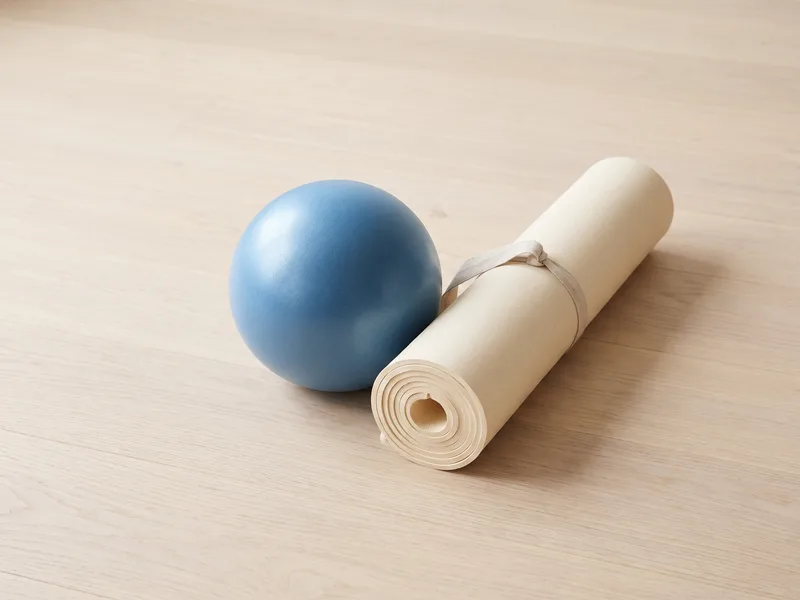
The clinic default
The ball people recognise from physiotherapy, and the one to buy if you were handed one there and want the same thing at home.
- 9in diameter, PVC, textured surface stated to stay put on hard floors
- Inflates by mouth through a supplied straw, so there is no pump to lose
- Ships with a spare plug and an exercise booklet
The one most people end up with
The category default, and the lightest here by a wide margin, which makes it the sensible pick if it lives in a bag.
- 9in and 3.2 oz — roughly a third the weight of the Bala
- Two inflation straws and a spare plug in the box
- One-year manufacturer warranty stated on the listing
Best if you want to adjust it
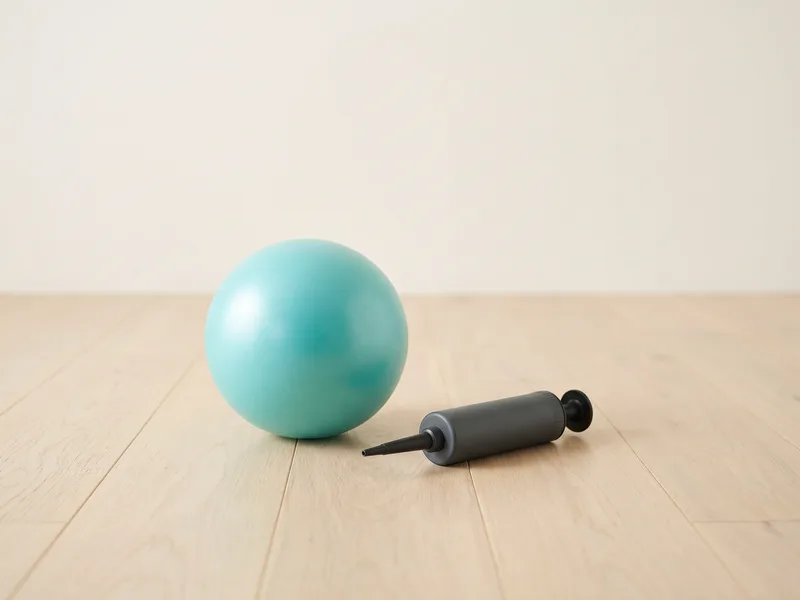
The smaller diameter plus the only adjustable valve of the four. If you are buying one ball to do everything, buy this one.
- 7.5in — the size that stays put between knees and ankles
- Needle valve: add or release air without deflating it
- The only listing that documents the one-week softening
If you want it to look like that
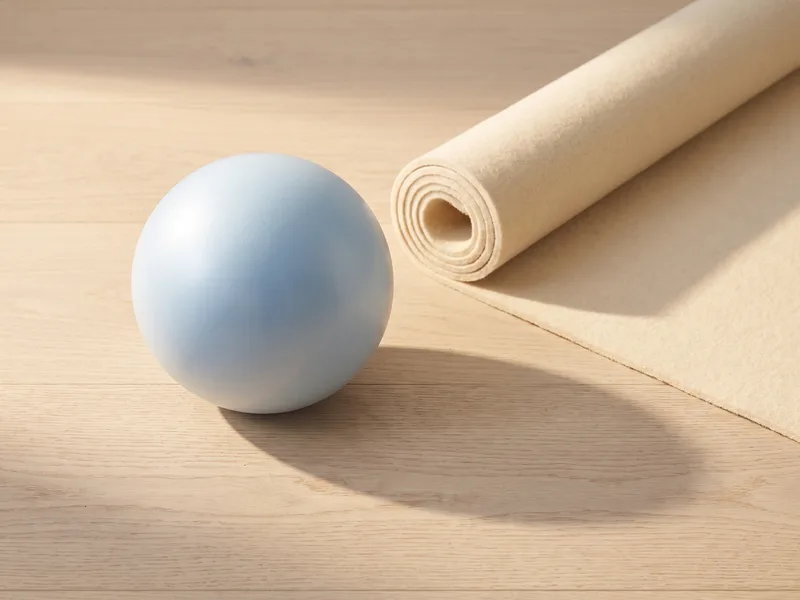
Costs several times the others and the difference is design and heft, not function. Buy it because you want it out on the floor, not because it does more.
- 8in, soft-touch PVC, mini pump included, ships deflated
- 10.24 oz — over three times the ProBody, which you feel
- The only listing here that does not state a non-slip or textured surface
Affiliate links — we may earn a commission. Prices and stock change too often to print here.
Who should skip it
Worth buying if
- A physiotherapist or instructor has already given you things to do with one
- You want a soft prop under the back or hips that packs completely flat
- You want resistance you can adjust rather than one fixed setting
- You travel and cannot take a block or a bolster with you
Skip it if
- You want a repeatable, unchanging resistance — a ring holds its setting, this drifts
- You expected something to sit on; that is the 55 to 75cm ball, a different purchase
- You already own blocks and a strap and are buying this to feel equipped
- You want it to solve a specific injury — that is a conversation with a clinician
What we would do
Pick the diameter by where the ball will spend most of its time. Between the knees, go 7 to 7.5 inches. Under the back or between the hands, go 9.
Then buy one you can adjust, inflate it soft, and top it up after the first week once it settles. Do not chase the anti-burst badge, and do not read the height chart — it is not for you.
For the floor underneath all of this, the Pilates mat guide covers why mat work wants more cushion than yoga does, and the grip sock guide covers the other thing studios ask you to bring. If you are assembling a home kit from scratch, start with the props guide rather than a ball.
Frequently asked questions
What size Pilates ball is best?
For most adults, somewhere between 7 and 9 inches — and you choose inside that range by where the ball goes, not by how tall you are. The height chart you have probably seen (55cm under 5ft 4in, 65cm to 5ft 11in, 75cm above) belongs to the large stability ball, and Complete Pilates publishes it scoped that way. For the small ball the same clinic recommends 7 inches. A 7.5in ball sits more securely between the knees or ankles. A 9in ball gives you more to press into under the low back or between the hands, and is the size rehab clinics tend to stock.
What is the difference between a Pilates ball and a yoga ball?
Usually size, and the words are used loosely enough that you should ignore them. 'Yoga ball' most often means the large 55 to 75cm ball you sit on. 'Pilates ball' most often means the 7 to 9 inch inflatable you squeeze. The listings themselves blur it: ProBody's own comparison table runs from 7-9 inches through to 45/55/65/75/85cm under one brand and one set of claims. Check the stated diameter, not the noun in the title.
What is the point of a Pilates ball?
Complete Pilates, a UK clinic, describes it as a way to add support, resistance, instability and feedback to an exercise. THERABAND, which makes the version stocked in rehab clinics, describes placing the same ball under the lower back, or between the body and the floor or a wall. So: a small, adjustable resistance you can put between two body parts, or a soft wedge you can lie on. That is also why physical therapists hand them out for home work.
Is a Pilates ball or ring better?
They do different jobs, so neither replaces the other. A ring's resistance is built into its frame and stays the same every session. A ball's resistance is whatever you inflated it to — which is more flexible, and also means it drifts. Trideer states that its ball softens in the first week after inflation and needs topping up. A ball can also be a soft prop under the back or hips, which a ring cannot. We have no ring guide yet, so read this as a description of what each one is, not a verdict between products.
How firm should a Pilates ball be?
Firm enough to give you something to work against, and no firmer — but be aware the sources genuinely disagree about which direction counts as support. Bala tells you to over-inflate the ball for more support, or half fill it. Complete Pilates says the reverse: a partially deflated ball gives greater comfort and support, while a fully inflated one adds instability and challenge. Both are right about different placements. Under your back, softer is kinder. Between your knees, firmer gives you more to press into. Buy one you can adjust and settle it yourself.