

This guide contains affiliate links — recommendations aren’t based on commission. Read our full disclosure.
How this page has changed
July 25, 2026
Sources, internal links and safety or product context reviewed.
In this guide
- 01What makes a Pilates mat different from a yoga mat
- 02How thick should a Pilates mat be
- 03Yoga mat vs Pilates mat: which do you actually need
- 04Mat Pilates or reformer Pilates — this guide is for the floor
- 05What material suits Pilates
- 06The four Pilates mats we recommend
- 07Size matters more in Pilates than in yoga
- 08Looking after a Pilates mat
- 09Four mistakes people make buying a Pilates mat
- 10How we chose these
- 11Choosing a Pilates mat for beginners
- 12When not to buy a Pilates mat
- 13Does mat Pilates actually work
- 14Related reading
A Pilates mat is a thicker yoga mat. That is genuinely most of the story. Pilates spends far more time rolling on your spine than yoga does, so the useful range sits around 8–15mm instead of the 3–5mm most yoga mats use.
If you already own a 6mm mat, try it first. The mats below are for when you have felt your spine hitting the floor and decided to fix it. This guide is part of our complete guide to choosing a yoga mat.
What makes a Pilates mat different from a yoga mat
Thickness, mostly. Everything else follows from it.
Yoga asks you to balance on one foot. That needs a thin mat, because the closer your foot is to the floor, the more stable you are. Most yoga mats land between 3mm and 5mm for exactly that reason.
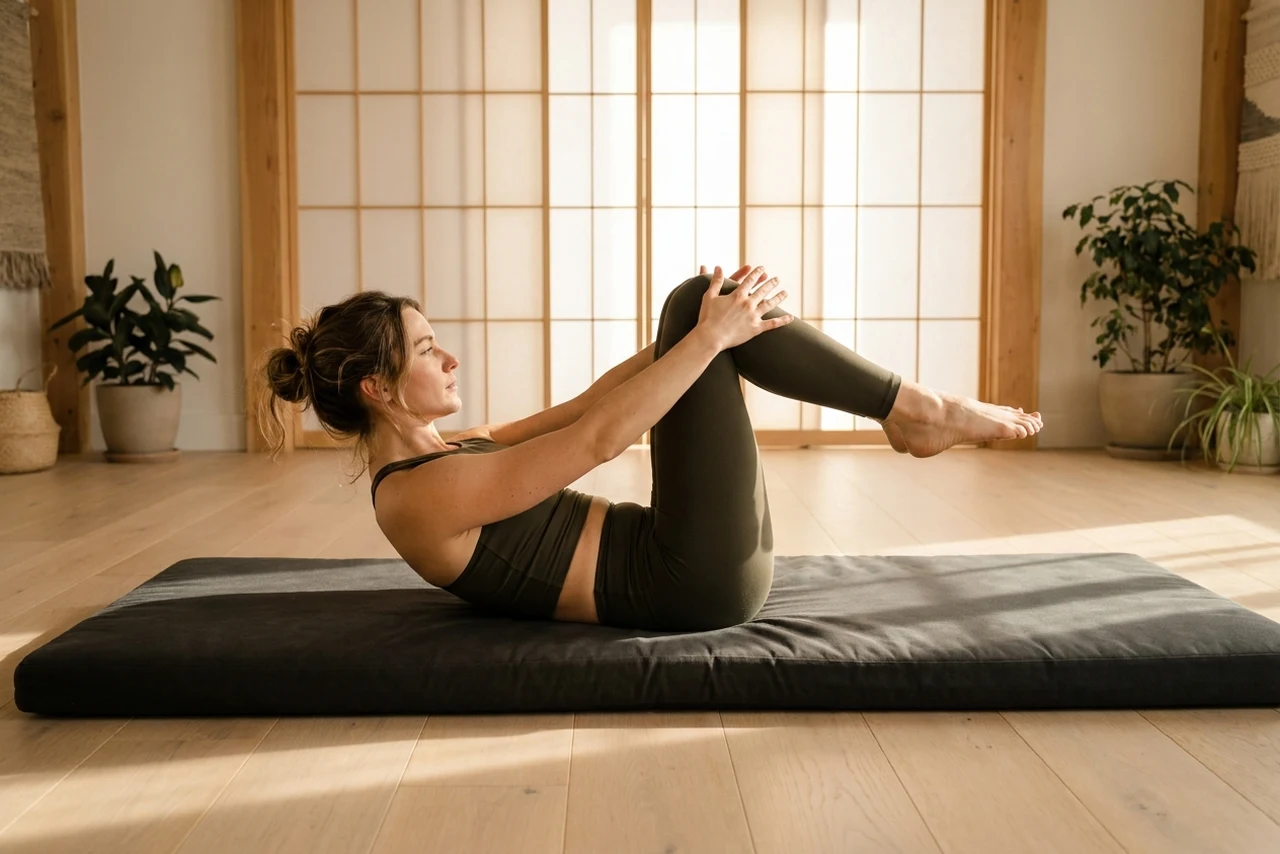
Pilates asks you to roll along your spine. The Roll-Up, Rolling Like a Ball, Spine Stretch, Teaser — the pattern in all of them is vertebrae moving across the floor one at a time, carrying your bodyweight. On a 4mm mat you feel every one of them.
So a Pilates mat trades stability for cushion. Where a yoga mat is thin enough to balance on, a Pilates mat is thick enough to protect the bones that press into the floor.
The overlap is real, though. A 6mm mat sits in the middle of both ranges, which is why several mats marketed for yoga turn up in Pilates recommendations. If you practise both, that overlap is where you want to shop.
How thick should a Pilates mat be
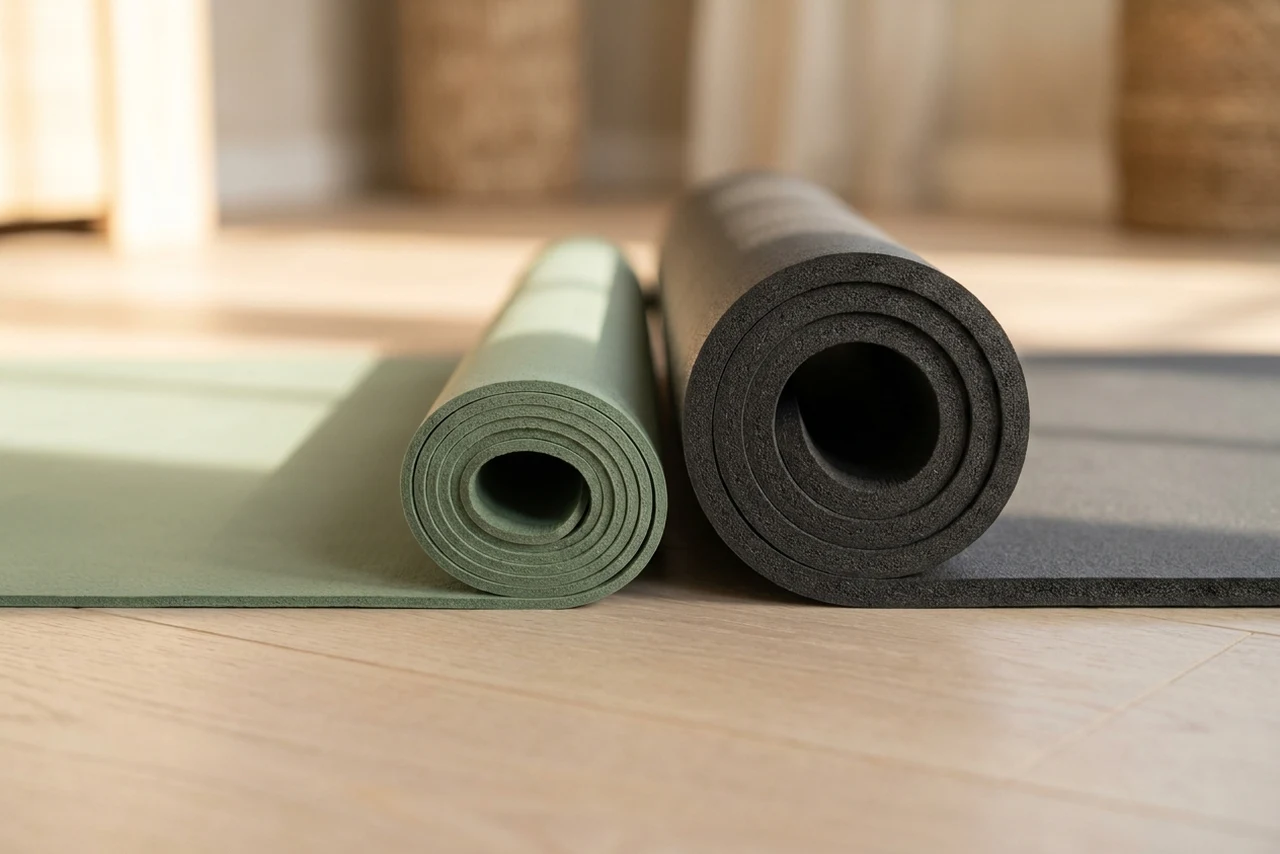
Between roughly 8mm and 15mm for most mat Pilates.
That is a wide range because it depends on what your class actually does:
- Floor-heavy mat Pilates — 10–15mm. Maximum protection for rolling work.
- Mixed practice with standing sequences — 6–10mm. Enough cushion, still stable when you stand.
- Pilates alongside regular yoga — 6mm. The compromise thickness that does both acceptably rather than either brilliantly.
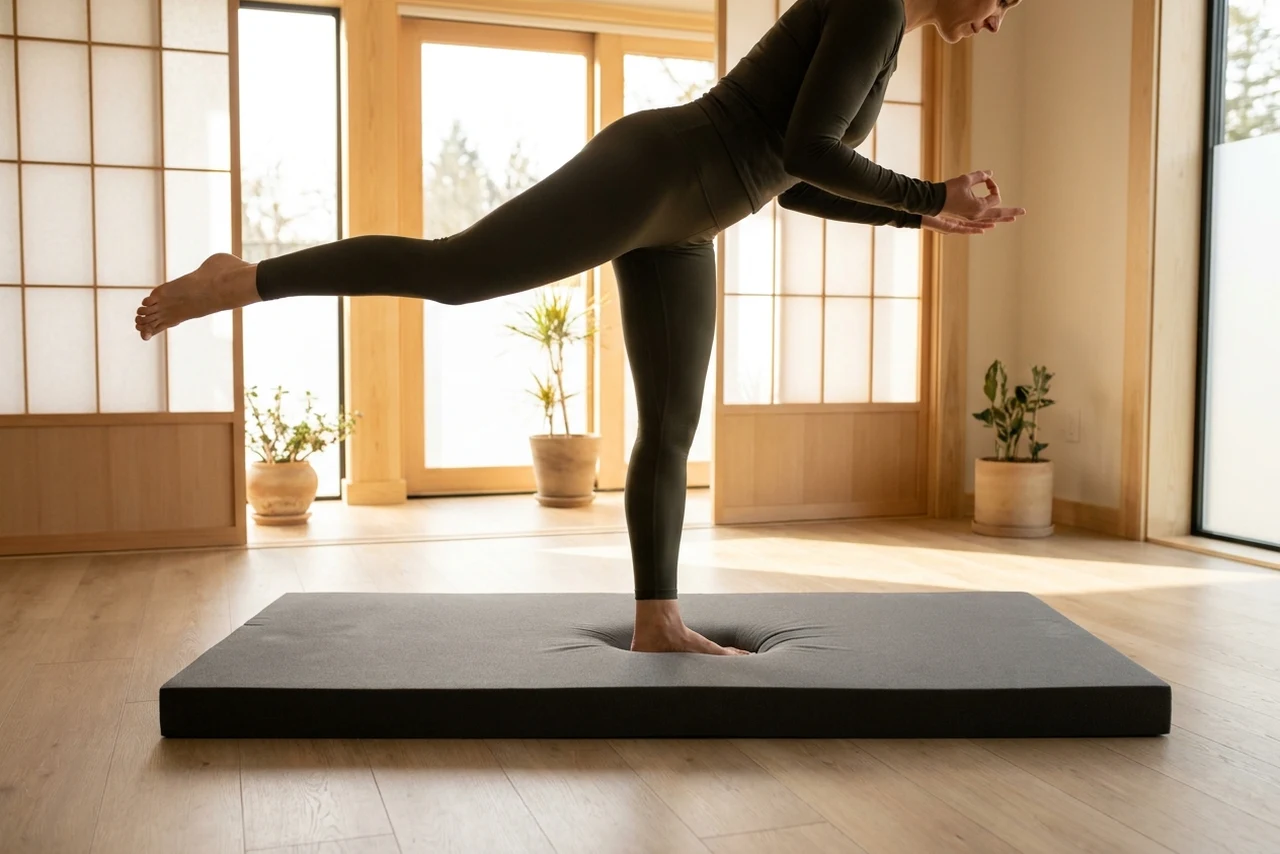
Past about 15mm you hit the point of diminishing returns. The mat starts absorbing the push you need for control, standing balance gets genuinely harder, and the extra foam makes the roll bulky to store.
Under 6mm you are on a yoga mat, and your tailbone will tell you.
If you want the full thickness breakdown across every practice style, we cover it in more depth in our guide to how thick a yoga mat should be.
Yoga mat vs Pilates mat: which do you actually need
Here is the honest version, and it will save some of you the purchase.
If you own a 6mm yoga mat, start there. Do a few sessions. Pay attention to the rolling exercises specifically. If your spine or tailbone feels bruised afterwards, you have your answer. If it does not, you have saved the money.
If you own a 3–4mm travel or grip mat, you will feel it immediately, and a folded blanket under your spine is a legitimate free fix before you buy anything.
If you are buying your first mat and Pilates is the main plan, skip the standard yoga thickness and go straight to something cushioned. Buying twice is the most common mistake in this category.
One thing thickness will not fix: grip. Thick foam mats tend to have less surface grip than dense rubber ones, which matters less in Pilates than in yoga, but it matters if you sweat or add standing work.
Mat Pilates or reformer Pilates — this guide is for the floor
Worth separating early, because the two need different things.
Reformer Pilates happens on a machine with a sliding carriage. You do not need a mat for it. If your studio work is reformer-only, the mat you buy is for practising at home between sessions, and it is a mat Pilates mat.
Mat Pilates is the floor-based version, and it is what this guide covers. It uses your bodyweight rather than springs, which is why the surface under you matters so much more.
Some people also buy a thin mat to lay over a reformer carriage for hygiene. That is a different product with different requirements, and none of the picks here are meant for it.
What material suits Pilates
Three materials cover almost everything on the market, and the ranking is different from yoga.
Foam (usually PVC or NBR) is the standard Pilates material, and for good reason. It is the cheapest way to get real thickness, it is light, and it compresses gently. The downsides are grip, which is moderate, and lifespan — foam takes a set over time and the strip under your spine will flatten first.
Natural rubber grips better and springs back rather than staying dented. It is heavier, more expensive, contains latex, and rarely comes in genuinely thick versions. It suits a Pilates practice with standing work in it.
TPE sits between the two: lighter than rubber, more resilient than cheap foam, usually less durable than either. A reasonable middle option if latex is a problem and budget is tight.
For pure floor-based Pilates, foam thickness beats rubber grip. That is close to the opposite of the advice we give for yoga, and it is the single most useful thing to understand before you shop.
The four Pilates mats we recommend
These are drawn from mats we have already researched in depth for this site, picked for how they handle Pilates specifically. Every recommendation is based on published specifications and aggregated owner reviews across retailers — we do not run lab tests and we do not pretend to.
Prices move constantly, so we do not quote them. Check the current price before you buy.
Best cushion for floor-based Pilates — Retrospec Solana ½ inch
At half an inch, this is the thickest mat we recommend anywhere on the site, and Pilates is the practice it genuinely suits. Rolling work stops being something you brace for. The tailbone problem simply goes away.
The trade-off is real and worth stating: at this thickness, standing balance work is noticeably harder. This is a floor mat. If your class has you upright for half the session, buy something thinner.
It is also foam rather than rubber, so grip is moderate rather than excellent. For Pilates that is usually fine — you are rarely holding a wet-handed plank.
Check price on AmazonBest all-rounder — Gaiam Premium 6mm
The compromise pick, and the one most people should probably buy. Six millimetres is enough cushion that rolling stops hurting, and thin enough that standing work stays stable.
It is light, easy to carry, and cheap enough that it is a low-risk way to find out whether Pilates sticks. We scored it 3.9 in our full Gaiam review.
Where it shows its price: it gets slippery once you sweat, and at 68 inches it runs short — if you are tall, your head or heels will find the floor.
Check price on AmazonBest for durability — Manduka PRO 6mm
Same 6mm thickness, entirely different feel. The PRO is dense rather than soft, so it cushions by resisting compression instead of squashing. For Pilates that means support that does not bottom out under a concentrated load like a hip bone.
It is built to last roughly a decade and carries a lifetime guarantee. If you know you are going to keep practising, the maths works.
Two honest warnings. It is genuinely slippery when new and needs weeks of break-in. And at around 7.5 lb it is heavy — this is a mat that lives in one room. Our full Manduka PRO review covers both in detail.
Check price on AmazonBest natural-rubber option — Manduka eKO 5mm
For anyone who wants to avoid PVC. Natural rubber grips better than foam and gives a springier, more responsive surface underfoot.
At 5mm it is the thinnest mat here, so it suits a Pilates practice that leans towards standing and stability work rather than long floor sequences.
The catch is latex. Natural rubber contains it, so this is a hard no if you are sensitive — and rubber mats carry a distinct smell for the first few weeks.
Check price on Amazon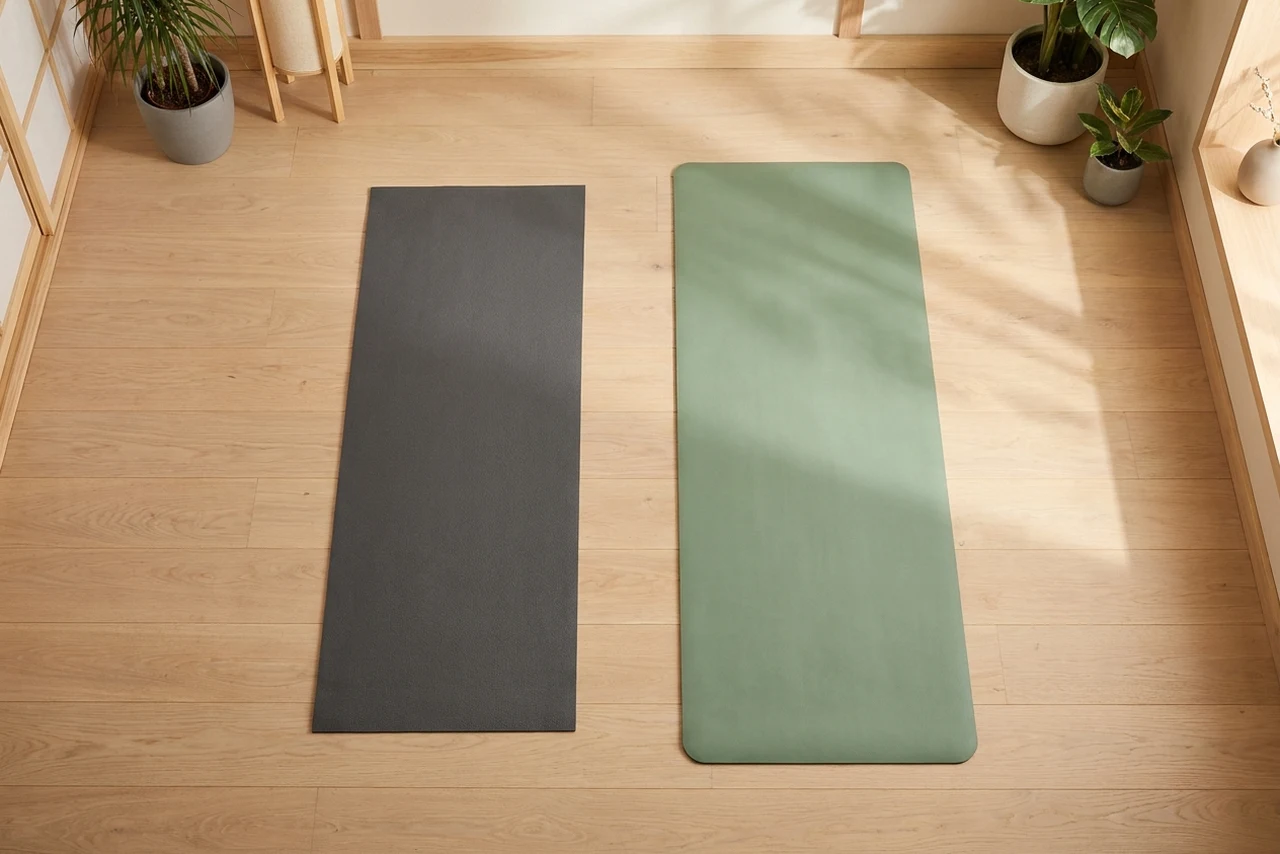
Size matters more in Pilates than in yoga
An underrated point, and one most buying guides skip entirely.
A yoga pose happens roughly where you are standing. A Pilates roll travels. The Roll-Up moves your whole spine along the mat; Rolling Like a Ball sends you backwards past where you started. You use more of the mat's length, and you use it in motion.
The standard mat is 68 inches. If you are taller than about 5'8", your head or heels will regularly find bare floor during rolling work — which defeats the point of buying cushion.
Look for 72 inches or longer if you are tall. Width helps too: 24 inches is standard, and the extra few inches on a wider mat give your arms somewhere to go in exercises that open them out.
Check the rolled diameter as well if you plan to store it upright. Thick mats roll fat, and a half-inch mat will not fit a bag sized for a yoga mat. Our guide to mat bags and carriers covers that measurement in detail.
Looking after a Pilates mat
Pilates is harder on a mat than yoga is, in one specific way: it compresses the same narrow strip repeatedly. The band under your spine takes almost every session.
Three things extend its life:
Rotate it. Turn the mat end for end every few weeks so the compression spreads across the surface instead of forming a permanent dent in one place.
Store it flat or loosely rolled. A thick mat stored tightly rolled for months keeps the curl, and a curling mat is a trip hazard during standing work.
Clean it gently. Foam mats do not tolerate the alcohol-heavy sprays some people use on rubber. Warm water, a little mild soap, and a full dry before rolling. Our full mat cleaning guide covers the differences by material.
Storage matters more than people expect — the same principles apply as in our guide to storing a yoga mat.
Four mistakes people make buying a Pilates mat
Buying yoga thickness because the branding says yoga. Marketing categories and practice needs are not the same thing. Read the millimetres, not the label.
Going as thick as possible. Past 15mm the mat starts working against you. Standing balance suffers and the surface absorbs the push you need for control. Thicker is better only up to a point.
Ignoring length. Cushion you roll off the end of is not cushion.
Buying before the habit exists. The most common regret in this category is a good mat bought in week one of an enthusiasm that lasted a month. A folded blanket will get you through the trial period honestly.
How we chose these
We started from the mats already reviewed on this site, then filtered on the things that actually change a Pilates session:
- Cushion depth under a bony contact point — spine, tailbone, hip, shoulder blade.
- Stability when standing — because most classes are not purely floor-based.
- Density rather than softness — a mat that bottoms out under one vertebra is not cushioning.
- Length — rolling exercises use more of the mat than a yoga pose does.
- Durability — Pilates compresses the same strip of mat repeatedly.
We did not test these in a lab, and no one here is a certified Pilates instructor. What we do is read the specifications, compare them against aggregated owner reviews across retailers, and be direct about the trade-offs.
Choosing a Pilates mat for beginners
If this is your first mat, the decision is simpler than the market makes it look.
Buy 6mm. It is the thickness that forgives the most mistakes. Enough cushion that your first Roll-Up does not put you off the whole discipline, stable enough that you are not fighting the mat during standing work, and light enough to move around a room.
Beginners systematically over-buy on two things and under-buy on one. They pay for eco materials and premium grip before they know whether the habit sticks — and they skip length, which is the spec they will actually notice.
Skip for now: natural rubber, alignment lines, anything described as professional-grade.
Do not skip: enough length for your height, and enough thickness that floor work is comfortable.
There is one beginner-specific comfort worth knowing. The bruised feeling along your spine after early sessions is usually the mat, not your technique. It is also the most common reason people quit Pilates in the first month, which makes cushion a genuinely worthwhile place to spend.
When not to buy a Pilates mat
Three situations where the honest answer is to keep your money:
You already own a 6mm mat and nothing hurts. The mat is doing its job. Nothing on this page will improve your practice.
You are three sessions into your first month. Find out whether the habit sticks first. A folded towel under your spine costs nothing and solves rolling discomfort well enough to get you through a trial period.
Your studio provides mats. Studio mats are usually already thick. Buy one when you start practising at home, not before.
There is a fourth, less obvious one. If your back hurts during Pilates in a way that feels sharp rather than bruised, that is not a cushioning problem, and a thicker mat will hide a signal you want to pay attention to. Speak to a clinician.
Does mat Pilates actually work
Worth answering plainly, because it comes up constantly in searches.
For low back pain, the evidence is reasonably encouraging. A Cochrane review of randomised controlled trials found that Pilates reduced pain and disability compared with minimal intervention, on low- to moderate-quality evidence. The same review found it unclear whether Pilates outperforms other forms of exercise (Yamato et al., 2015).
The fair reading: mat Pilates is a genuinely effective form of exercise, and probably not a magic one. Consistency matters more than the discipline you pick — which is an argument for buying the mat that makes you want to lie down on it.
Related reading
- How thick should a yoga mat be — the full thickness breakdown across practice styles
- How to choose a yoga mat — the pillar guide covering material, grip and care
- Best yoga mats for every practice — seven mats scored and ranked
- Best yoga mat for bad knees — the other cushion-first buying decision
Frequently asked questions
What is the best thickness for a Pilates mat?
Most mat Pilates is comfortable somewhere between 8mm and 15mm, which is roughly double a standard yoga mat. That extra depth protects your spine during rolling work, where your vertebrae move along the floor one at a time. If your practice includes standing work or balance sequences, stay nearer 8mm — past about 15mm the surface gets unstable underfoot.
Is there a difference between a yoga mat and Pilates mat?
Yes, and it is mostly thickness. A yoga mat is usually 3–5mm and prioritises grip and floor feel so you can balance. A Pilates mat is usually 8–15mm and prioritises cushion, because Pilates spends far more time rolling on the spine and pressing the tailbone into the floor. Some 6mm yoga mats sit in the overlap and work for both.
Is it better to have a thick or thin Pilates mat?
Thicker, within limits. Thin mats leave your spine, tailbone and shoulder blades pressing into a hard floor during rolling exercises. Very thick mats fix that but wobble under standing work and make balance harder. If your Pilates is mostly floor-based, go thick; if you mix in standing sequences, a 6–10mm mat is the safer compromise.
Which mat is best for Pilates?
It depends on what your practice looks like. For floor-heavy mat Pilates, a half-inch cushioned mat is the most comfortable option. For a mixed practice that includes standing work, a dense 6mm mat gives cushion without the wobble. If you already own a 6mm yoga mat, start there before buying anything.
Is mat Pilates actually effective?
For low back pain there is reasonable evidence that it helps. A Cochrane review of randomised trials found Pilates reduced pain and disability compared with minimal intervention, on low- to moderate-quality evidence, though it was unclear whether Pilates beat other forms of exercise. Treat it as one effective option among several rather than a uniquely powerful one, and speak to a clinician about existing back problems.
Can I use a yoga mat for Pilates?
Often, yes. A 5–6mm yoga mat is usable for most mat Pilates, and plenty of people never buy anything else. You will notice the difference during rolling exercises and any move that puts bodyweight through the spine or hip bones. If that is where your practice hurts, that is the signal to add cushion — not before.