

How this page has changed
July 26, 2026
Sources, internal links and safety or product context reviewed.
In this guide
- 01Hemp yoga mats at a glance
- 02What “hemp yoga mat” actually describes
- 03Two current products that show the range
- 04Grip: separate texture from floor stability
- 05Latex, blends and disclosure traps
- 06How to evaluate sustainability claims
- 07How to clean a hemp yoga mat
- 08Hemp vs jute, cotton rug and cork
- 09Buying checklist
- 10The verdict
- 11Frequently asked questions
A hemp yoga mat can be a woven textile rug, a hemp-cotton cloth, or a layered mat with hemp on top of foam or natural rubber. Those products share a search term, not a single construction. The difference controls cushion, latex status, floor grip, washing and whether the finished mat can realistically be recycled or composted.
The useful question is therefore not “is hemp better?” but which part is hemp, what supports it, and does that system fit your practice? A plant-fiber face may feel firm and tactile. It does not automatically make the complete mat non-slip, toxin-free, antibacterial or biodegradable.
This guide uses current manufacturer disclosures and public primary sources; it does not claim hands-on testing. The category has limited standardized testing, so missing numbers stay missing rather than being replaced with marketing adjectives.
Hemp yoga mats at a glance
| Construction | Likely feel | Main advantage | Main question |
|---|---|---|---|
| Woven hemp or hemp blend | Firm, rug-like, textured | Simple textile format | Does it move on your floor? |
| Hemp + PER/foam | More cushion, lighter roll | Familiar mat format | What exactly is the polymer? |
| Hemp + natural rubber | Dense, planted underside | Stronger floor grip | Latex, weight and layer separation |
| Hemp-filled textile pad | Soft, bedding-like | Long floor contact | Washability and dynamic stability |
For a general-purpose grip surface, start with how to choose a yoga mat. Hemp earns its own page because fiber-led products require different questions from PVC, TPE or PU mats.
What “hemp yoga mat” actually describes
Hemp is a bast fiber taken from the stem of Cannabis sativa. It can be processed into yarn and woven alone or blended with cotton, linen and manufactured fibers. The European Commission identifies hemp as a textile fiber crop, while its Joint Research Centre notes that hemp can be used alone or in blends and that bio-based fibers still carry processing impacts.
In current product listings, Pushaoo discloses an 80% hemp, 20% cotton textile mat. Salachi publishes a hemp and PER composite at 183 x 61 x 0.5cm and 1.15kg. Other sellers pair a hemp face with natural rubber. These are materially different products.
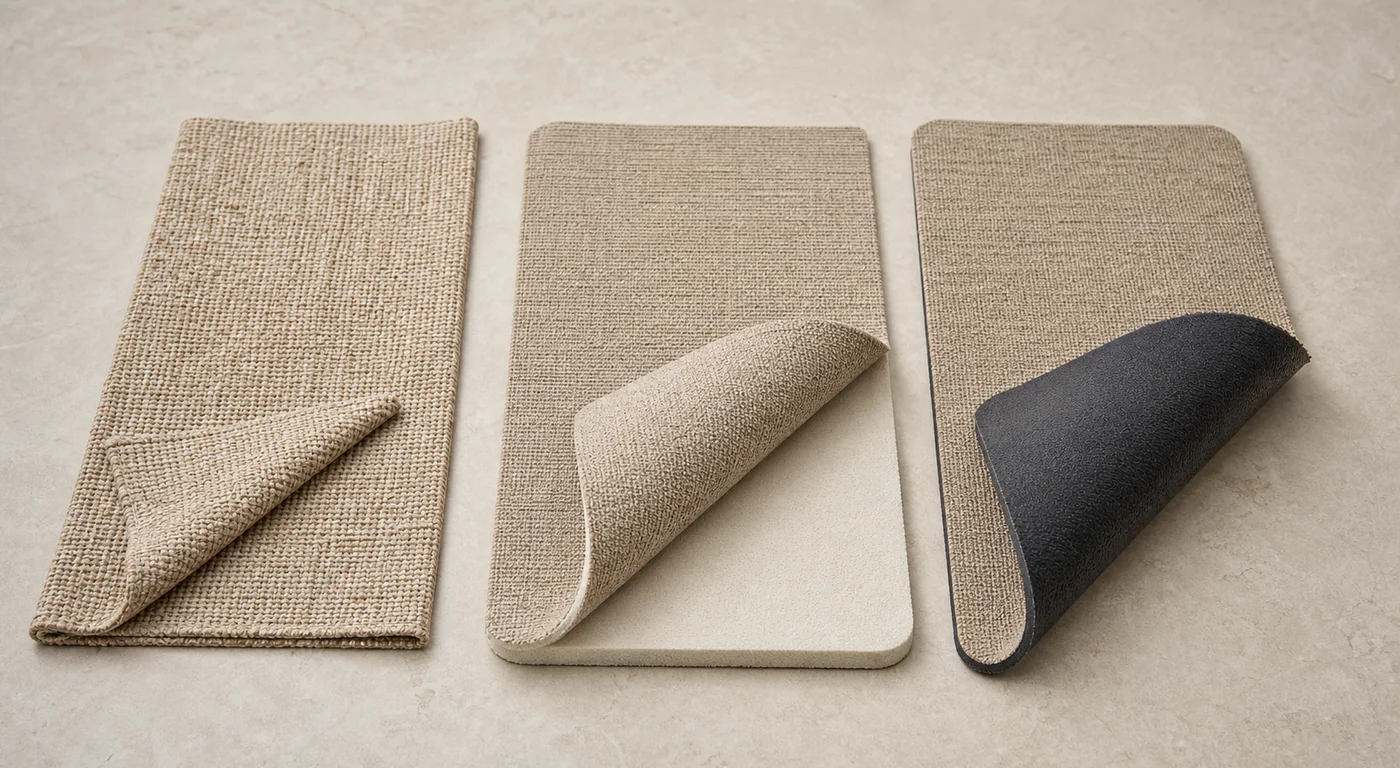
Read every listing in layers:
- Face: hemp percentage, blend partner, weave and dye or print.
- Core: no core, textile fill, PER, TPE, other foam or unspecified material.
- Backing: same woven face, rubber, latex coating, polymer or anti-slip dots.
- Finish: adhesive, edge binding, treatment and carry accessories.
If a listing says only “natural hemp,” latex exposure, total synthetic content and end-of-life remain unresolved.
Two current products that show the range
This is a construction comparison, not a ranked roundup. Stable product disclosure is scarce, and adding marketplace listings with vague specifications would not improve the answer.
Pushaoo hemp-cotton mat: textile-first
Pushaoo currently publishes an 80/20 hemp-cotton blend and recommends hand washing in cold water with diluted gentle liquid soap, wiping with a damp cloth and hanging away from direct sunlight until fully dry. The page does not publish thickness, weight, dimensions or a separate backing composition.
That makes it a textile-led option, but not a fully specified performance product. Choose this direction if a simple fabric surface and careful hand care suit you. Ask for dimensions and underside details before ordering. Do not infer dynamic traction from the phrase “yoga mat.”
Salachi hemp-PER mat: layered composite
Salachi publishes more comparison-ready numbers: hemp and PER construction, 183 x 61cm, 5mm and 1.15kg, plus a latex-free claim. The company instructs users not to machine wash it and describes soap-and-water cleaning followed by shade drying.
This is closer to a conventional rollable mat because the polymer layer supplies structure and cushion. It also illustrates why “hemp mat” is not synonymous with plastic-free textile. PER must be evaluated as part of the product, including durability and the realistic local recycling route.
Grip: separate texture from floor stability
A fibrous weave creates mechanical texture rather than the tack of smooth PVC or polyurethane. Whether that feels secure depends on fiber exposure, weave density, skin moisture and wear. The underside then has a separate job: keeping the entire mat from moving across the floor.
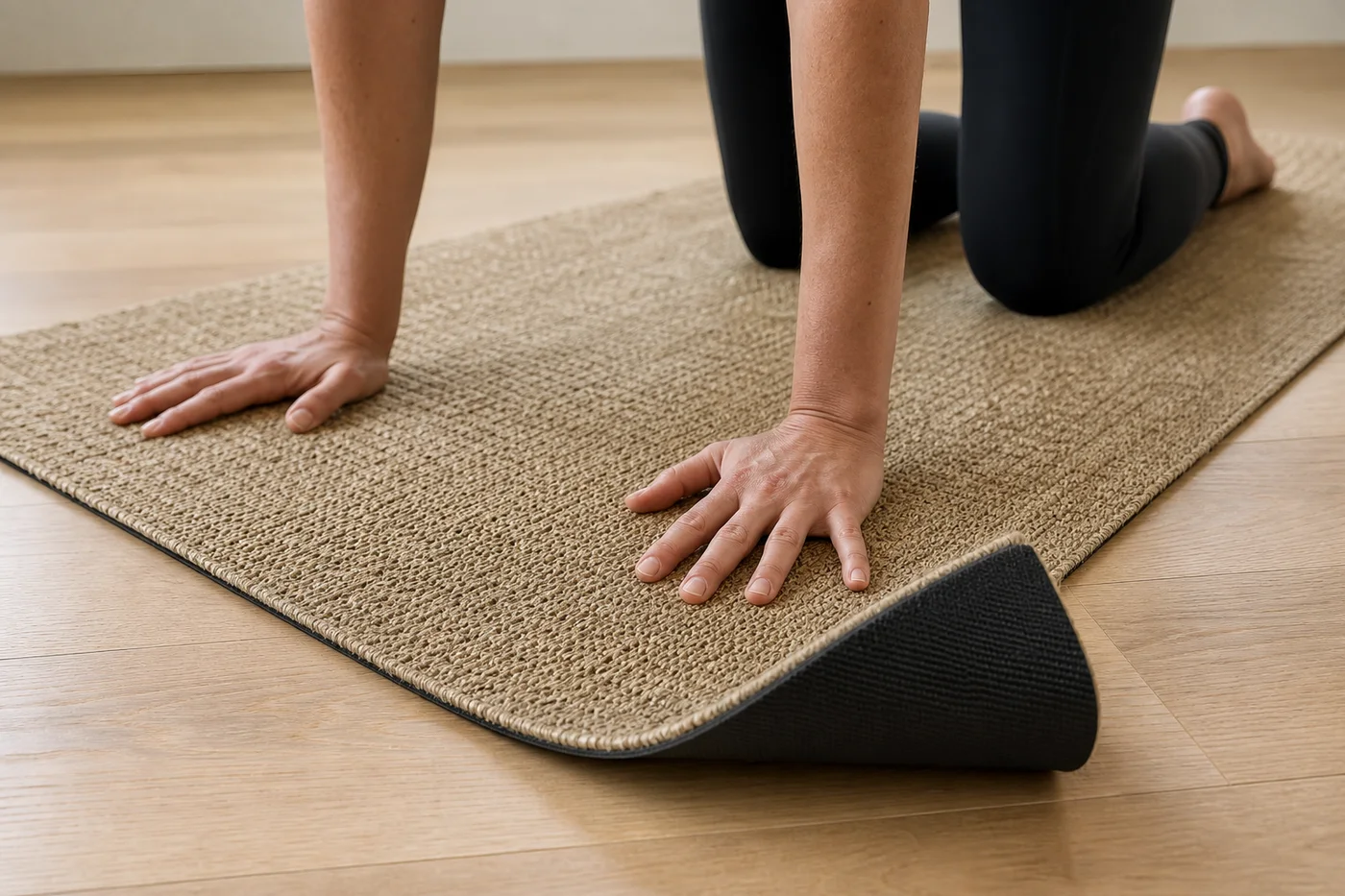
Test both interfaces on the actual floor:
- Press hands forward and feet back during a controlled, familiar position.
- Move laterally near both short ends and watch the mat edge.
- Add moisture gradually rather than assuming “absorbent” means unlimited wet grip.
- Check prolonged contact on knees and forearms; coarse fibers may irritate skin.
- Stop using a mat whose layers bunch, curl or separate.
For heavy sweat, compare purpose-built options in the hot yoga mat guide. For an unbacked woven construction, the yoga rug versus mat guide is the closest sibling.
Latex, blends and disclosure traps
Hemp itself does not contain natural-rubber latex, but a hemp-faced mat may. Natural-rubber backing is common because it provides density and floor traction. If latex sensitivity matters, read the whole bill of materials and the manufacturer warning; do not stop at the plant-fiber headline.
Blends also deserve precision. Cotton can soften a weave. Polyester may reinforce edges. PER or TPE can add cushion. A blend is not automatically bad, but it changes washing, separation and disposal. “Hemp yoga mat” should never be treated as a material percentage.
Four weak phrases to challenge:
- Chemical-free: physically meaningless; all materials consist of chemicals.
- Non-toxic: incomplete without substances, exposure route and test standard.
- Antibacterial: requires a defined test method and performance threshold.
- 100% recyclable: requires the layers to be accepted by a real local system.
How to evaluate sustainability claims
The crop has relevant advantages. The European Commission says hemp can often be grown with low or no pesticide use and identifies benefits related to ground cover, crop rotation and carbon storage. Those are crop-level observations—not proof that every imported, dyed, bonded yoga mat has a lower lifecycle impact than every alternative.
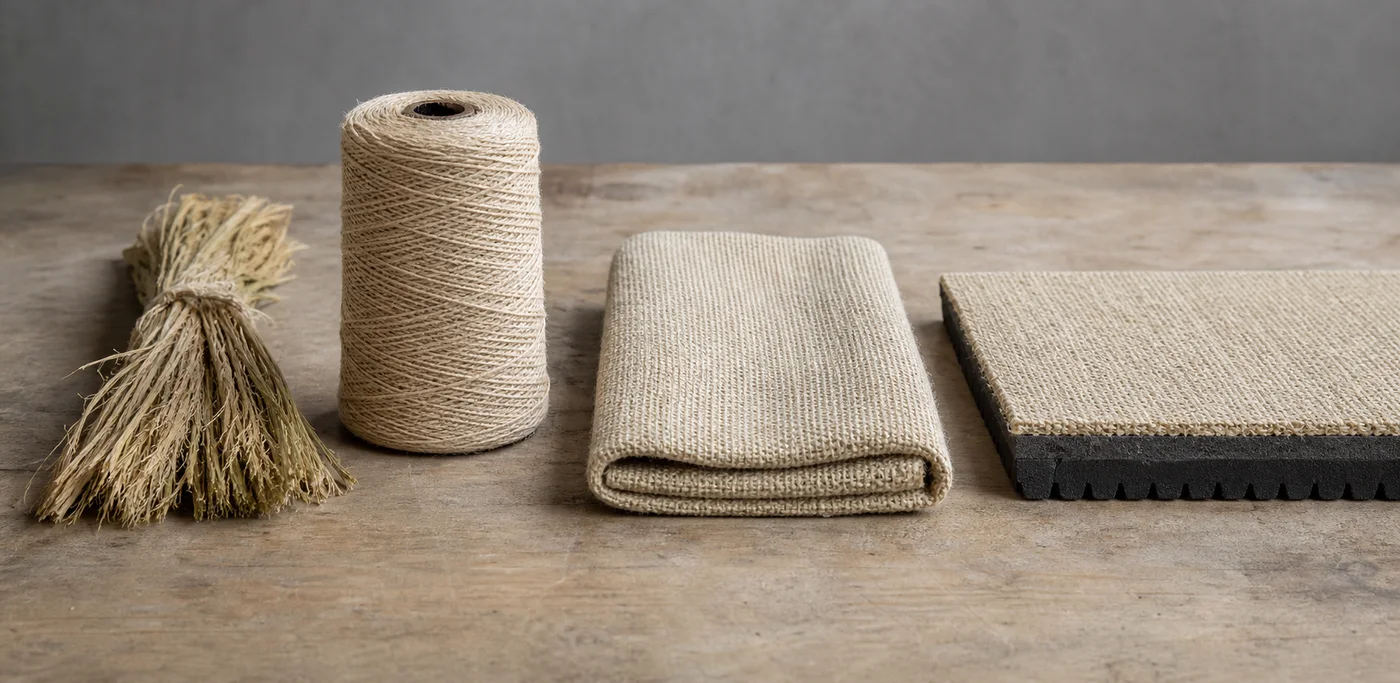
Evaluate four stages:
- Cultivation: origin, farming standard, water and crop inputs.
- Textile processing: retting, spinning, bleaching, dyeing and finishing.
- Product assembly: fiber percentage, foam or rubber, adhesive, durability and repair.
- End of life: reuse first, then an actual local collection or disposal route.
A long-lived conventional mat already owned may be a better waste decision than replacing it early with a poorly disclosed “eco” mat. The broader eco-friendly yoga mat guide provides a full claims checklist.
How to clean a hemp yoga mat
There is no universal hemp-mat wash method because the constructions differ. A woven hemp-cotton cloth may tolerate careful hand washing; a bonded hemp-rubber or hemp-foam mat may not tolerate soaking, folding or machine agitation.
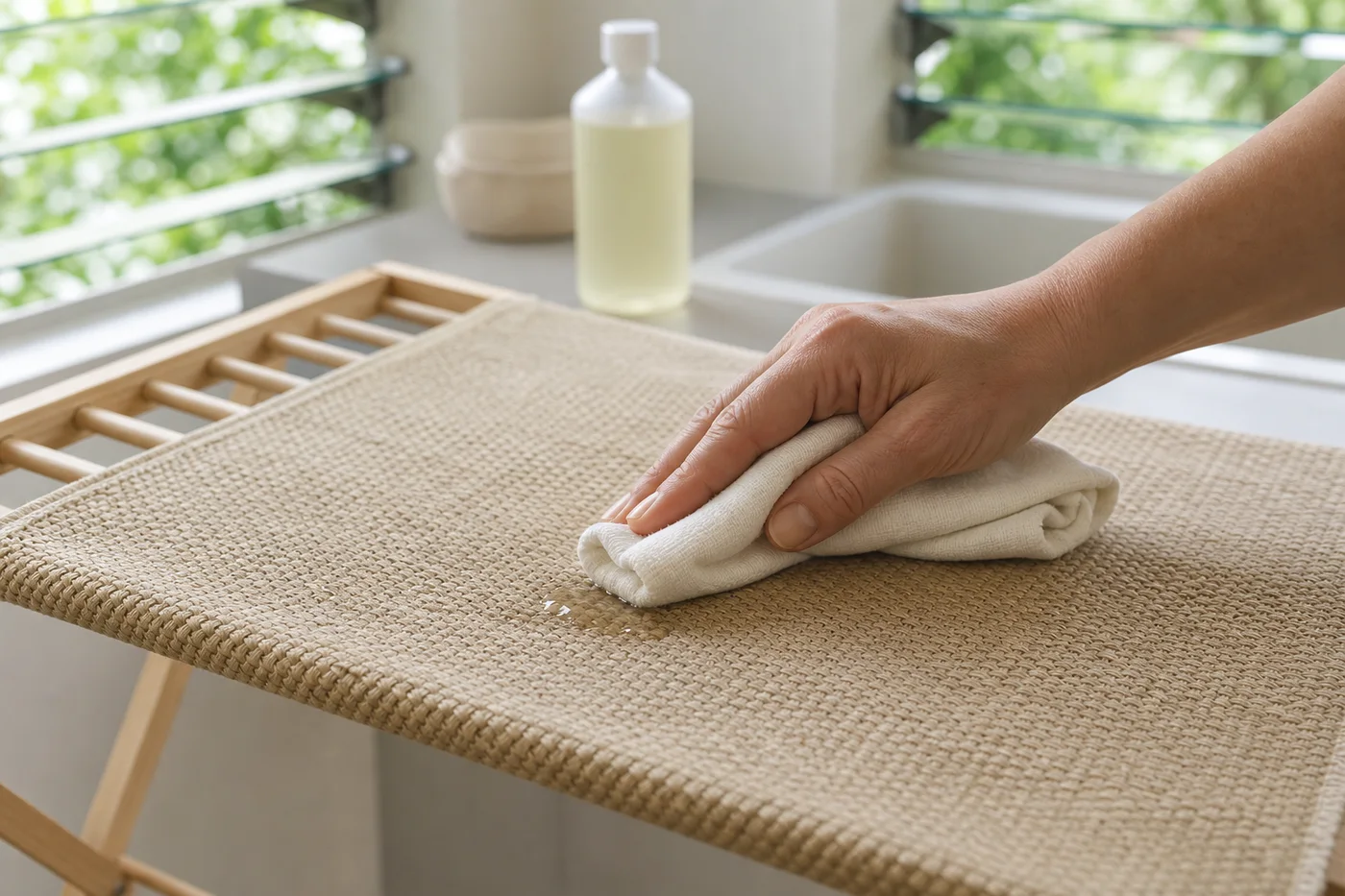
Use this conservative baseline when it does not conflict with the product label:
- Air the mat open after every damp session.
- Shake or brush away dry debris gently.
- Blot spills; do not aggressively scrub exposed fibers.
- Apply approved cleaner to a cloth rather than saturating a bonded mat.
- Dry both faces completely before rolling.
- Store away from prolonged heat, moisture and direct sun.
Do not use bleach, essential oils, steam, a washing machine or a dryer unless the exact manufacturer approves it. Oils can leave residue that affects traction, while heat and saturation can damage foam, rubber, dye or adhesive. See how to clean a yoga mat for frequency and drying principles.
Hemp vs jute, cotton rug and cork
| Alternative | Where hemp may fit better | Where the alternative may fit better |
|---|---|---|
| Jute composite | A softer or more textile-like hemp blend | More widely specified mainstream composites |
| Cotton yoga rug | Strong bast-fiber character and firm texture | Familiar laundering and traditional sweat absorption |
| Cork-topped mat | Woven feel and flexible textile formats | Smoother wipeable face and clearer layered specs |
| Natural rubber mat | Plant-textile contact and less tack | Predictable dense support and continuous dry grip |
These are category tendencies, not guarantees. A hemp-rubber composite may behave more like a rubber mat than an unbacked hemp rug. Compare exact layers with the jute mat guide and natural-rubber guide.
Buying checklist
Before ordering, require answers to these questions:
- What percentage of the practice face is hemp?
- What are every core, backing, edge and adhesive material?
- Is natural rubber or latex present?
- What are length, width, thickness and measured weight?
- Are traction or restricted-substance claims tied to named tests?
- What cleaning method is explicitly approved?
- Can the seller describe a real end-of-life route?
- Is the return policy practical if texture or floor behavior disappoints?
A seller who cannot state the backing cannot substantiate the most important performance and allergy details.
The verdict
A hemp yoga mat can be a useful textile-led alternative, especially for buyers who like a firm, tactile face and are willing to evaluate care carefully. It is not one standardized category, and hemp on the label does not automatically mean plastic-free, latex-free, non-slip or biodegradable.
Choose the construction first: woven rug for simplicity, foam composite for lighter cushion, or rubber-backed mat for a denser floor interface. Then verify the fiber percentage, full backing, dimensions and care label. Hemp is the beginning of the specification, not the conclusion.
Frequently asked questions
Are hemp yoga mats good?
They can suit people who prefer a firm textile surface. Construction and intended practice matter more than the fiber name.
Are hemp yoga mats non-slip?
They can provide texture, while a backing may add floor grip. Neither is guaranteed; test both interfaces separately.
Do hemp yoga mats contain latex?
Some use natural rubber and some do not. Verify the complete material list for the exact model.
How do you clean a hemp yoga mat?
Follow the manufacturer label. Woven products may allow hand washing; bonded composites often need restrained wiping and thorough air drying.
Are hemp yoga mats biodegradable?
Hemp fiber can biodegrade in suitable conditions, but complete mats may contain foam, rubber, polyester, dyes and adhesives. Whole-product claims need evidence and defined conditions.
Frequently asked questions
Are hemp yoga mats good?
They can suit people who prefer a firm, textile-like surface, but hemp mats vary from thin rugs to foam or rubber composites. The complete construction and intended practice matter more than the fiber name.
Are hemp yoga mats non-slip?
A textured hemp face may provide mechanical traction, while a rubber or foam backing may resist floor movement. Neither is guaranteed: test top-side traction and underside floor grip separately.
Do hemp yoga mats contain latex?
Some use natural-rubber backing and are latex-relevant; others use PER, cotton or woven textile construction. Verify the exact product rather than inferring latex status from hemp.
How do you clean a hemp yoga mat?
Follow the exact manufacturer label. Woven designs may allow careful hand washing, while bonded composites often call for wiping or spot cleaning. Air-dry completely and do not soak or machine wash unless explicitly approved.
Are hemp yoga mats biodegradable?
Hemp fiber can biodegrade under suitable conditions, but a finished mat may include rubber, foam, polyester, dyes and adhesives. A whole-product biodegradability claim needs defined conditions and evidence.