

In this guide
If a mat could win a popularity contest among yoga teachers, the Jade Harmony would be on the shortlist. It is the natural-rubber mat people reach for when grip matters most, it is made in the USA, and Jade plants a tree for every one sold. The reputation is real — but "grippiest" comes with a specific catch, and this review is about where the Harmony is the right mat and where it quietly is not.
This is a research-and-specs review, not a paid lab test. I draw on Jade's published specs, hands-on testing from OutdoorGearLab and Live Science, and the themes that repeat across owner reviews — attributed where it matters, no invented scorecard or frozen price.
By Marvin Smit · Long-time practitioner, not a certified instructor.
The short verdict
Buy the Jade Harmony if grip is your top priority and you want a genuinely eco, made-in-USA natural-rubber mat — for a dry home or studio practice, almost nothing grips better out of the box. Skip it if you do hot yoga (the open-cell surface gets slippery when soaked), you have a latex sensitivity, or you want a lifetime mat — natural rubber is a multi-year material, not a forever one.
Check price on AmazonEverything below is the reasoning. If you are still deciding on material and thickness in general, start with how to choose a yoga mat and come back.
Grip: the reason it tops the lists
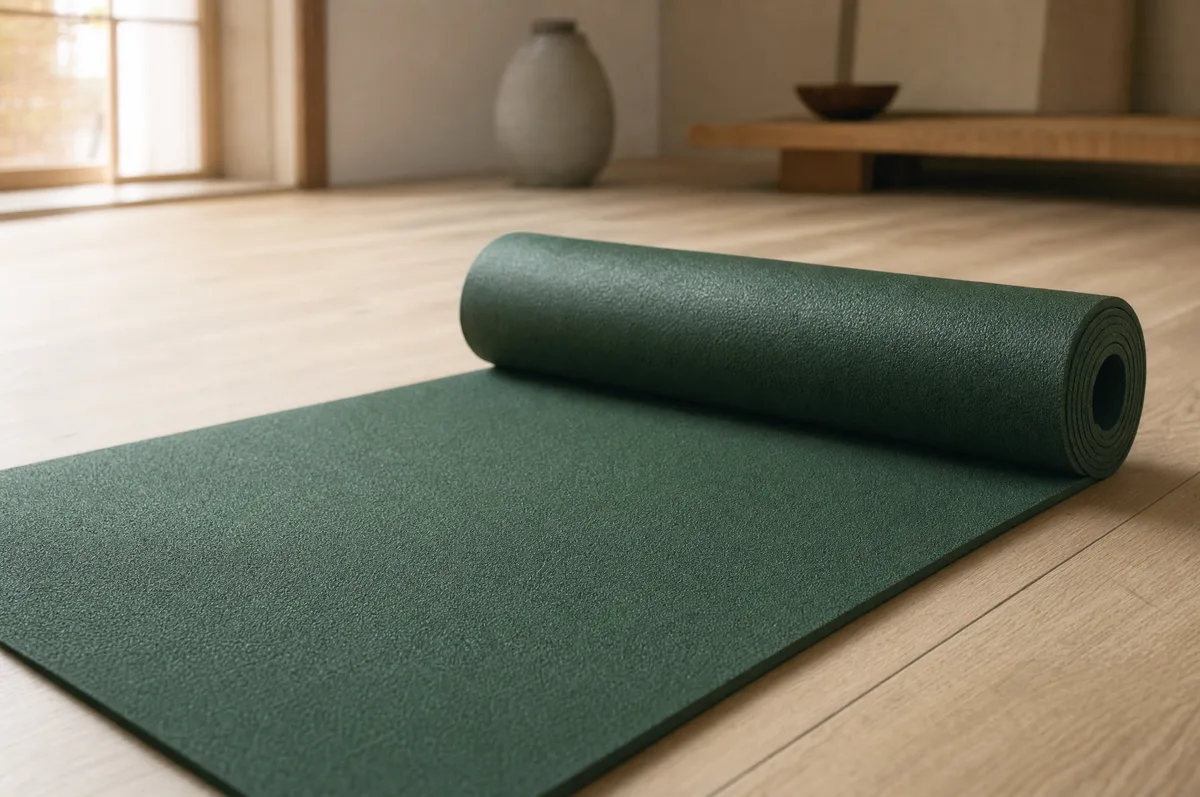
This is the Harmony's whole argument, and it is a strong one. The open-cell natural rubber grabs the floor and your skin directly, with no coating to wear off and no break-in to wait through — it grips from the first session. Reviewers consistently rate it among the grippiest natural-rubber mats made, and Yoga Journal named it a best-for-grip pick. If you slide around on cheaper mats, the Harmony is the obvious fix for a dry practice.
The catch is in that last word. Open-cell rubber grips brilliantly dry but absorbs moisture, so as you sweat it gets less grippy, not more — the opposite of a mat built for heat. The diagram below is the whole trade-off in one picture.
Grip vs. moisture
Illustrative
So if your classes are gentle-to-regular and not heated, this curve works entirely in your favour. If you sweat hard or do hot yoga, it works against you — more on that below, and in the best yoga mat for hot yoga guide.
How it compares to the other rubber mats
The Harmony sits in the premium natural-rubber tier alongside the mats people most often cross-shop it against.
| Mat | Material | Dry grip | Hot yoga | Durability |
|---|---|---|---|---|
| Jade Harmony | Natural rubber (open-cell) | Excellent | Weak (absorbs) | Moderate (multi-year) |
| Manduka eKO | Natural rubber | Very good | Weak | Good |
| Manduka PRO | PVC (closed-cell) | Good (after break-in) | OK with towel | Excellent (lifetime) |
| Lululemon Reversible | Rubber + PU top | Very good | Better (absorbent top) | ~4–6 years |
Against the Manduka lineup, the Jade grips better dry but the PRO outlasts it by years and is latex-free; against the Lululemon Reversible Mat, the Jade is the greener, more tactile choice but loses on sweat. For the full premium head-to-head, see Manduka vs Lululemon.
Eco and made in the USA
This is where the Harmony genuinely stands apart. It is renewable, non-Amazon-harvested natural tree rubber, biodegradable, with no PVC or synthetic rubber, and it is made in the United States under US environmental and labour rules — unusual in a category mostly manufactured overseas. Jade also plants a tree for every mat sold. If sustainability is a real reason you are buying, the Harmony is one of the most credible options out there; the wider trade-offs are in the eco-friendly yoga mat guide.
Latex: read the label carefully
The honest downsides
Even a teacher-favourite has real costs, and most trace back to the natural-rubber surface.
- It is not for hot yoga. The open-cell rubber absorbs sweat and turns slippery when soaked, and the textured ridges trap moisture and are harder to clean after a heated class.
- It wears faster than synthetic. Natural rubber is moderately durable — several years for many owners — but it breaks down sooner than a PVC mat like the Manduka PRO, especially under heavy or hot use. By design, it will biodegrade over time.
- It has a rubber smell at first. Like most natural-rubber mats, it off-gasses a tyre-ish smell out of the box that fades with airing.
- It is on the heavy side. Around 5 lb — it stays put well but is not a daily-commute mat.
Who should buy it — and who shouldn't
Buy it if grip is your number-one priority, you practise mostly dry (gentle, hatha, vinyasa, restorative), and you want a genuinely eco, made-in-USA mat with a feel-good footprint. For that buyer, the Harmony is close to ideal.
Don't buy it if any of these are you:
- You do hot yoga or sweat heavily — it gets slippery when wet.
- You have a latex allergy or sensitivity.
- You want a lifetime mat — natural rubber is multi-year, not forever.
- You need a light commuter mat or a fully wipe-clean surface.
The bottom line
The Jade Harmony earns its teacher-favourite status on two things almost nothing else combines: best-in-class dry grip and a credible eco, made-in-USA story. Know its one real limit — sweat — and it is an easy recommendation for a dry practice. If hot yoga or durability lead your list instead, the best yoga mats of 2026 shortlist points to better-suited picks.
FAQ
Is the Jade Harmony a good yoga mat?
For grip and eco-credentials, it is one of the best — natural rubber gives it a tacky, slip-free surface that reviewers and Yoga Journal rate at the top, and it is made in the USA from renewable rubber with a tree planted per mat. It is a weaker pick for hot yoga (the open-cell surface gets slippery when soaked) and for anyone with a latex sensitivity.
Does the Jade Harmony contain latex?
It is natural tree rubber, and Jade markets it as latex-free — but the company itself notes there may be trace latex proteins and advises people with latex allergies to avoid contact. So despite the label, treat it as a latex-relevant mat: if you react to latex, choose a PVC mat like the Manduka PRO instead.
Is the Jade Harmony good for hot yoga?
Not really. Its grip is superb when dry, but the open-cell rubber absorbs sweat and gets slippery when fully wet, and the textured ridges make it harder to clean after a sweaty class. For heated practice, a closed-cell or purpose-made wet-grip mat — or a towel on top — is the better route.
How long does a Jade Harmony mat last?
Natural rubber is moderately durable — many owners get several years of regular practice — but it wears faster than synthetic mats like the Manduka PRO, especially with heavy or hot-yoga use, and it will biodegrade over time by design. It is a multi-year mat, not a lifetime one.
Jade Harmony vs Manduka — which is better?
They win on different things. The Jade grips better dry and is the greener, made-in-USA natural-rubber choice. The Manduka PRO lasts far longer (lifetime guarantee) and is latex-free, and Manduka's GRP beats the Jade for hot yoga. Pick Jade for dry grip and eco; Manduka for durability or a latex-safe surface.
Why is the Jade Harmony so grippy?
It is open-cell natural rubber with a slightly textured, tacky surface — the rubber grabs the floor and your hands and feet directly, rather than relying on a coating. That is why it grips from the first roll-out with no break-in. The same open-cell surface is what absorbs sweat and limits it for hot yoga.