

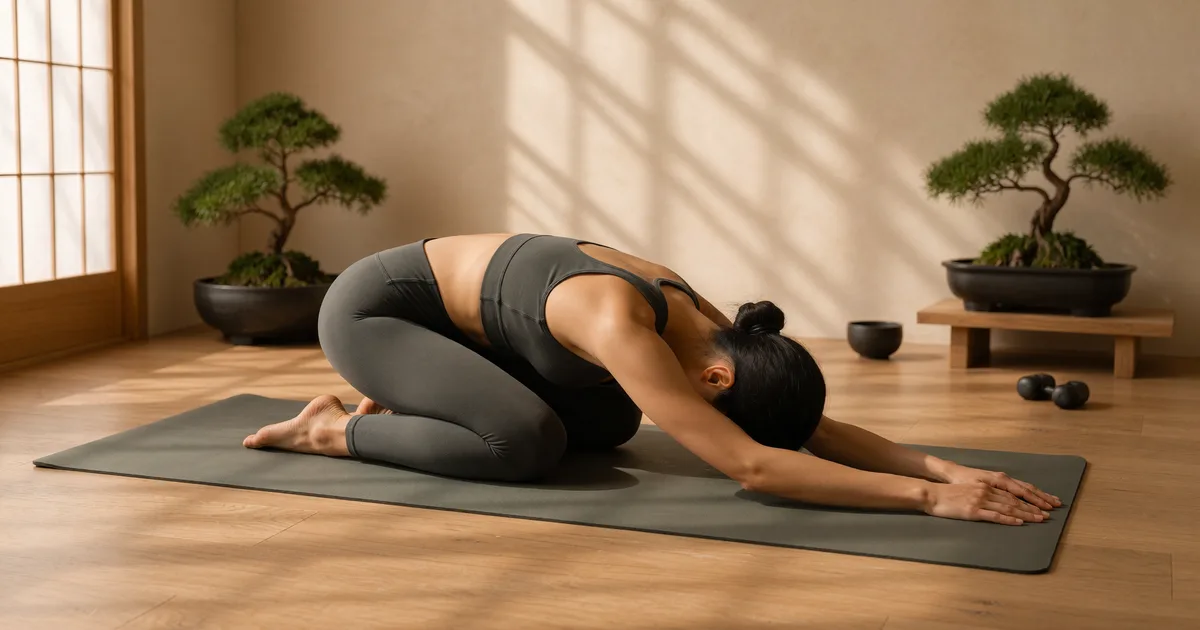
Pose information
At a glance
- Level
- Beginner-friendly
- Type
- Resting · kneeling fold
- Primary areas
- Back, hips, thighs and ankles
- Helpful props
- Blanket, bolster or block
- Modify or avoid when
- Knee discomfort, later pregnancy or difficulty breathing comfortably in the fold
- Hold
- A few comfortable breaths to several minutes
Practise with options
Breath, exit and variations
- Breathing
- Breathe comfortably into the back and sides of the ribs.
- Leave safely
- Press into the hands and return upright slowly, keeping the head easy.
- Easier variation
- Support the chest and forehead with a bolster, blanket or block.
- Chair variation
- Fold toward a chair seat or table and support the forehead and arms.
- In a sequence
- Use it as a pause after standing work or near the end of practice.
Educational guidance only. Yoga can require individual modifications; do not postpone professional care for a medical concern. Read the NCCIH yoga safety overview.
How this page has changed
August 2, 2026
Instructions, modifications and safety context reviewed.
June 14, 2026
First published.
Child's Pose — Balasana — is the one shape every yoga class quietly returns to. It is the pose you take when you need a breath, a reset, or a moment of calm, and it asks almost nothing of you in return. This is the unhurried guide: how to rest into it properly, the small things that get in the way, and the props that make it genuinely comfortable.
This is general guidance, not medical or personalised instruction — see a qualified teacher for hands-on help.
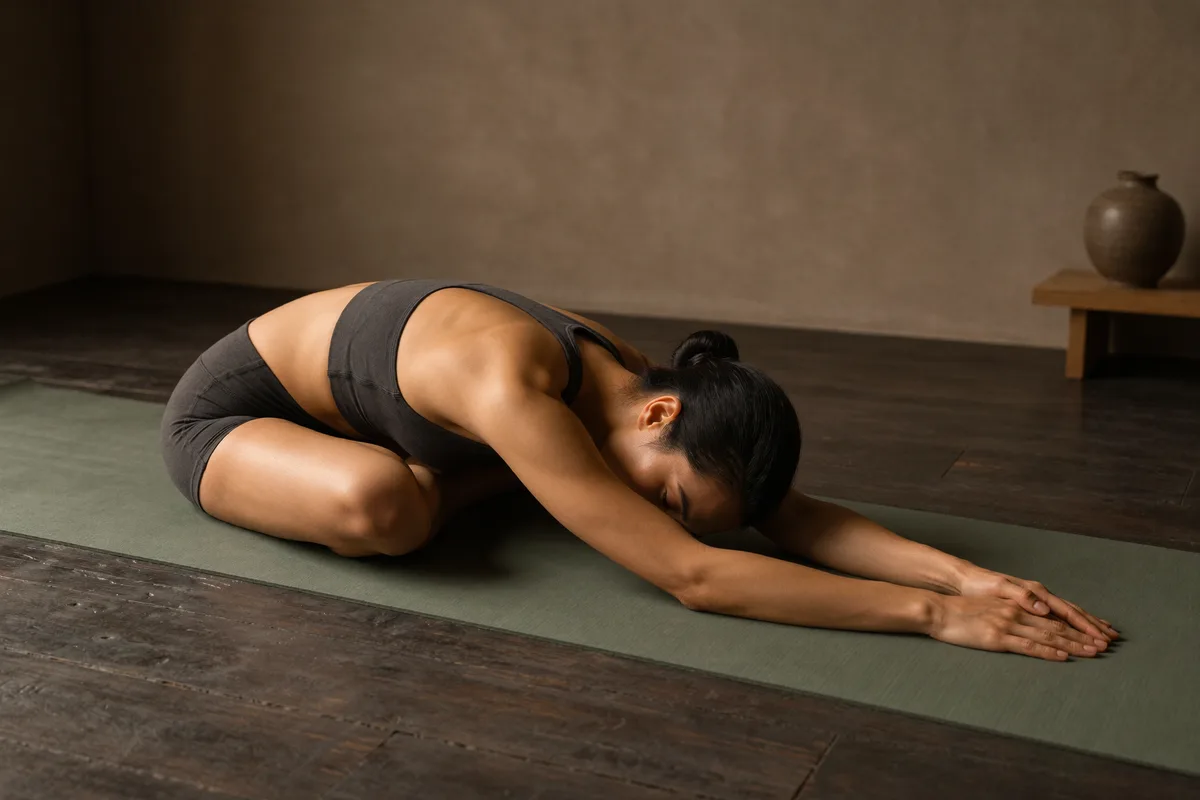
Child's Pose at a glance
| Sanskrit | Balasana |
| Level | Beginner-friendly · restful |
| Type | Kneeling forward fold · gentle stretch + calming |
| Primary areas | Lower back, hips, thighs and ankles |
| Hold | A few breaths to several minutes |
| Props | A bolster or blanket under the chest; a block under the forehead |
How to do Child's Pose
- Kneel with the tops of the feet down and the big toes touching behind you; sit back toward the heels.
- Take the knees wide toward the edges of the mat (or keep them together — your choice), big toes still touching.
- Fold forward on an exhale, walking the hands ahead as the torso settles between or over the thighs.
- Rest the forehead lightly on the mat — or on a block, cushion or stacked fists if it doesn't reach. Keep the neck long.
- Settle the arms and breathe — stretched forward, or back alongside the body, palms up. Soften and breathe into the back of the ribs.
Common mistakes
- Forcing the hips down to the heels. Tight thighs and ankles keep many people off their heels — that is normal. Forcing it adds tension; prop instead.
- Straining the neck. Don't crank the head down to reach the floor. Support the forehead and keep the neck neutral.
- Forgetting to breathe. It is easy to go limp and shallow-breathe. Keep the breath slow and full — that is where the calming happens.
Modifications
- Bolster or blanket along the front of the body to rest the torso and head on — turns Child's Pose into a deeply restorative shape you can hold for minutes.
- Block under the forehead if it doesn't reach the mat.
- Blanket behind the knees (rolled and tucked) if the knees feel pinched when you sit back, which also helps sensitive knees — the same cushioning logic as choosing a mat for bad knees.
- Knees together for a rounder lower-back stretch, or wide for more room and less knee strain.
What it's good for
Child's Pose places the lower back, hips, thighs and ankles in a gentle folded position. Many practitioners use it as a quiet pause, especially when the forehead and torso are comfortably supported, but it does not guarantee a particular physiological or emotional effect. It can follow backbends or provide a neutral break between more demanding shapes.
Keep practising
Child's Pose pairs naturally with almost everything — it is the rest you take after Downward Facing Dog or a round of standing poses, and a calm way to close a session. Roll out a grippy, cushioned mat and let it be the easy pose it is meant to be.
Frequently asked questions
Is Child's Pose a resting pose?
Yes — teachers commonly offer it whenever you want a break in class. Many people experience the supported forward-folding shape as restful, but that is an individual experience rather than a guaranteed nervous-system effect. Stay for a few comfortable breaths or longer only while breathing remains easy.
Should my knees be together or wide in Child's Pose?
Either works. Knees together gives a rounder stretch through the lower back; knees wide (big toes still touching) makes room for the belly and chest to settle between the thighs, which most people find more restful and easier on the knees. Try both and keep whichever lets you breathe deepest.
Why can't I sit back on my heels in Child's Pose?
Usually tight hips, thighs or ankles — very common and not a problem. Slip a folded blanket between your calves and thighs, or a bolster under your chest, so you have something to rest on. Forcing the hips down only creates tension; let the prop bring the floor up to you.
Can I do Child's Pose every day?
Yes — it is gentle enough for daily practice and makes a lovely way to start or end the day, or to pause during a stressful one. The only times to be careful are with a knee injury or in later pregnancy; see the cautions below.