

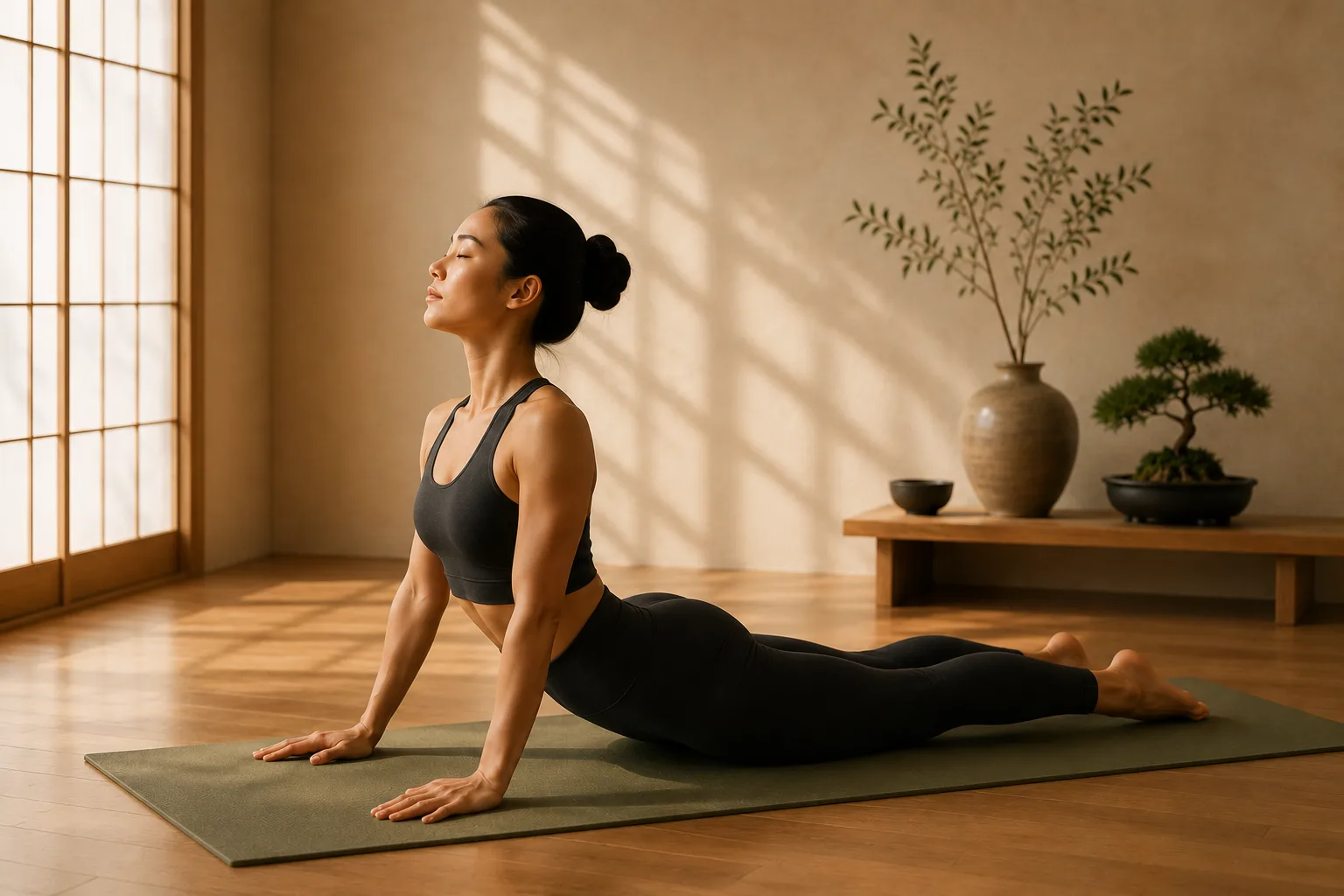
Pose information
At a glance
- Level
- Beginner with care
- Type
- Prone backbend
- Primary areas
- Chest, shoulders and spine
- Helpful props
- Blanket under the pelvis if useful
- Modify or avoid when
- Back or wrist pain, pregnancy or recent abdominal surgery
- Hold
- One to several easy breaths without forcing height
Practise with options
Breath, exit and variations
- Breathing
- Keep the breath smooth; reduce the lift if breathing feels restricted.
- Leave safely
- Exhale and lower the chest gradually, then turn the head or rest the forehead.
- Easier variation
- Keep the lift very low or use Sphinx Pose on the forearms.
- Chair variation
- Use a standing wall version instead of loading the floor and wrists.
- In a sequence
- Place it after gentle prone preparation and before a neutral resting shape.
Educational guidance only. Yoga can require individual modifications; do not postpone professional care for a medical concern. Read the NCCIH yoga safety overview.
How this page has changed
June 14, 2026
Instructions, modifications and safety context reviewed.
Cobra Pose — Bhujangasana — is the gentle backbend that teaches your spine to extend. It opens the chest and shoulders, builds quiet strength along the back, and offers a lovely counter to a day spent hunched over a screen. It is also easy to overdo by pushing up with the arms. This is the gentle guide: how to lift from the right place, the lower-back mistakes to avoid, and the softer versions worth starting with.
This is general guidance, not medical or personalised instruction — see a qualified teacher for hands-on help.
Cobra Pose at a glance
| Sanskrit | Bhujangasana |
| Level | Beginner-friendly · gentle backbend |
| Type | Prone backbend · spine strength + chest opening |
| Targets | Spine, chest, shoulders, abdomen; counters slouching |
| Hold | A few slow breaths |
| Props | None needed; a cushioned mat is kinder on the hips and ribs |
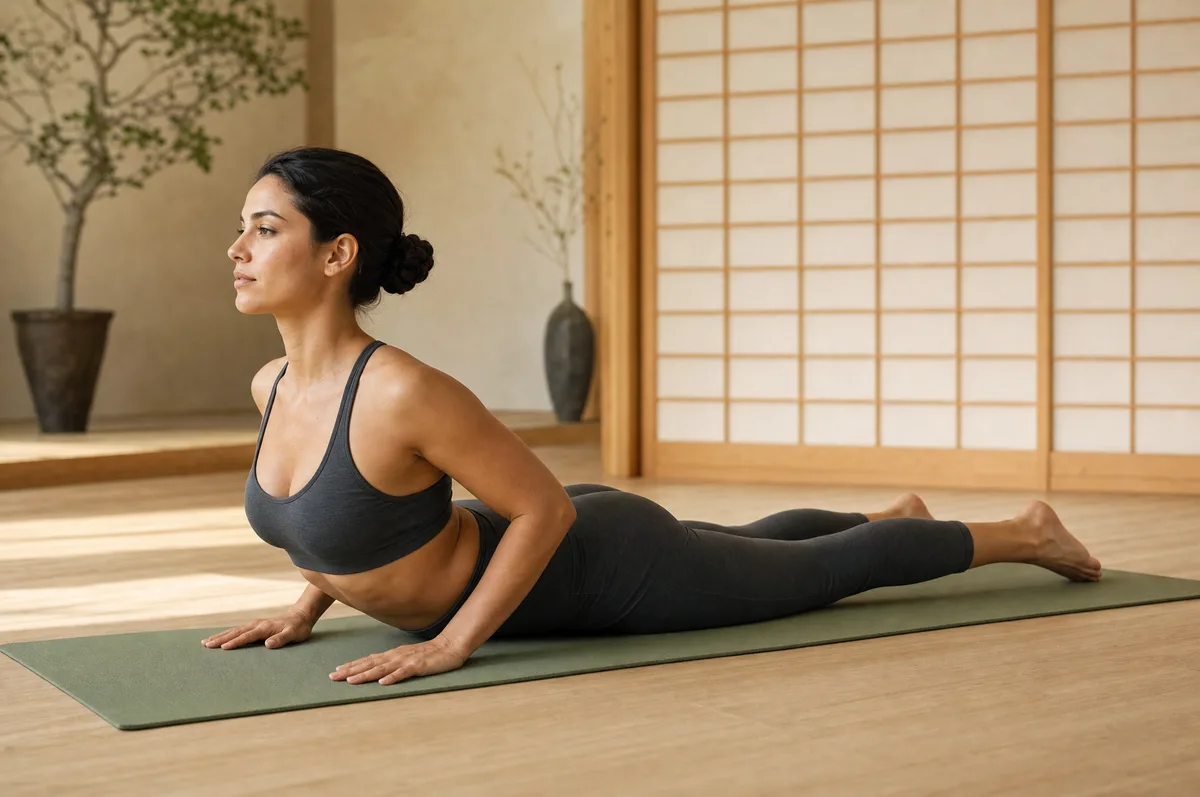
How to do Cobra Pose
- Lie face down, legs back, tops of the feet on the mat, forehead resting down.
- Set the hands under the shoulders, elbows bent and hugging the ribs; press the tops of the feet and the pubic bone gently down.
- Lengthen, then lift the chest and head on an inhale into a low backbend, leading with the chest. Hands stay light — the back does the work.
- Set the shoulders and neck — shoulders down and back, neck long, gaze forward or slightly up.
- Hold and release for a few slow breaths with the lower belly lightly engaged, then lower down on an exhale.
Common mistakes
- Pushing up with the arms. Forces an unnatural, high curve. Lift less and lead with the chest.
- Lifting too high and compressing the lower back. More height isn't better. Aim for a long, even curve; lower if you feel pinching.
- Overextending the neck. Don't throw the head back. Keep the neck a natural continuation of the spine.
- Forgetting the legs and belly. Press the tops of the feet down and lightly engage the lower belly — it protects the lower back and shares the work.
Modifications
- Baby Cobra — lift the chest just a few inches with the hands barely pressing (or hovering). The safest version, and the one that actually builds back strength.
- Sphinx Pose — come onto the forearms with the elbows under the shoulders. A supported, lower backbend that is very kind to the lower back and wrists.
- Hands wider or slightly forward to lower the intensity of the lift.
What it's good for
Cobra gently strengthens the muscles along the spine while opening the chest, shoulders and front of the body — the opposite of the rounded-forward shape most of us hold all day. Practised low and slow, it builds the back strength that supports good posture, and leaves the upper body feeling open rather than compressed.
Keep practising
Cobra is a natural counter-pose: it feels wonderful after Child's Pose or as a gentle backbend between rounds of Downward Facing Dog. A cushioned mat makes lying face down far more comfortable on the hip bones and ribs.
Frequently asked questions
What is the difference between Cobra and Upward-Facing Dog?
In Cobra the pelvis, legs and often the lower ribs stay on the mat and the lift is low and gentle, powered mostly by the back. In Upward-Facing Dog the thighs and pelvis lift off the floor and only the hands and tops of the feet are grounded — a stronger, higher backbend. Cobra is the friendlier, lower-effort version for beginners.
Why does my lower back hurt in Cobra Pose?
Usually because you are lifting too high or pushing up with the arms, which crunches the lower back. Lift less, keep the elbows bent and hugging the ribs, lengthen the spine forward as you rise, and gently engage the lower belly and the legs. If it still pinches, practise Baby Cobra or Sphinx instead.
How high should I lift in Cobra Pose?
Only as high as your back can lift you while the hands stay light — most beginners come up far less than they think. The goal is a long, even curve through the whole spine, not maximum height. If you are pushing hard through the hands, you have gone too far; lower down.
What is Baby Cobra?
Baby Cobra is the gentlest version: you lift the chest just a few inches using your back muscles, with the hands barely pressing — sometimes hovering off the mat entirely. It is the safest way to learn the pose and to protect a sensitive lower back, and it builds the back strength the fuller pose needs.